



This week’s Reporter features excerpts from a longer interview with US Rep. Stephen F. Lynch, the incumbent congressman from the Eighth Congressional district, which includes parts of Dorchester and his hometown, South Boston.
The conversation covers a wide range of issues, including the increasingly dire warnings from Lynch and others about the pace and profound consequences of unchecked AI and the war in Iran. We also discussed some timely local issues, including his efforts to prevent further erosion and injury by the Trump regime to the United States Postal Service here in Boston’s neighborhoods.
But we also wanted to know what Lynch thinks about the surprising comments the current president made earlier this month during his two-day visit to Ireland. Trump stunned his fans and detractors alike by announcing to reporters that he thinks it’s time for Ireland —long divided north and south— to reunite.
Standing alongside Taoiseach Micheál Martin in Dublin on Sept. 12, Trump said he would “love to see” Ireland unified, predicted that it would happen eventually, and added: “It may as well happen now.” He later called reunification a “very cool thing.”
They were, by a long shot, the most dramatic public statements on the subject uttered by a US president since the 1998 Good Friday Agreement, the breakthrough deal that brought a relative peace to Ireland— particularly in the six counties still controlled by the British.
Trump is deeply unpopular among most Irish, particularly in the republic, who regard him— correctly— as a reckless warmonger and demagogue. He’s far more popular among Unionists in the North of Ireland, who are generally aligned with MAGA-like thinking.
His sudden pronouncement on “the Irish question” left both sides a bit flummoxed. And, after the immediate tumult subsided, most sensible folks resolved that it was a deeply unserious outburst more aimed at needling UK politicians than advancing the best interests of the Irish people.
Steve Lynch, who probably represents the most heavily Irish-American Congressional district in the US, offered a similar assessment on Monday.
“I guess I was surprised that he would take that issue on. But remember, a lot of what comes out of the president’s mouth has no basis in fact, or is just simple rhetoric,” he surmised. “There’s no substance behind it.”
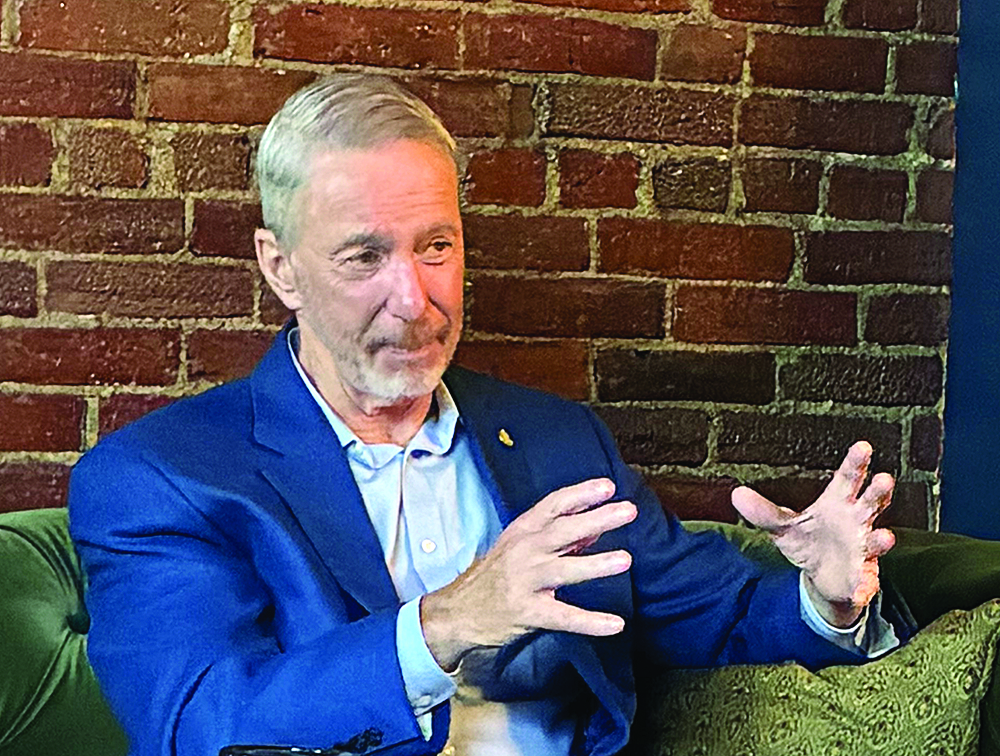
Congressman Stephen F. Lynch. John P. Forry photo
He added: “So I tend to think… that he didn’t realize what he was saying, or the import of it. And, you know, it’s sort of like invading Greenland and making Canada the 51st state. It’s in that league, you know?”
Trump, by Lynch’s account, is just “ignorant” about how “incredibly sensitive” the matter is in Ireland.
Like many of his fellow Bostonians of Irish ancestry, Lynch is unequivocal in his belief that Ireland should, in fact, be one nation.
“Ireland should be united and free,” Lynch replied when I asked his position on the question. “Simple as that. No passage of time can change that simple fact. And so, I think we’ve made progress, but there’s much more work to be done.”
The practical consequences of staging the referendum that the Good Friday Agreement mandates is still considered a perilous proposition without the framework and preparations that are needed on both sides of the border.
Rushing into a Brexit-like decision that could prompt a return to 1980s-style sectarian violence is something no one wants or needs. As on many other matters, Donald Trump might know that if he spent a few minutes to learn a bit of history and statecraft.
Copyright © 2026 Boston Neighborhood News, Inc. This content may not be re-published or re-used without written permission.
