

The Asian American Resource Workshop (AARW), Asian Pacific Islanders Civic Action Network (APIs CAN), Greater Boston Legal Services’ Asian Outreach Center (AOC), and Vietnamese American Initiative for Development, Inc. (VietAID), in collaboration with Boston College Law School Legal Services LAB Civil Rights Clinic, launched “Not to Be Left Behind” on Monday night. Cassidy McNeeley photos
Copyright © 2026 Boston Neighborhood News, Inc. This content may not be re-published or re-used without written permission.
On Monday night (Oct. 19), about 70 community members gathered at VietAID in Fields Corner to discuss a newly published report highlighting the hardships facing worker and owner experiences in the Massachusetts nail salon industry. Based on a nationwide survey and focus groups conducted over the past year, the report— “Not to Be Left Behind”— shares findings and recommends ways to make the industry more sustainable.
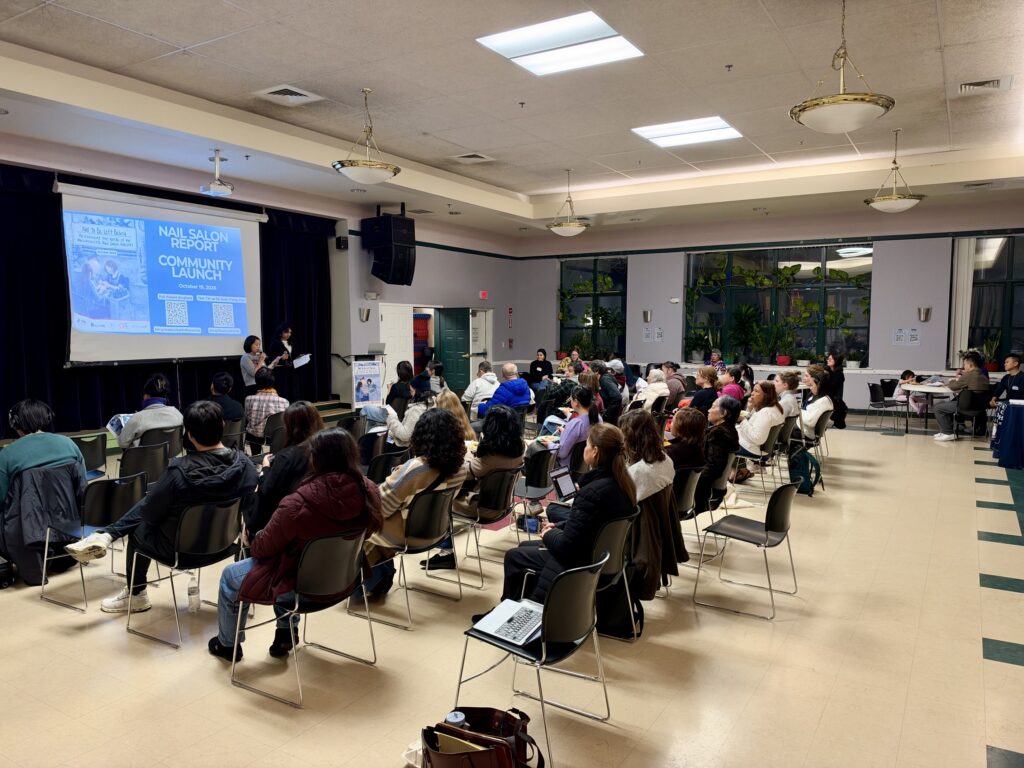
“Nail salons are a cornerstone of Massachusetts immigrant communities, particularly the Vietnamese and Asian American community,” said Jaya Savita, executive director of Asian Pacific Islanders Civic Action Network, one of several groups that sponsored the research by Boston College Law School.
“They are built and maintained by workers and owners who look out for one another, and this report gives workers a voice.”
Savita said the report, based on a survey of 95 nail salon workers and 47 owners, “shows a skilled but undervalued workforce whose wages haven’t kept up with the cost of living and whose access to support is now shrinking.”
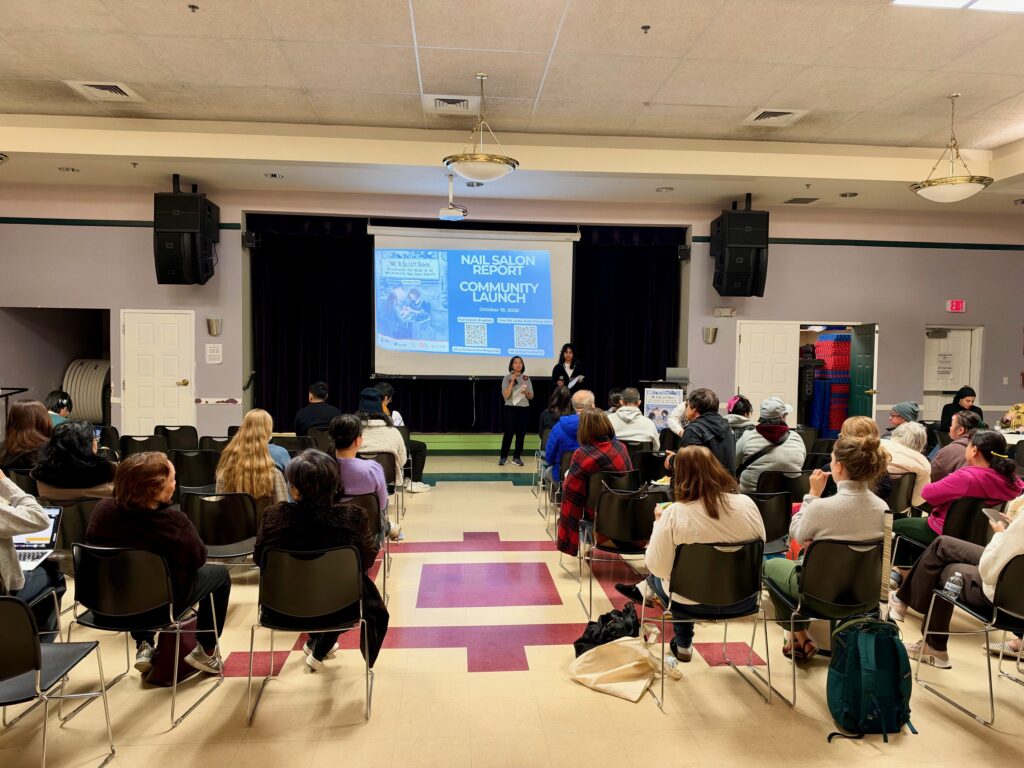
Thao Ho, a staff attorney at Greater Boston Legal Services, added that the report’s first major finding “was that many nail salon workers and owners still struggle with income instability.” Specifically, she explained that of the workers surveyed, 79 percent reported making $40,000 or less a year.” According to Ho, this is a result of “the very specific nature and characteristics of the industry,” such as it being commission-based, seasonal, and highly dependent on tips.
Jenn Le, a Vietnamese nail tech who lives in Dorchester, agreed. “One of the challenges in the industry is income stability. When the cold season hits, business is also affected,” Le said in a written statement read by Kevin Lam, co-executive director at the Asian American Resource Workshop.
“For me, I have to drive outside of Boston to my workplace. If my client doesn’t come in, I will have lost money, so this means that there are times when I will be paying more to travel to the nail salon.”
She added, “Income stability for nail salon workers is important, because without the steady income, I would not be able to cover rent. There might be times when I make ten dollars a day and might be there all day. The income is not predictable and is inconsistent. It’s becoming more difficult to meet basic needs for myself and my two young children.”
But nail techs like Le aren’t just worried about income; they fear for their overall health and safety, too.
“Eighty percent of the workers that we surveyed had experienced health issues while performing their work,” said Ho. “One out of three of them visited a doctor for health concerns at some point arising from their work.”
The nail techs said their health issues were a result of being around harsh chemicals, having poor ventilation, and being bent over for long periods of time.
Boston-based nail tech Lan Nguyen, who has more than 20 years of experience, said she joined the industry decades ago because it gave her the “time and possibility to take care of my children and family.” Despite that perk, she worries about the long-term impact her work will have on her health.
“The working conditions can be very difficult,” she said. “I am breathing in chemicals every day.”
Nguyen and others in the industry also face racial discrimination; in fact, one out of three workers surveyed said they felt unsafe in the workplace at some point due to identity or race.
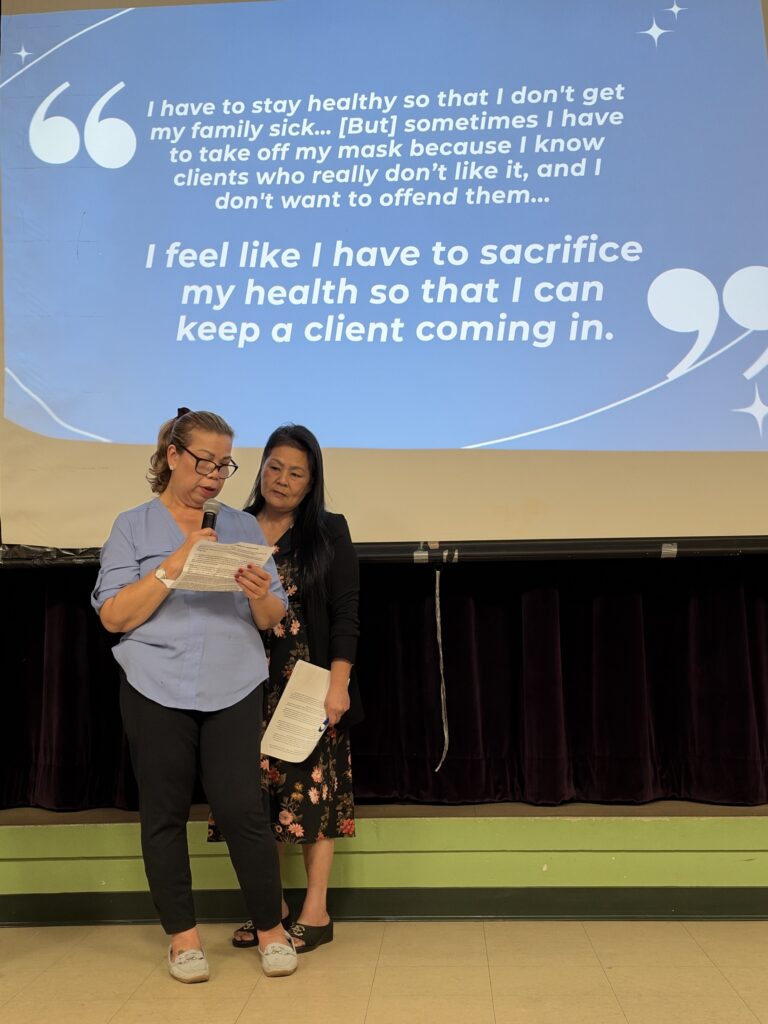
Overall, Ho said, “workers and owners expressed a deep investment in wanting to continue to build up the nail salon industry. They recognize that the industry serves as a bedrock for many immigrant communities across the state, and they would really like to continue that path for future generations as well.”
Bella Hoang, MPH Candidate at Harvard T.H. Chan School of Public Health, presented the report’s recommendations moving forward. This included promoting income stability, furthering health and safety initiatives, and building workforce power.
Copyright © 2026 Boston Neighborhood News, Inc. This content may not be re-published or re-used without written permission.
