
Copyright © 2026 Boston Neighborhood News, Inc. This content may not be re-published or re-used without written permission.
By Jack Schwed
Election Day was a paid holiday for Boston City Council employees this year – a first for that body – and some councillors want it to be a permanent holiday statewide.
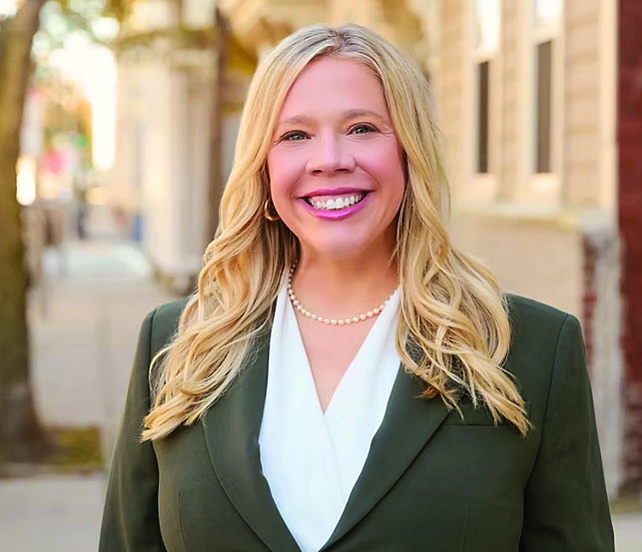
City Council President Liz Breadon said the goal of a resolution approved Oct. 21 was to suspend hearings and meetings for the day so that central staff and council office employees could participate in a “democracy-related project” such as volunteering at call centers or assisting voters at the polls.
Expanding the holiday statewide would provide flexibility for working residents and improve the state’s “abysmal” voter turnout record, Breadon said, noting that turnout numbers perceived as low in Northern Ireland, where she hails from, would be seen as high in the United States.
That, she said, “is really a very sad reflection of our commitment to participating in our democracy,” which she called “very, very important, and if you don’t tend to it and support it and educate people about it, we’re in danger of losing it.”
Her office did not to respond to repeated emails and calls made in efforts to substantiate the data Breadon was referring to, establish the number of Council employees the policy applies to, and clarify if the resolution is meant to permanently set Election Day as a holiday for them.
Breadon and nine other councillors sponsored the resolution, including Brian Worrell and Miniard Culpepper, who represent parts of Dorchester, and Councillors-at-large Ruthzee Louijeune, Henry Santana, and Julia Mejia.
Breadon did say earlier that councillors will evaluate the effectiveness of the time off by gathering feedback from staff members and ask what the employees did with their time on Nov. 3.
The resolution has received pushback, with Councillors Ed Flynn and Erin Murphy publicly opposing it. Flynn noted that with council employees choosing what to do on Election Day, they may engage in political activities, such as campaigning for candidates or get-out-the-vote efforts.
He addressed a letter to City Corporation Counsel Michael Firestone and the Massachusetts State Ethics Commission questioning whether this is initiative is lawful under Firestone’s annual legal guidance. He said that as of last Nov. 23, he had not received a response from either.
The 2026 legal guidance states that city employees cannot participate in campaign activities during regular business hours, and must do so on their own time, including during “properly approved time off.”
On Nov. 4. Breadon said the resolution did not encourage City Council employees to campaign on Election Day. She noted, “Yesterday, we gave people the opportunity to use the day to go volunteer, to participate. It wasn’t partisan.”
Flynn said he also opposed the resolution because it closed municipal services off to the public on a non-holiday weekday. He and Murphy noted that the door was locked on the fifth floor with a posted note advising people to call their councillors if they needed assistance.
“It just sends the wrong message to residents that the City Council is more engaged in political campaigning than we are in neighborhood services and quality-of-life issues for residents,” Flynn said.
For her part, Breadon again emphasized that the goal is to expand voter access and boost turnout because voting is “the oxygen in our political system.”
“If Councillor Flynn wants to play politics for this, I’m very sorry that that’s happening, because that’s not the intention of what I’m trying to do here,” she said.
Murphy said she is opposed to the resolution because there are no obstacles in place now for City Council employees who want to vote. She also noted that while employees were encouraged to engage in a democracy-related project, nobody “took me up on that offer.”
Breadon said there are obstacles with mail-in ballots, which she experienced when her ballot took two weeks to get from City Hall to her home in Brighton. She also said that Council employees had volunteered at call centers and polling stations, translated for voters, and encouraged people to vote.
Murphy argued that the resolution is inequitable because it does not apply to other city employees. She said she would be in support of expanding the resolution citywide and statewide.
Said Breadon: “I’m delighted this is prompting a conversation, and I hope that we continue to evaluate how we can improve voter turnout in the city of Boston but also across the country.”
Steve Poftak, the chief executive officer and president of the Boston Municipal Research Bureau, which analyzes the city’s finances and operations, said the resolution as is has minimal budgetary impact, but expanding it to the entire municipal workforce would increase pressure on the budget.
He said it would accelerate overtime costs — particularly for the Boston Public Schools, and the fire and police departments — which the city’s 2027 budget status report identified as a major budget strain.
Expanding the policy would also disrupt school operations and could place a burden on private businesses, he said. “I see the virtue of the symbolic gesture, but I do worry that the juice may not be worth the squeeze,” he added.
Marcela Dwork, a spokesperson for Mayor Wu, wrote in a statement to The Reporter that a proposal to establish a local holiday would require “careful review on how to address operational impacts, including for BPS students and families.”
Voters casting ballots on Election Day at three locations — the Boston Public Library’s Adams Street and Lower Mills branches and Florian Hall — had mixed opinions on the resolution and its potential expansion.
Deborah Kane, 61, of Lower Mills said that while she believes everybody should vote, she sees the holiday as “unnecessary.” She said there are ample ways to vote, including early voting. “We’ve made it really easy for people to cast their vote in multiple different ways to accommodate multiple schedules,” she said.
Vielkis Gonzalez, a Dorchester resident in her 50s, agreed that residents have an “expansive” amount of time to vote. Work has never stopped her from voting, she said. “To me, if you’re going to vote, you’re going to vote regardless. You will make the time to do it.”
Gonzalez also emphasized the importance of municipal services being available. She said she’s gone to the city several times for assistance, but each time, she was redirected online.
But, she noted, that was not the case when she worked for the city as a senior development officer in the Mayor’s Office of Housing from 2007 to 2023. “We were there for the constituents,” she said. “And as a constituent, I’d rather speak to someone than have to go online.”
Cal Tortolani, 22, of Adams Village said that as a young voter he supports the policy’s expansion because it is an “uphill battle” trying to get his friends to vote. Many of them claim they’re unable to fit it into their schedules because of work, he said.
“Having the day off would kind of help push more people to the ballots, which is what makes this country so great,” he said.
He added that “the busier people’s opinions are just as valuable as everyone else’s. Making sure you’re getting a well-rounded group of people is important.”
This story is the product of a partnership between the Dorchester Reporter and the Boston University Department of Journalism’s Newsroom Initiative.
Copyright © 2026 Boston Neighborhood News, Inc. This content may not be re-published or re-used without written permission.
