
By Madyline Swearing, Boston University Statehouse Program
Legislators are looking to the past to support a specific group of Massachusetts residents: the descendants of those emancipated from slavery 161 years ago.
The proposed Massachusetts Office of Freedmen Affairs would be the first state-level office modeled after The Bureau of Refugees, Freedmen, and Abandoned Lands — known as the Freedmen’s Bureau. Established by Congress in 1865, the Freedmen’s Bureau was created to provide aid to four million African Americans as they made their transition from enslavement to freedom.
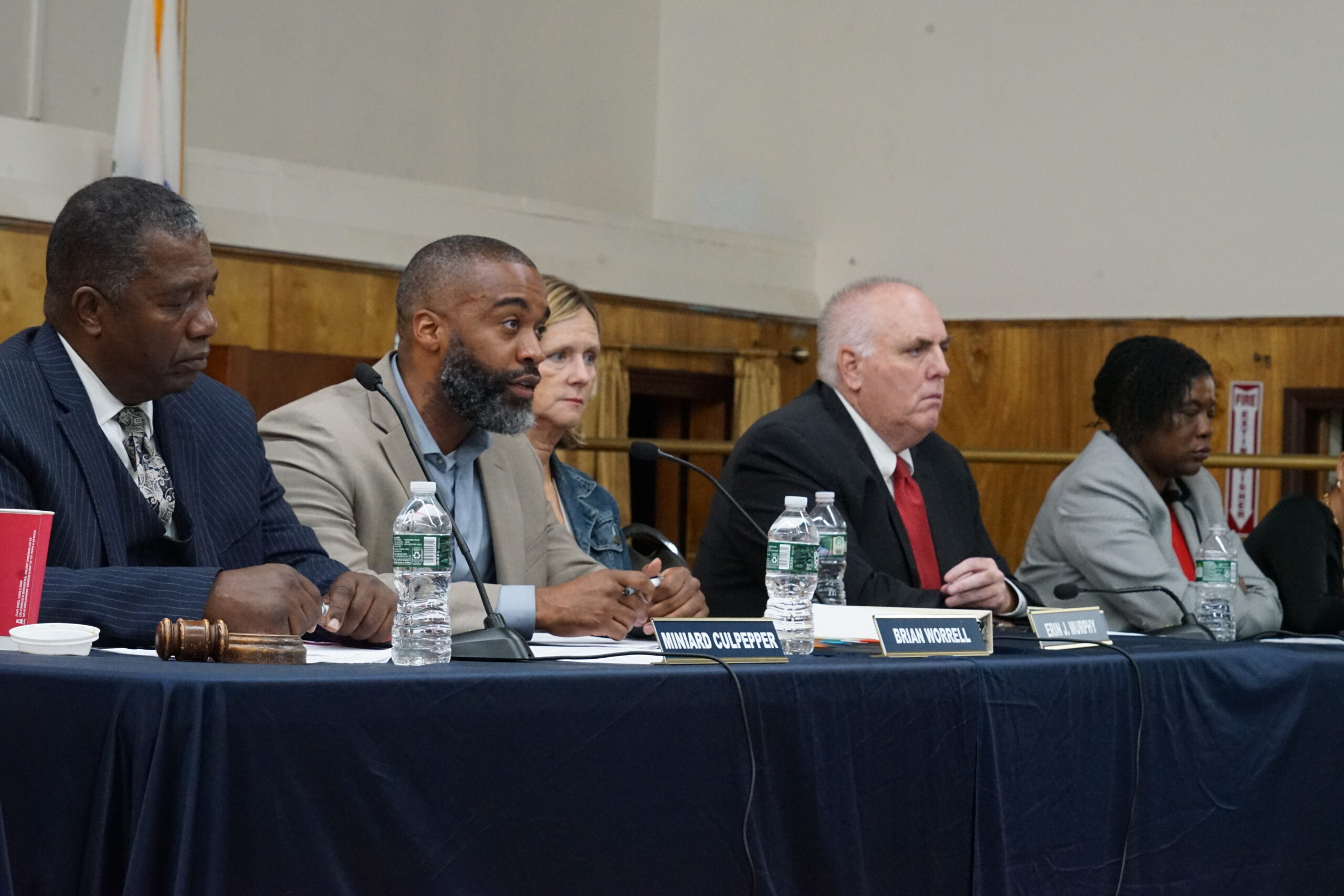
Sponsored by Dorchester and Mattapan Rep. Brandy Fluker-Reid (shown above), the bill recognizes that American Freedmen — descendants of those emancipated in the United States — have unique needs and that there is an obligation to address ongoing marginalization, inequities, and cultural erasure that affect their communities through policy implementation and resource allocation.
“One of the biggest misconceptions that we as historians and archaeologists operate under is that in the North…racism is not as pervasive as we see in the South, and that’s just not true,” said Nedra Lee, associate professor of anthropology and director of the New England African American Archaeology Lab at UMass Boston. “When you think about an institution like a Freedmen’s Bureau operating in today’s time, it shows you that that work is not done, and it also offers a historical explanation for why it’s not done.”
The NEAAAL lab, founded by Lee in 2018, partners with the Museum of African American History and uses written records and physical items to chronicle the history of Black communities in New England.
The bill was drafted in collaboration with United Sons and Daughters of Freedmen, a national organization dedicated to “preserving the legacy and advancing the interests” of American Freedmen through civic education, genealogical research, and historical preservation.
“Our history and heritage is being erased every day,” said Antonia Edwards, USDOF director of community engagement. “There’s a commission for Latinos, a commission for LGBT, an office for women, the Bureau of Indian Affairs and a commission for Haitians, but there’s nothing for the descendants of the slaves in the US.”
The Freedmen’s Bureau was active until 1872 and provided newly freed individuals with rations and clothing, established schools, supervised labor contracts in the North, supported transportation, arranged housing, and created a records system with the names of hundreds of thousands of formerly enslaved individuals and white refugees from the South.
In Boston, boarding houses — primarily run by women — were spaces for newly emancipated people to work and live in freedom. Beacon Hill housed the most active Underground Railroad safe house in Boston before emancipation, run by activist Harriet Bell Hayden, who escaped enslavement in Kentucky with her abolitionist husband Lewis Hayden in 1844, and housed dozens of American Freedmen at a time after emancipation.
As the country celebrates its 250th birthday, supporters say now is the time to tackle the unfinished work of emancipation and uphold the principles of self-determination and justice Massachusetts is known for.
USDOF President Nyhiem Way said the primary goal in establishing the office is to create a genealogical research system. Individuals would be able to verify their American Freedmen lineage, receive an American Freedmen card (similar to a tribal card) and have access to a case manager to address any service or support needs.
“It’s a very simple process. Most of us have Ancestry.com or FamilySearch.org…and you’re able to trace your ancestors to slave labor camps,” Way said. “A team of genealogists looks at your family tree and makes the determination.”
The goal is to make this service free through state funding, and while it wouldn’t be a reparations program, Edwards said, the office would be committed to addressing economic disparities impacting American Freedmen.
According to a 2015 report, “The Color of Wealth in Boston,” by the Federal Reserve Bank of Boston, Duke University and the New School, non-immigrant African American households in Greater Boston had a median net worth of $8, while white households come in at $248,000. In comparison, Black Caribbean households were charted at $12,000.
“We’re so used to using the terminology of a wealth gap, but that’s not a wealth gap, that’s a complete erasure and devastation of wealth,” said Josh Gray, USDOF director of business and finance. “We need this office, because how in the world does a population group live like that?”
Lee said these disparities can be traced back to institutional hurdles imposed on free Black communities after emancipation. She said that while it’s easy to conflate wealth disparity with a lack of personal will or effort, larger historical structural barriers are at play and continue to impact the socioeconomic mobility of American Freedmen.
“In these communities, people worked really hard to buy land and establish their own institutions…not just as a way to cope with segregation, but as a means of self-determination,” Lee said. “There’s a reason why many of these communities don’t exist today, and it’s not for a lack of trying.”
The office would enhance access to state programming and benefits to make “economic determinants,” such as robust education, workforce development and homeownership, more accessible.
Former South End Representative Byron Rushing, whose 36 years of work in the House spearheaded areas of equity and civil rights, said this piece of legislation calls to work that should have already been done. The impact of the office, he said, should match the weight and importance of the Freedmen’s Bureau name.
“I haven’t read the bill…but it should have a real aspect,” he said. “Find out what their ancestors did and how long they did it. Turn that into a monetary amount and multiply it by all the years since their enslavement. Then give that to their descendants.”
The bill received a unanimous vote in December from the Legislature’s Committee on State Administration and Regulatory Oversight and is currently under review in the House Ways and Means Committee. Should it win approval from both branches and signed by Gov. Maura Healey, it would become law upon her signing as “necessary for the immediate preservation of the public convenience.”
Said Gray: “Massachusetts has a history of being progressive and leading the charge on these types of issues. Why should that trend stop now?”
