
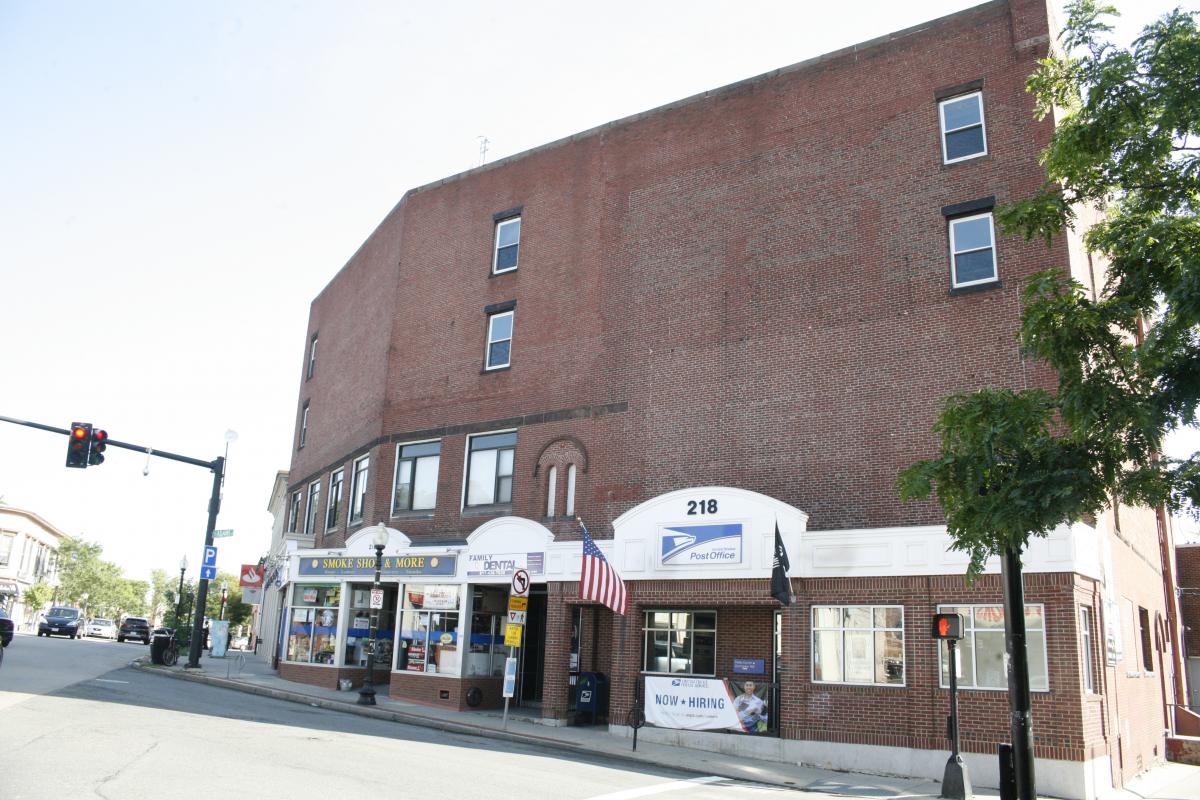
Above: Blue Hill Avenue looking south. Reporter file photo by Seth Daniel
Editor’s note: This article was updated on July 6, 2026 to include new comments from Rep. Brandy Fluker-Reid.
City Councillors Brian Worrell and Miniard Culpepper’s call last week for a new subway line stretching from Ruggles Station to Mattapan Square has sparked debate over transit in Boston’s Black community, where many residents rely heavily on buses bogged in traffic for trips to work, school and shopping.
Reaction ranged from support from some within the communities around Blue Hill Avenue, to skepticism from Mayor Michelle Wu and other elected officials, to outright opposition from transit advocates who have long supported the city’s plan for a center-running bus lane on Blue Hill Avenue.
While the advocates estimate that the proposed subway line would cost billions of dollars to build and could take decades for planning and the securing of federal funding, the idea itself has sparked a larger discussion about transit investment and needs in Mattapan, Dorchester, and Roxbury.
“It’s opened the door for a conversation that needs to be had about a replacement for the elevated Orange Line,” said transit activist Mela Miles.
Miles hasn’t taken a position on the city’s plan for bus lanes — a plan for which city and state officials are confident they will receive federal funding to build out. That proposal, which has gone through a years-long community planning process has faced pushback from business owners and some residents who fear the lane closures will cause congestion and hurt businesses on Blue Hill Avenue that rely on auto traffic.
Culpepper, who has consistently opposed the plan for center-running bus lanes, said his opposition was part of the impetus for the Orange Line extension plan.
“When you say no to something, you have to have an alternative,” he said.

A rendering shows what a proposed center-running bus lane might look like. City of Boston image
Rep. Brandy Fluker-Reid, another elected leader who represents parts of the Blue Hill Avenue corridor, highlighted the center-running bus lane in a social media post last month.
Noting her participation in a ride-along with MBTA officials, Fluker-Rid said, “We simulated the 28 bus route up Blue Hill Ave, then experienced the center running bus lane on Columbus Ave firsthand. Over 40,000 people ride through this corridor every weekday, most of them from Mattapan, Dorchester, and Roxbury.
“Decades of disinvestment have made that ride slower and harder than it should be. This redesign is about finally fixing that.”
She added: “This project is moving and our communities deserve to see it through.”
In a July 6 statement submitted to The Reporter, Rep. Fluker-Reid clarified her position:
“Whether on the bus, driving, or walking down Blue Hill Ave, I am the Blue Hill Ave transit community. Blue Hill Ave cannot remain the same: it must create safer conditions as well as a real plan to protect Black-owned businesses. My support has always been conditional on protecting our community’s wealth and legacy businesses like Lawson’s Barber Shop as well as newer community favorites like Café Juice.”
“Research is clear that train infrastructure drives gentrification and displacement far more than bus service,” she added. “Our community deserves a real plan that makes Blue Hill Ave safe and protects what makes this corridor ours.”
State Sen. Liz Miranda (below), while not opposed to a new subway line, said that discussion about the Blue Hill Avenue redesign should be separate from any subway conversation.
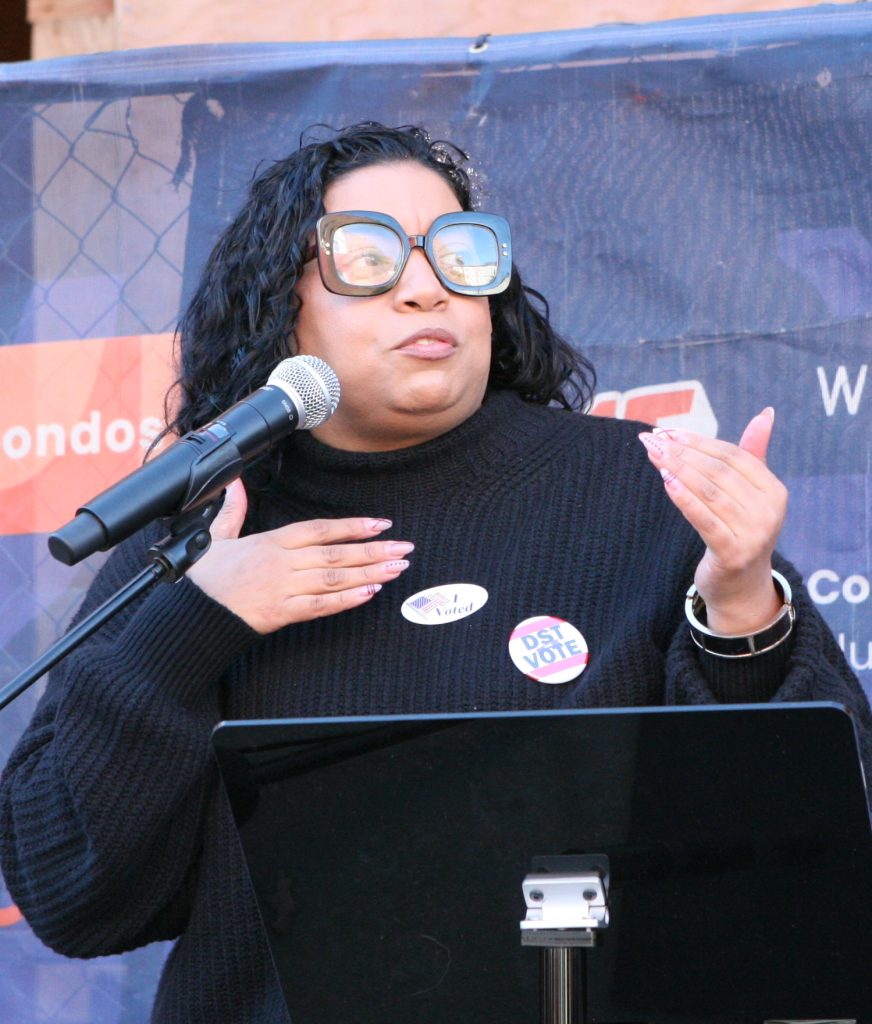
“The proposed Orange Line extension should not be presented as an alternative to that work,” she said in a statement sent to The Reporter.
“While it’s an exciting long-term vision,” she added, “it has never gone through a community planning process, has no identified funding source, and has not earned broad community buy-in.
“Even under the most optimistic timeline, this project could take 25 years to deliver, cost nearly $10 billion, and likely require the use of eminent domain to acquire private property along the corridor.”
As to the current center-lane bus plan for Blue Hill Avenue, Miranda said it does not have broad community support, so the city and MBTA need to go back to the community for a new look at the situation.
“Without a new redesign process that earns broad community buy-in, I don’t believe we should move forward with any proposal,” she said. “I believe that approach gives us the best chance to deliver meaningful transportation improvements that the community can support and be proud of.”
When the state moved the Orange Line from Washington Street to the Southwest Corridor in 1987, the project widened the gap between the subway line and the Red Line, lengthening commutes for people in what was then, and is now, the heart of the city’s Black community.
Some 15 years before that project moved forward, then-Gov. Francis Sargent gave Black community residents a verbal promise that the MBTA would provide a replacement service that was equal to or better than the elevated line.
It wasn’t until 2002 that the MBTA launched the Silver Line, an articulated bus that travels on Washington Street in restricted, side-running lanes that are shared with cyclists and often with double-parked cars. Critics panned the replacement service, referring to it as the 49 bus painted gray.
“When they promised us comparable rail service, we really believed they would do it,” Culpepper said. “We got the Silver Line, which is a joke.”
In the intervening years, the MBTA invested heavily in rail outside of Boston, extending the Red Line from Harvard Square to Alewife Station in 1985 and completing the extension of the Green Line from Lechmere Station to Somerville and Medford in 2022.
While Wu did not voice opposition to Culpepper and Worrell’s plan, she told reporters their plan could cost billions of dollars and take decades to complete. Extending the Orange Line from Forest Hills to Roslindale, the neighborhood where Wu lives, “actually would be pretty, relatively speaking, cost-effective,” Wu told the report Jon Keller, noting that such an extension could follow an existing commuter rail and Amtrak right of way.
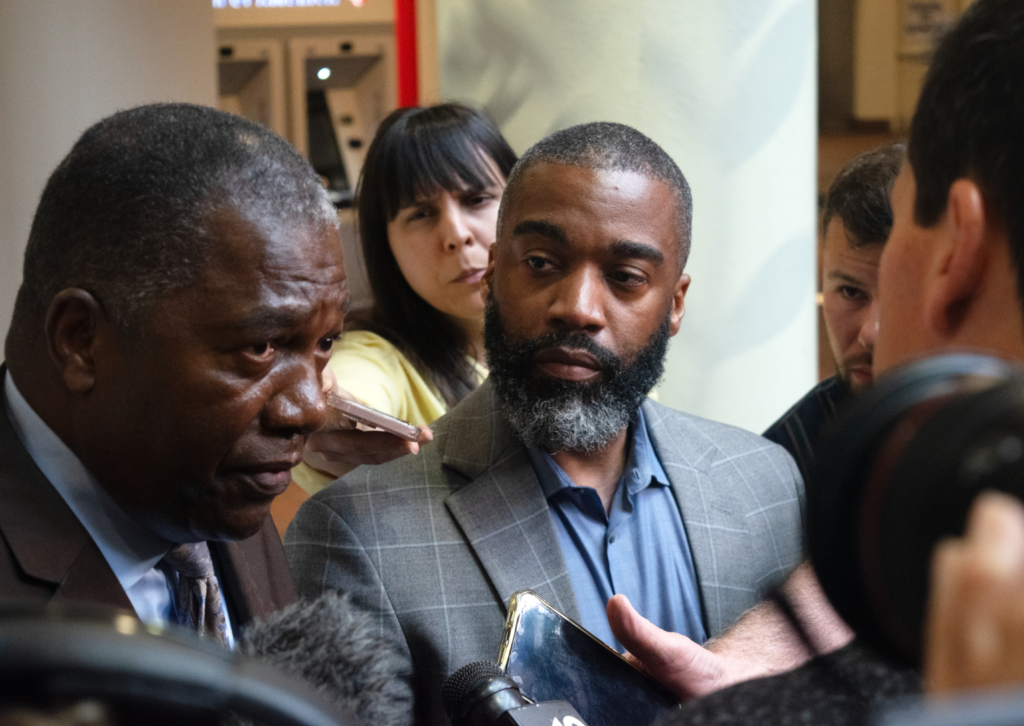
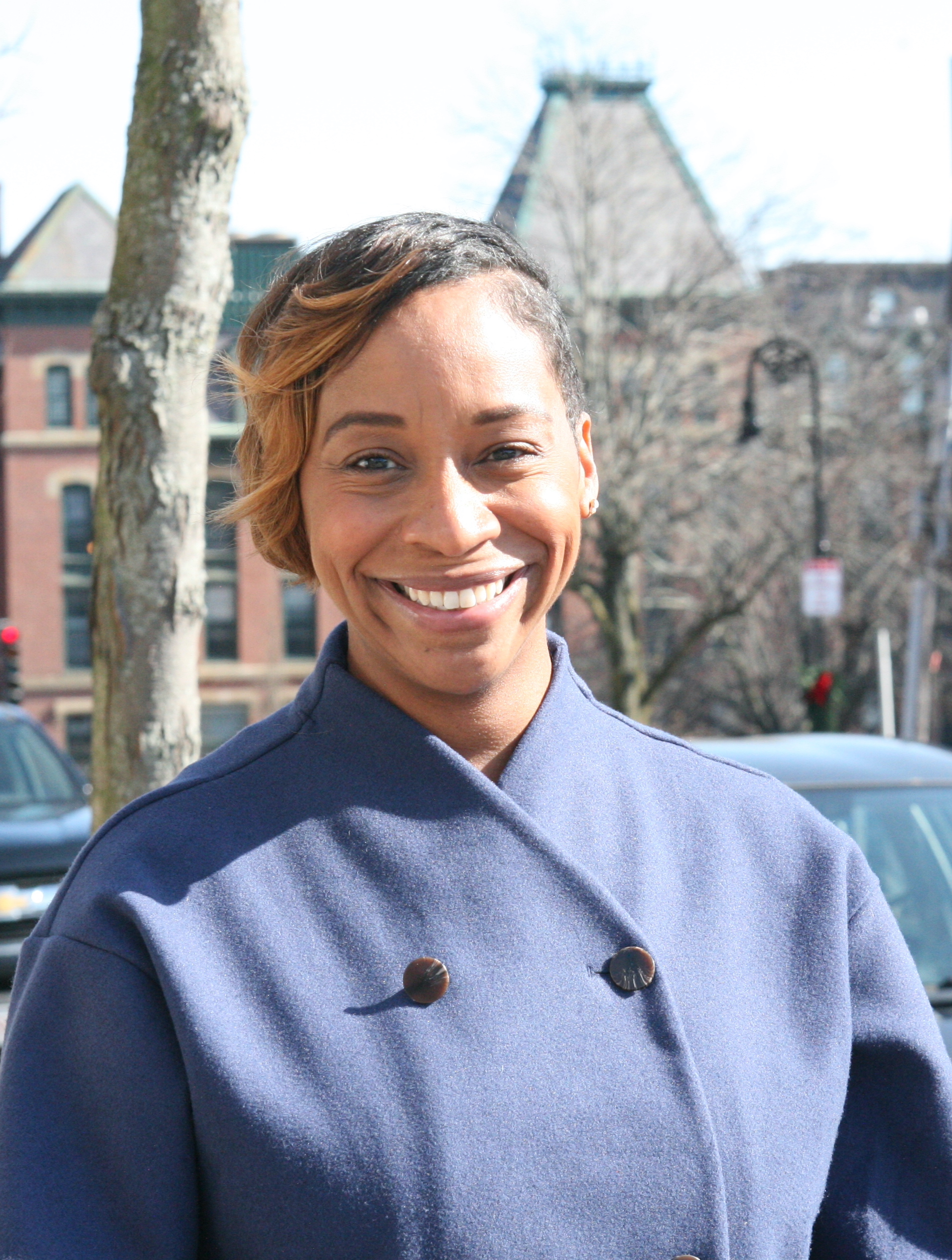
Above, Councillors Culpepper and Worrell meet the press to discuss their Orange Line idea. Gage Vieno photo for The Reporter.
Worrell said officials’ apparent resistance to the plan underscores a double standard.
“It just speaks to how government has disinvested from our neighborhood for so long,” he said. “We feel like subway infrastructure that’s been around since the 1800s is too much for us.”
Jeffrey Rosenblum, co-founder and board chair of the group Livable Streets, has long advocated for bus rapid transit that incorporates center-running bus lanes. He, too, cautioned that a new subway line could take years to implement, but said Culpepper and Worrell are right to raise the idea.
“Long-term visioning is critical,” he said. “We’ve been trained as a society to never think big and never think ahead.”
While Rosenblum says rail projects should be a critical component of the state’s planning to meet transit and climate goals, he acknowledges that the funding isn’t there to embark on such projects at the current moment.
“There is no reason we can’t do bus rapid transit now and think about the future,” he said.
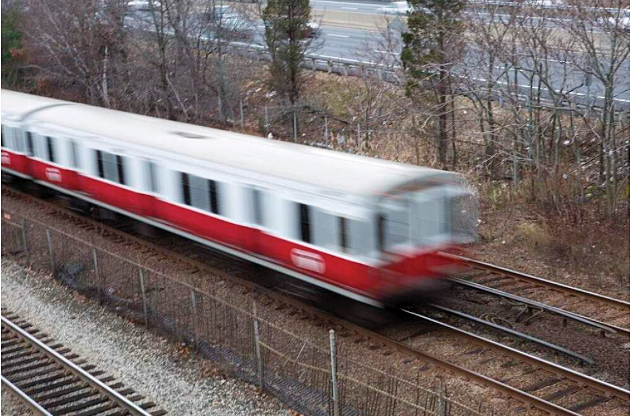
For Mattapan and Dorchester residents looking for a faster ride downtown, the Fairmount Line electrification project has been a ray of hope. Local transit activists have for years advocated for local service on the commuter rail line that until recently ran from Hyde Park to South Station with no stops in between.
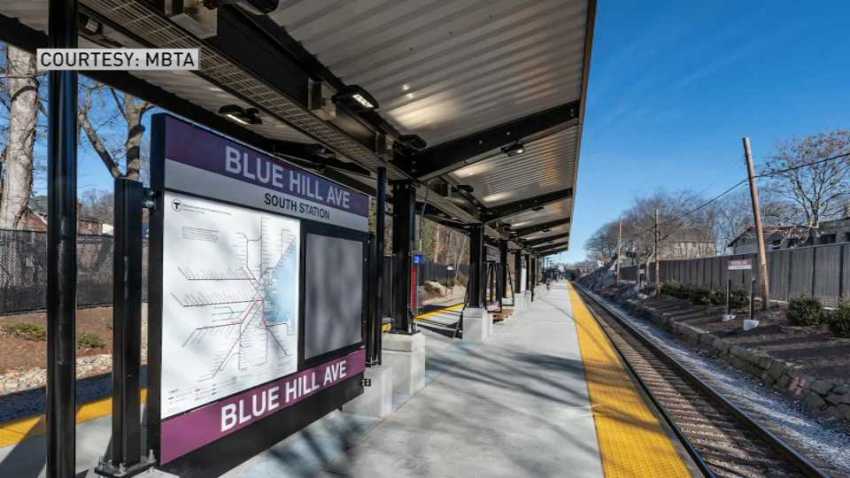
A new Mattapan station at Blue Hill Ave (above) opened in 2019. Along with stops at Talbot Avenue, Geneva Avenue, Dudley Street and South Bay, the line has all the fixings of a rapid transit line, minus the rapidity. MBTA officials’ promises to electrify the route, bringing frequency up from a train every half hour to one every 20 minutes have not yet materialized.
In 2024, T officials announced electric cars would be in service in 2028. Last week, they pushed the date back to 2030.
