

To the Editor:
The noted landscape architect Frederick Law Olmsted designed Dorchester Park on land that included the woodlot of Dorchester’s Revolutionary War heroes Ezra and Stephen Badlam. He wanted people to walk through the wooded landscape and escape busy city life.
Dorchester Park is part of a system of city parks developed by Olmsted’s firm from 1878 to 1896 that also includes Boston Common, the Public Garden, Commonwealth Avenue, Back Bay Fens, Jamaica Pond, Arnold Arboretum, and Franklin Park.
This ring of dedicated green space around Boston is often referred to as “The Emerald Necklace.”
Dorchester Park, a gem in the necklace that is listed on the National Register of Historic Places, should not be marred by the construction of eight-story buildings within it. Boston needs to retain its green space.
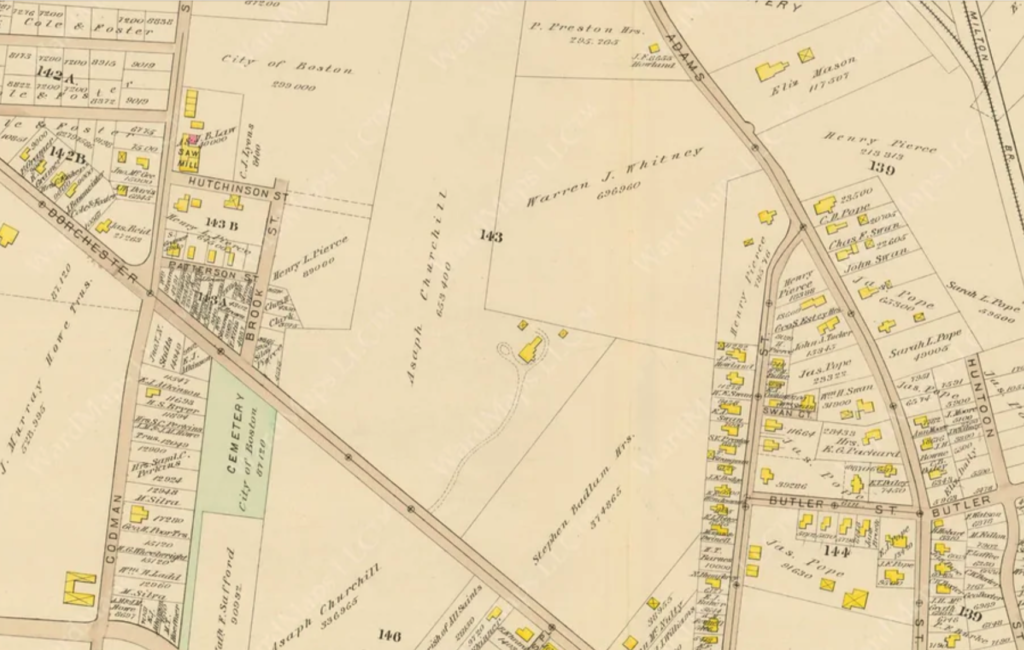
A section of an 1884 atlas shows privately-held land before Dorchester Park.
If the land cannot be returned to the park, a medical facility should be the only building to occupy the property as directed by Mayor Michelle Wu. No other park in the city has a housing development in the center of it.
With its tall trees, outcroppings of puddingstone, and curving pathways, Dorchester Park provides a view of the neighborhood before its buildings and roads were built. Ideally, the former Carney Hospital land would be returned to restore the original design of the park.
If used for an orchard of fruit and nut trees, city children would be able to see food grow on trees and enjoy free, healthy, and delicious treats in the fall.
The proposed 500 housing units would likely bring 1,000 or more residents to the site, many of whom would use the nearby Ashmont train station to get to work but who otherwise would need a vehicle to visit elderly parents in the suburbs, to pick up children on an icy day, or to enjoy a day on the Cape or in the Berkshires.
They may also have guests with vehicles who would visit for a few hours or weeks. Parking would also be needed for the medical facility, the educational building, and the commercial space.
The proposed 517 parking spaces would have to at least triple to accommodate all of the proposed uses.
Residents may also be reluctant to trust an investment group to develop the land after experiencing the demise of Carney Hospital by a for- profit group.
The city must clear the property of vacant buildings, charge the owners, and use the land to benefit the residents of Dorchester.
Carole Mooney, Dorchester
