

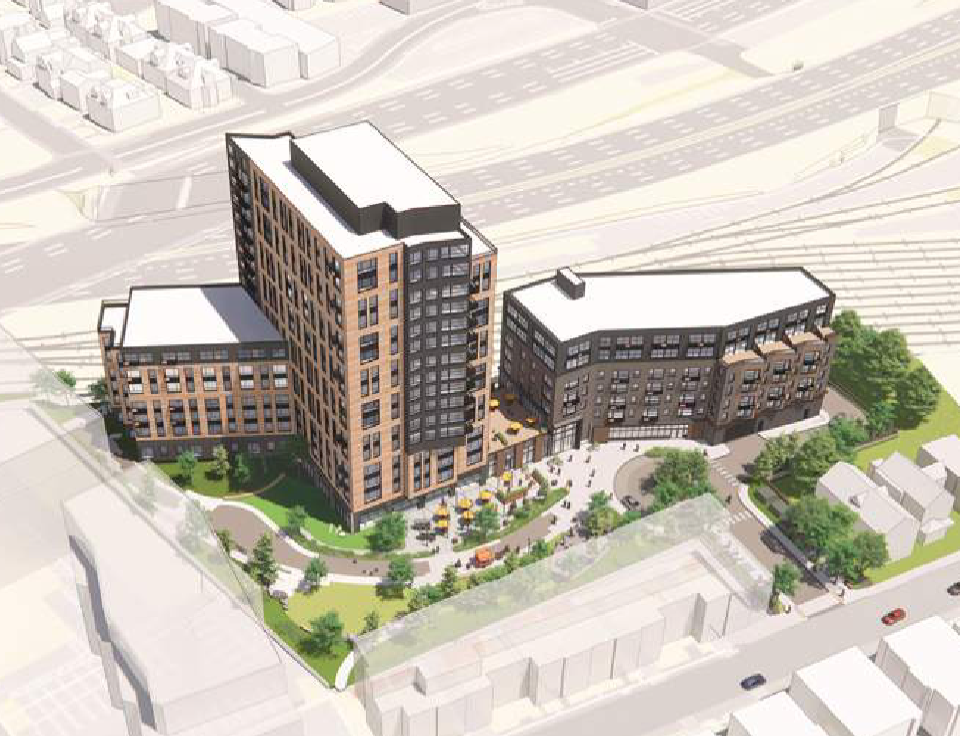
Image above, the One Mystic Avenue project was approved back in 2023 but has been stalled, holding up 423 residential units, including 221 condominiums and 202 rental units. Boston Planning image
Abatements totaling $31.5m to fuel work on 1,400 new units
The Wu administration is dangling roughly $31.5 million in property tax abatements to four already-approved housing developments in three Boston neighborhoods in an effort to jump-start the production of new units next year. City officials say it’s the latest tool in Mayor Michelle Wu’s wider strategy to get more cranes swinging in a slumping national economy that has left Boston particularly hard-hit.
“The mayor has asked us to work hard to get more construction going,” explained Kairos Shen, the city’s chief of planning in a briefing with reporters on Monday.
Only three market-rate housing projects with more than 100 units were built in 2025 —and just of that size have moved forward so far in 2026.
“The mission is to get more housing under construction in 2027,” Shen said. “Boston is interested in investment and we’re open for business. But we’re going to be prudent in making sure that this is something that actually leads to action.”
The targeted abatements would apply to projects in Charlestown, Allston, and Brighton that city officials say are close to being financially feasible, but remain stalled amid high interest rates, construction costs, and other market pressures.
Together, the four developments will deliver 1,400 new units, including 185 income-restricted units, along with 1,582 construction jobs.
The effort is aimed at projects that are “right on the goal line,” Shen said. They include One Mystic Avenue in Charlestown, with 408 units; 22-24 Pratt Street in Allston, with 318 units; 83 Birmingham Parkway in Brighton, with 333 units; and a 341-unit Building D at Allston Yards.
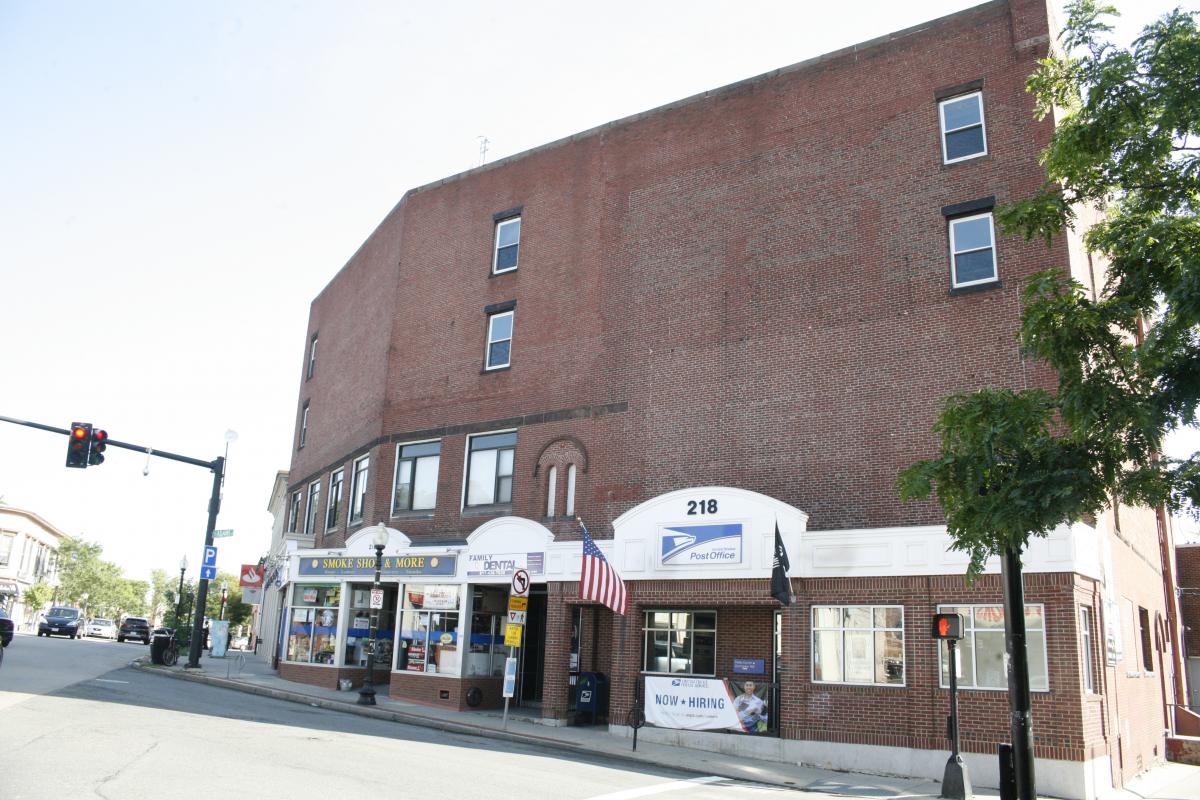
22-24 Pratt St. in Allston, one of the four stalled projects eyed by city officials for possible tax relief to jump-start construction in 2027.
The BPDA board will be asked to vote in October— following a 30-day public comment period that starts today (Mon., Sept. 14) – on designating the four developments as so-called “demonstration projects.” That would allow the city’s assessing department to then negotiate individual tax agreements.
The project do not need to go back for approvals, but the public does get a chance to weigh-in over the next month on whether or not this bespoke tax abatement policy is a good idea, or not.
While nothing has been finalized, Shen and Boston’s Housing chief Sheila Dillon said the four targeted projects meet the criteria for what Wu administration officials have set up and comes after consultation with more than a dozen eligible projects that have been languishing in the pipeline, in some cases, for several years.
Under the plan, developers would continue to pay current property tax while construction proceeds. Once the buildings are completed and reassessed at their higher value, developers could receive one of two forms of temporary relief. One would provide a relatively steep discount for five years after construction. A second would phase taxes upward over 10 years, beginning at roughly 20 percent of the building’s eventual tax obligation and rising to about 80 percent in the tenth year.
The estimated $31.5 million package works out to about $22,500 in relief per apartment unit.
Shen stressed that the city would not be cutting into Boston’s existing property-tax haul.
“We are not reducing the tax rolls at any point,” he said. “It’s about building the future tax base while deferring some of the intermediate incremental taxes.”
Dillon said that a staff team has reviewed each project carefully before choosing them for tax breaks, which still must be negotiated.
“We’re only giving projects the relief they need—whether that is inclusionary relief, tax relief, or access to Accelerator Fund money,” she added. “There has been very strict and very serious underwriting.”
The city began with a much larger universe of potential targets for this specific tax incentive. Chen said 47 projects, totaling roughly 10,000 units, were considered eligible initially. That was winnowed down to about 12 select developers. Several of those remain in active conversations with the city beyond the initial four. Others have told city officials that the proposed tax relief would still not be enough to advance into construction phase.
The slowdown that this project seeks to interrupt, Dillon said, is most acute among Boston’s larger residential developments.
“Our smaller projects in the outer neighborhoods are continuing to be developed at a fairly healthy pace,” she said. “So this was a targeted look at larger projects that have stalled for years.”
Two of the four projects—One Mystic and Pratt Street—are also discussing changes to their affordable-housing obligations. Dillon said the developers are seeking to buy out 50 percent of those requirements, which would generate more than $20 million for other affordable housing projects.
The city argues that allowing those payments could both improve the feasibility of the market-rate projects and supply money for housing with deeper levels of affordability.
“We also have a very healthy pipeline of affordable housing developments, both at [Boston Housing Authority] and [Mayor’s Office of Housing],” Dillon said. “We’re very interested in getting resources to advance those projects now.”
City officials said on Monday that they are not willing to ease Boston’s broader energy or affordability standards as a substitute for the financial incentives.
“These projects will deliver both affordability and high energy performance,” Shen said. “We do not think compromising inclusionary development, energy performance, or climate resiliency is smart. It’s not just housing. It’s quality housing.”
Dillon sees the approach as a calculated and careful move that also sends a message that Boston is willing to make deals to kick-start the sluggish market.
“We’re creating new housing that is desperately needed,” she said. “We’re putting a lot of people back to work who right now are not working. And we’re increasing the tax base for the future. To me, it is a modest investment to get all of those benefits.”
Steve Poftak, CEO of the Boston Municipal Research Bureau — an independent watchdog that monitors City Hall policies— said on Tuesday that the tax incentive is needed and “appropriate.”
“This is a time and place where we need to stimulate the production of housing,” said Poftak. “It’s not a blank check and if economic conditions were different, our viewpoint may be different. But it appears the plan is to ramp this up to a certain level and we think that level is prudent.”
Editor’s note: This article originally stated, based on statement from city officials, that there were two 100-plus unit housing starts in 2025 in the city. In fact, city officials later clarified, there were three such projects. In 2026, there are four 100-plus unit projects that have “gone forward,” as opposed to none as originally stated in the article.
Copyright © 2026 Boston Neighborhood News, Inc. This content may not be re-published or re-used without written permission.
