

Marcus McNeill is about a month into his new job as Mayor Michelle Wu’s liaison for “Mid-Dorchester,” a role that makes the 22-year-old Fields Corner native a key go-between for residents and City Hall services. He joined the Mayor’s Office of Neighborhood Services (ONS) this summer after a stint working for at-large Councillor Ruthzee Louijeune.
“Honestly, it has flown by,” McNeill told The Reporter on Monday. “It’s really been exciting, getting to know a lot of folks here in ONS, which is a very collaborative team, but also people across different departments.”
McNeill’s ties to Dorchester are deep. Much of his family grew up in the neighborhood, including in Codman Square and around Stanton Street, while he spent much of his own childhood on Geneva Avenue across from the shopping center and MBTA station. He now lives off Dorchester Avenue.
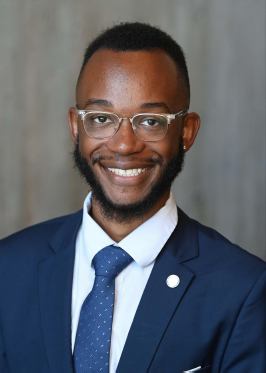
“I’m so happy to be able to contribute back to the community that raised me,” he said. “I think it’s a special tribute to be able to work in the community, and when constituent concerns do come up, I can see those for myself as well and elevate some of that to the departments. For me, it’s really about giving back.”
McNeill is one of three new hires announced by the Mayor’s Office this week. Isabella Carr has been named as the new neighborhood liaison for Charlestown and Abdullah Beckett is now on duty in Roxbury.
The ONS liaison job is demanding. They are expected to know all about their assigned neighborhoods, attend civic meetings, alert abutters to proposed projects and run those meetings, respond to constituent problems, and connect residents with the right city agencies.
Mohammed Missouri, McNeill’s boss, runs the Office of Neighborhood Services. He says empathy is one of the main qualities he and the mayor look for in a liaison.
“It helps you really understand the issues you’re getting from residents, any community concerns that come up, but it also helps you navigate City Hall and all the different agencies,” Missouri said. “Ultimately, a liaison’s role is to be able to deliver for residents when they have concerns.”
Missouri says McNeill has already shown a willingness to visit locations himself when 311 requests or other concerns come in.
“That’s really what we’re looking for: Someone who is driven to do the small stuff constantly, but at the same time has the bandwidth and curiosity to think about bigger-picture solutions,” Missouri said. “Marcus has both of those ingredients and skills.”
After attending Fenway High School, McNeill graduated from American University in Washington, D.C., with a political science degree and a minor in education studies. While there, he worked at the US Department of Education’s Office of Postsecondary Education under the Biden administration. After returning home, he joined Louijeune’s City Council office.
McNeill said no two days are quite alike. Some are spent at City Hall, while others involve visits in his assigned part of the city, which includes Fields Corner, Four Corners, Meeting House Hill, and Savin Hill.
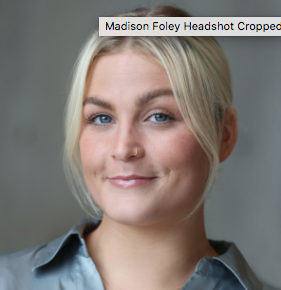
Madison Foley, who has been serving as a coordinator for many other sections of Dorchester, continues to serve in that role.
ONS coordinators also serve as translators of sorts for a large municipal bureaucracy, helping residents understand which department handles a particular issue and how to get a response.
“If a resident reaches out and says, ‘Can you just give me the best contact you might have for this situation?’ that’s one win for me,” McNeill said. “If I can connect people to different services, that’s a win.”
Missouri said Wu’s approach to ONS also includes a role in shaping city policy. “She reminds us every day, frankly, that it’s about getting the small things right,” he said, citing matters such as potholes. But, the job also involves “figuring out how to proactively bring residents into our decision-making and involve them in our decision-making as a city and in our big policies.”
That means ONS staff are expected to look for patterns in the complaints they receive and consider whether an individual problem points to something larger.
“Someone brings us a pothole, but then we notice, ‘You know what? We’re seeing it here, here, and here.’ Is there a new program we can build around this?” Missouri said. “As you said, the liaisons are the ears and eyes of the mayor. It’s both bringing in the reactive things — the 311s and all of that — but it’s also identifying what residents are saying and how that can lead to solutions to bigger potential problems.”
The office has also gone through a period of turnover and rebuilding. Missouri said ONS has added roughly six of seven new staffers this year as former liaisons moved on to other positions. He described the current group as a talented team focused on day-to-day constituent work.
“We’re having fun every single day while also helping people,” he said.
For McNeill, those small interactions with residents are already reinforcing why he wanted the job. He recalled recently being recognized by a resident at a grocery store after the two had exchanged emails about a city issue.
“She said I was helpful in my email, concise and brief, and told her everything she needed to know about how to navigate that particular scenario,” McNeill said. “Something like that goes right back to the work we do here in ONS.”
