


Above, Fields Corner native Julio Salado carried a care package during one of his recent humanitarian visits to Kyiv, the capitol of Ukraine. Courtesy Julio Salado
By Julio Salado, Special to the Reporter
“Is it really that bad in Ukraine?” That is a question I am asked often. Having completed seven humanitarian trips to Ukraine since 2022—most recently in 2026—the short answer is yes: the situation is systematic, deadly, and intentional.
I welcome this question because it is an opening—an opportunity to look past social media or news sources, push aside the coordinated propaganda and hybrid warfare tactics used by elected officials, media influencers, and business leaders to spread falsehoods, and share the objective facts from the ground.
To help them, and you the reader, understand what is happening, I use this simple analogy:
Imagine visiting your local grocery store here in Dorchester. Now imagine it being targeted and shelled. You are left with two options: Move, but with what funds? Or stay, continue to support that same grocery store now operating with boarded-up windows, and try to live a normal life under the constant threat of the next strike.
During my trips to Ukraine, I have seen firsthand how the scale of Russian aggression has only increased in frequency, and it is entirely indiscriminate.
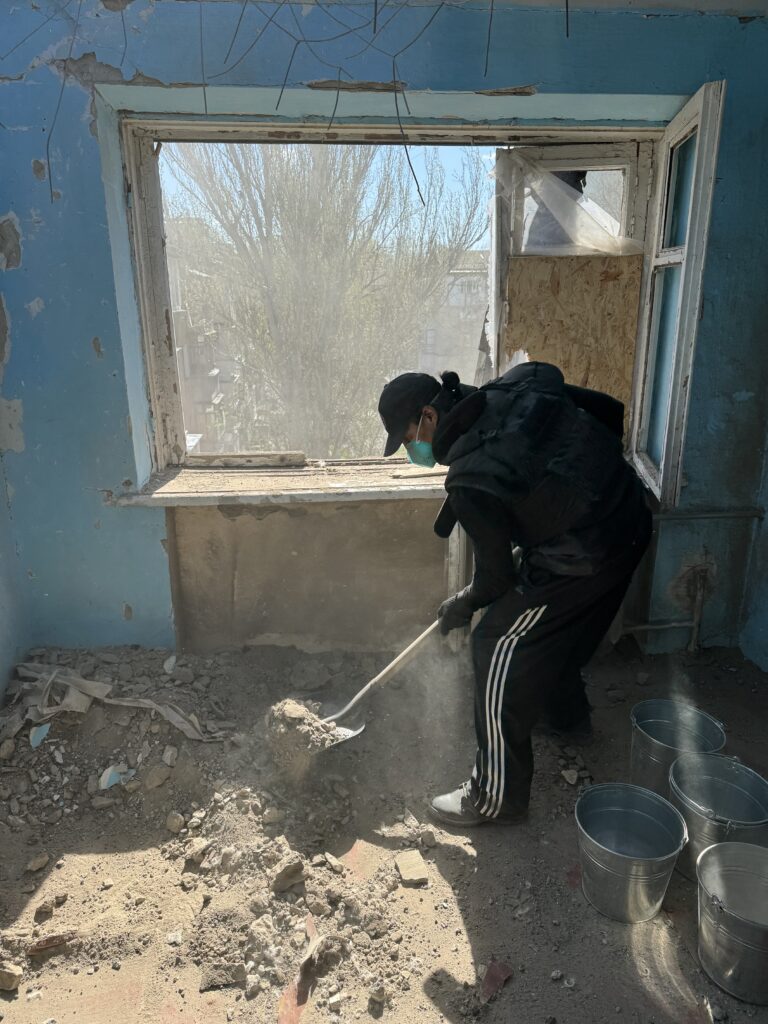
Julio Salado is shown clearing the floor of a residential building after it was struck by an artillery shell in the frontline city of Kherson in 2024. Photo courtesy Julio Salada
The following are a few examples of the daily threats that Ukrainians endure:
In frontline cities and villages, drones actively hunt civilians known as “human safaris,” stalking and striking residents, including first responders. You may have seen news reports of attacks on civilian trains traveling from Kyiv to Warsaw.
I’ve traveled those routes many times, and I can unequivocally say that these are not military targets. They are civilians—women, children, older adults, and people with mobility issues.
There is also the systemic weaponization of winter. Attacks on critical infrastructure—the deliberate targeting of power grids, heat sources, and electricity—are designed to force millions, including the most vulnerable older adults, people with pre-existing conditions, pregnant women, and young children, to survive in freezing homes.
Winter in Ukraine mirrors the harshness and sub-zero temperatures of a New England winter. So imagine enduring this for months with intermittent or no heat or power. Let’s not forget hospitals are affected, struggling to maintain generator power to provide life-saving services.
These are but a few examples that confirm it is deliberate, calculated terror against civilians, and it’s continuing as I write these words. A direct violation of international law and a war crime. Full stop.
Yet, even amidst this daily terror and adversity, I have witnessed the daily strength of the population from Lviv, to the port city of Odesa, Kyiv, the nation’s capital, and frontline cities like Kherson and Kharkiv. I am sharing my experiences directly from the ground and my time volunteering side-by-side with Ukrainians.
Communities keep at clearing debris, restoring essential services where possible, and reopening storefronts, refusing to let terrorism dictate their future. Life continues as normally as possible.
The Ukrainian people are resilient, we know that. But don’t confuse resilience with not needing help. They are resilient because they have no option. Ukraine needs more than prayers and statements of condemnation. As another winter approaches, the urgency cannot be overstated. They still need sustained support—to survive and to prevail.
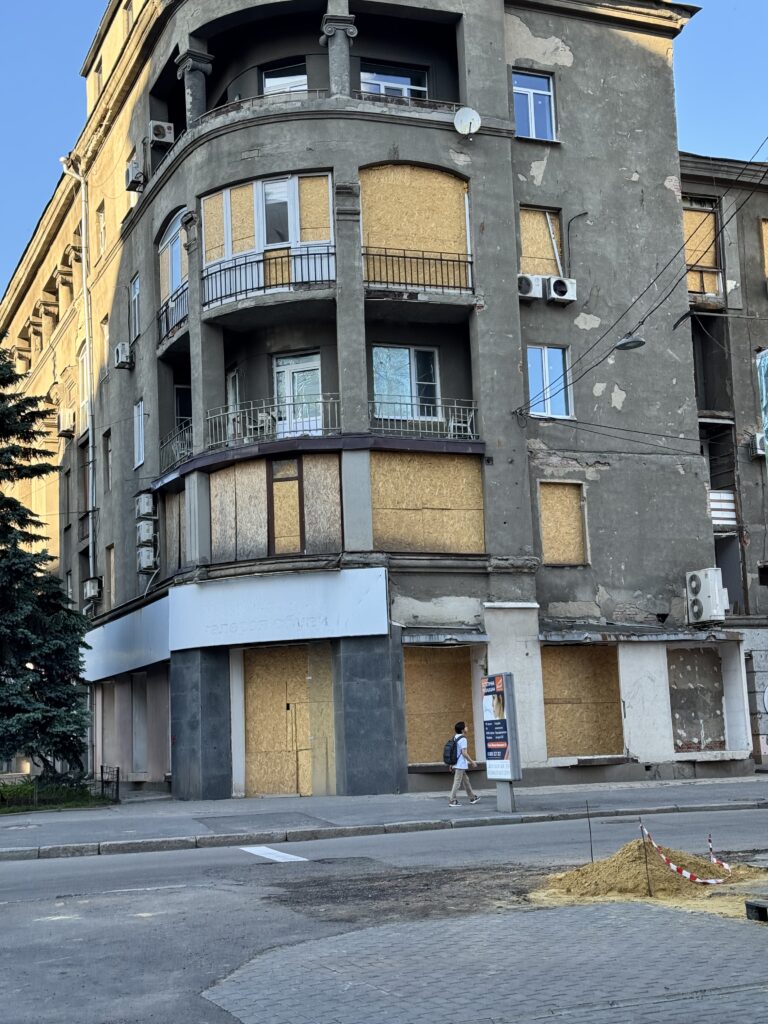
A battle-damaged building in the frontline city of Kharkiv as seen by Julio Salado earlier this year.
You do not need to travel overseas to make a difference. You can combat misinformation by sharing verified facts and keeping this war of aggression visible.
Most urgently, call your federal representatives. Demand they urge the president to sign the Lindsey O. Graham Sanctioning Russia and Iran Act, now passed by both chambers of Congress, and insist on air defense and sustained military, economic, and humanitarian aid reaching Ukraine.
The reality comes down to a simple truth: If Russia stops fighting, the war ends. If Ukraine stops fighting, Ukraine ends.
Is it bad in Ukraine? Yes. But apathy is worse. One phone call carries more weight than you think. A flood of them changes policy. Every act of solidarity matters. Our collective efforts will make a positive difference for Ukraine.
Julio Salado, a Dorchester native, is an award-winning fitness coach, author, licensed EMT, and owner of Fitness Foundry. A first-generation Dominican, he volunteers with local organizations, including the New England Center and Home for Veterans in Boston, and has completed seven humanitarian missions to Ukraine.
Copyright © 2026 Boston Neighborhood News, Inc. This content may not be re-published or re-used without written permission.
