
By Jack Schwed
Special to the Reporter
A Native-owned company, in collaboration with Wampanoag tribes, has completed the design of what could be the first permanent Indigenous-created monument in Boston.
The White Pine Gathering Circle, designed by media and museum exhibit production company SmokeSygnals, is one of many artifacts in the Mayor’s Office of Arts and Culture’s “Un-monument” initiative. Funded by a $3 million grant from the Mellon Foundation, the program aims to “create new public art projects that expand the inclusive histories represented in public spaces across the City.”
Steven Peters, citizen of the Mashpee Wampanoag Tribe and creative director for SmokeSygnals, said the arts and culture office reached out to him over a year ago in search of Native American artists to participate in the initiative. After applying for the grant, he was awarded $50,000 for the design phase, as well as related community meetings and events, he said.
The final design will be publicly unveiled on Oct. 18 from 2 to 4 p.m. at the monument’s proposed location — Scarboro Hill in Franklin Park.
To construct and maintain the monument would cost an estimated $2 million, he said. “If there’s somebody in the community that wants to step up and … fund this,” Peters said, “we’d gladly accept it, but I think we have the support within the city to make this happen.”
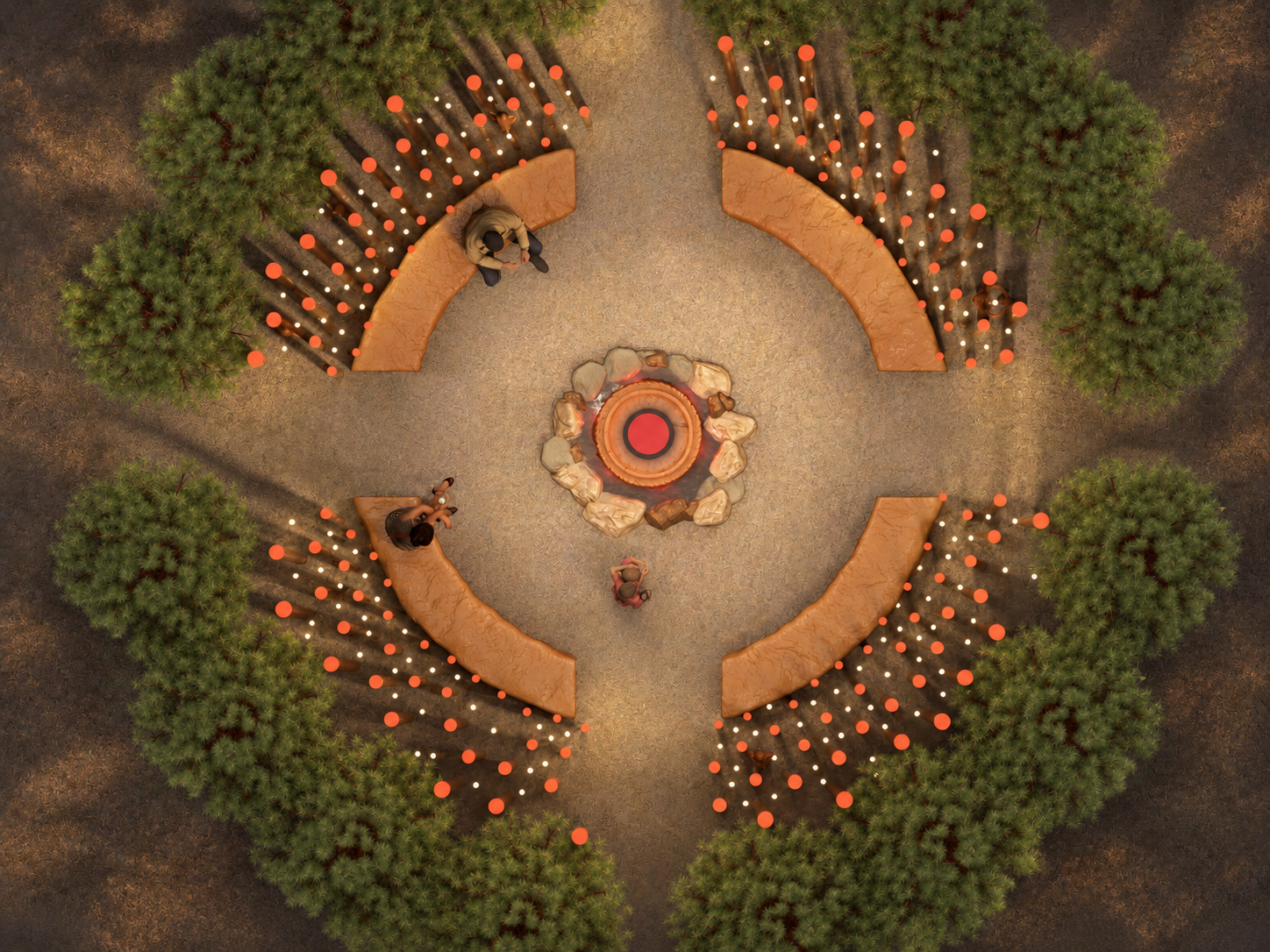
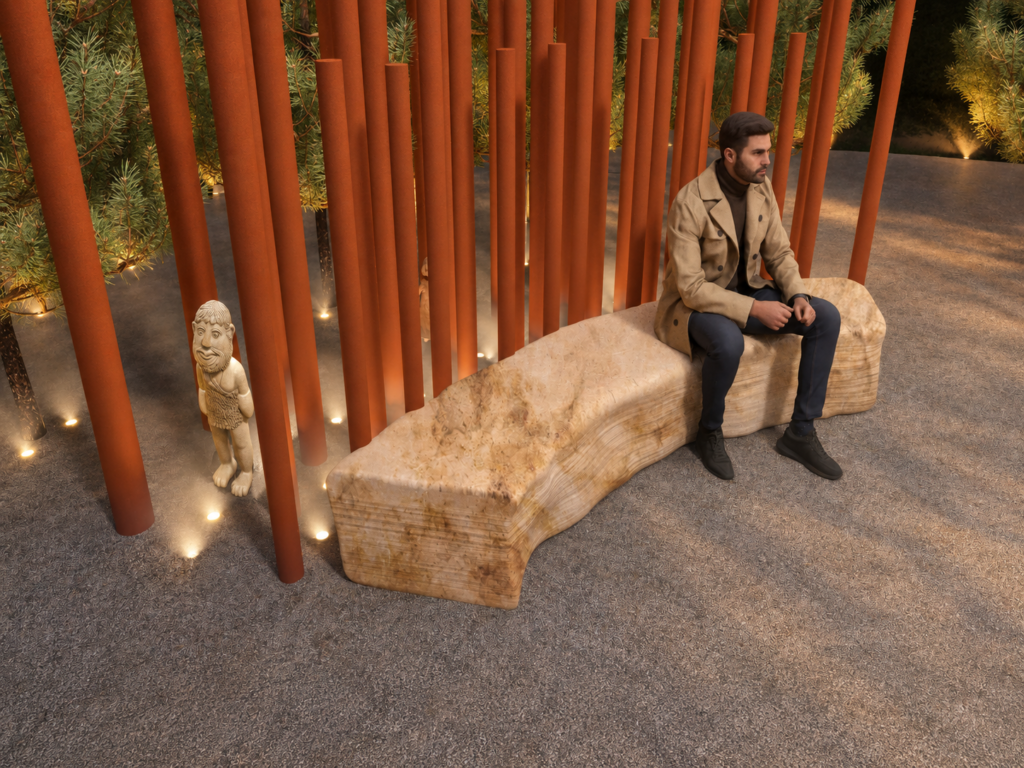
The monument design consists of an outer ring of white pine trees and an inner ring of steel poles, among which are statues of pukwudgies — small human-like creatures prominent in Wampanoag folklore. In the center, four benches wrap around a large clay cooking pot with the Wampanoag creation story etched upon its surface.
Boston is unique in that many Indigenous tribes, such as the Nipmuc people and Stockbridge-Munsee Community, are connected to it, Peters said. The goal of the monument is to provide a space for these groups to come together, he said.
“This is a place … for ceremonial healing for these intertribal relationships,” Peters said. “It’s a place where the community can interact with our culture but also just come there and functionally use it for a place to sit and have lunch or [for] kids to go searching for the pukwudgies.”
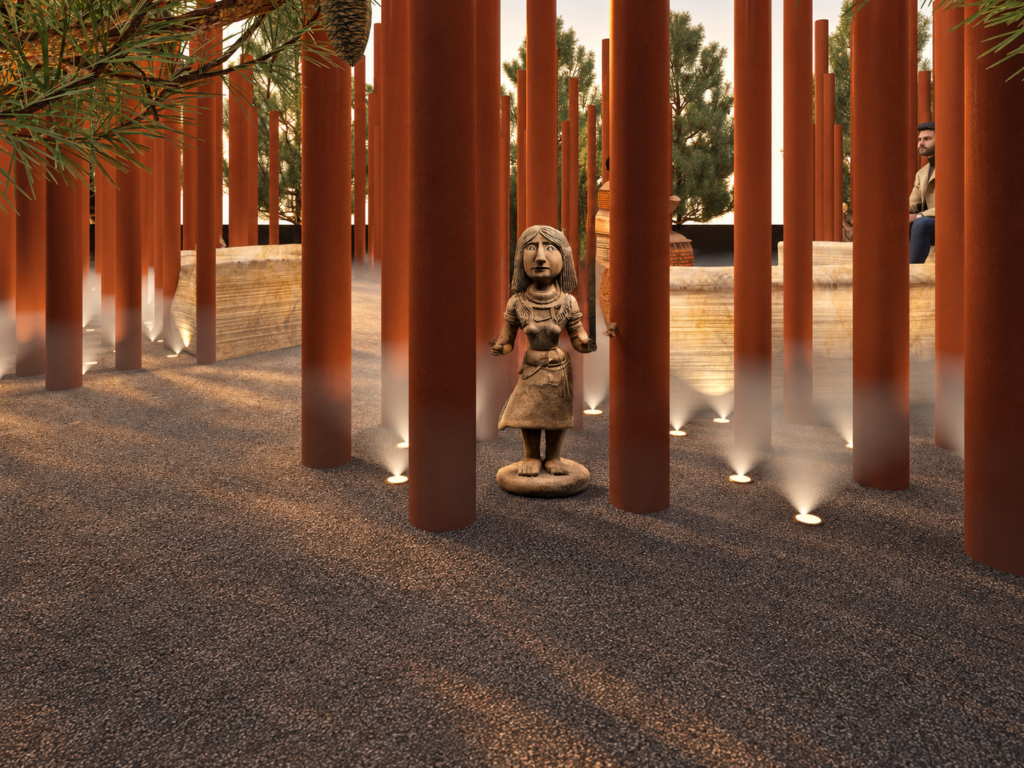
To design the monument, Peters worked alongside the Wampanoag Consulting Alliance, an advisory group composed of members from the Mashpee, Aquinnah, and Herring Pond Wampanoag tribes whom the communities “respect and honor.”
“We don’t believe that anybody, any single artist, any single person should carry that burden of getting something of this magnitude correct,” Peters said. “It needs to be spread out and democratized through the community.”
Linda Coombs, a member of the advisory group, said that each member was asked to jot down words that evoke a Wampanoag monument. Throughout several sessions, the group organized those words into themes, which they used to guide the monument’s design, she said.
Coombs, an author, historian, and citizen of the Wampanoag Tribe of Aquinnah, said the Wampanoag tribes have a story that their creator made them from white pine trees. The clay pot, she said, is meant to represent that of Moshup, a giant who shaped the local landscape, led the Aquinnah people to their land, and showed them how to properly care for it.
Peters said the use of Corten steel, a construction material used starting in the mid-20th century, touches on another theme: Wampanoag culture and art does not solely exist in the past.
“It doesn’t have to sit in this cage of ‘Native art only can be representative up to 1620,’” he said. “Our art continues to evolve and change.”
Amira Madison, an advisory group member who is a citizen and councilwoman of the Wampanoag Tribe of Aquinnah, said the Mashpee and Aquinnah tribes are a “nation within a nation,” as they are the only federally recognized Indigenous tribes in Massachusetts.
The monument is an opportunity to push back on the idea that Indigenous peoples are “no longer here,” said Madison, who serves as manager for tribal nation strategic initiatives at Harvard University’s Native American Program.
“Historically, Native people have been erased from the city of Boston and New England in general,” Madison said. “There are remnants of us. However, you don’t see very many pieces around New England that are actually talking about us in a way that is for us and by us.”
Peters said he hopes the community-driven framework of the monument’s design process will be replicated across Indigenous cultures in and around Boston.
“We don’t want this to be the last Indigenous monument that the City of Boston undertakes,” Peters said. “We just want it to be the first of many.”
This story is the product of a partnership between the Dorchester Reporter and the Boston University Department of Journalism’s Newsroom program.
Copyright © 2026 Boston Neighborhood News, Inc. This content may not be re-published or re-used without written permission.
