

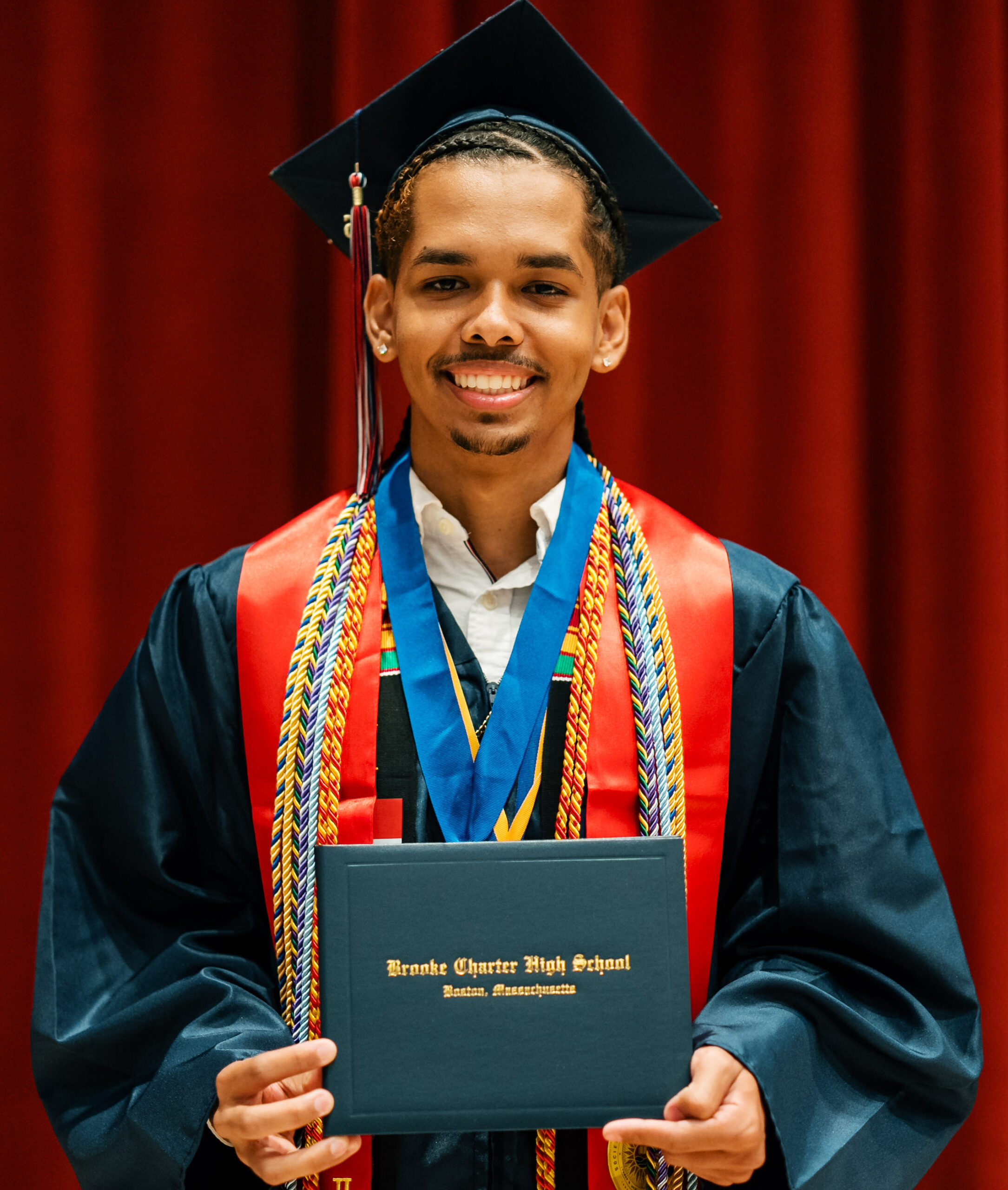
Two long-time staff members at the Louis D. Brown Peace Institute — Alexandra Chéry Dorrelus and Rachel Rodrigues— have taken charge as co-directors of the Fields Corner-based organization that works to change society’s response to homicide and promote healing for homicide survivors and perpetrators and their families.
The institute was founded by Joseph and Clementina ‘Tina’ Chéry in 1994 to memorialize their late son, Louis D. Brown, who was killed in a shooting on Geneva Avenue in December 1993. Chéry Dorrelus, Louis’s younger sister, and Rodrigues have both been with the organization for more than fifteen years. They join Clementina ‘Tina’ Chéry, the group’s president and CEO, in the leadership roles.
“My parents always said that I could have been a kindergarten dropout, because at the time there was no real response to anyone, but especially children, dealing with the homicide of a loved one,” said Chéry Dorrelus. “It was through my experiences in kindergarten, elementary school, and middle school that I started to get connected to the idea that there are two different types of pain. There’s physical pain, and then there’s that pain that you can’t access when somebody hurts or takes away somebody that you love.”
She adds: “Everything that we do here has been grounded in our personal experiences. The growth of the organization and what we’re offering today has been grounded in all of the staff’s experiences, because a good number of us are survivors ourselves. In listening to the survivor community and in listening to each other, [we’ve] built a foundation on serving others.”
Rodrigues first came to the Peace Institute as a college intern. She found that the organization’s mission resonated with her, so she stayed.
“Whenever we learned about [human rights] in college, it was always something happening in another country,” said Rodrigues. “For me, it was really important to be grounded in whatever the biggest human rights issues were in my own country, and that had a lot to do with racism and oppression and how it impacted some communities differently when it came to issues like homicide and incarceration.”
Rodrigues has experienced her own loss. Her cousin was killed in a drunk-driving crash that was caused by a law enforcement officer.
“Over the course of the last fifteen years, I have been able to grow, listen to survivors, listen to Tina and Alexandra’s vision, and do whatever was in my power to make that happen, whether that was applying for grants or assisting the team with creating workshops or curriculum,” she said.
Rodrigues added: “One thing Tina’s always said is that it was Louis’s vision for his generation to be in a leadership position. Me and Alexandra are Louis’s generation, had he lived. I think it’s important that we’re starting this shared leadership structure, so that our staff can see that it’s not always up to one person to do things.
“It really is a shared effort, not just with us, but across the whole organization. We want to change the way that typical non-profits are run. It’s always dependent on the founder to do everything. Tina has worked so hard, put so much in all these years. She deserves the time and space to do whatever else she wants to do.”
When asked about their goals for the institute, Chéry Dorrelus and Rodrigues stressed that they hope to continue offering the same level of support to families impacted by homicide while expanding their operations and best practices.
Chéry Dorrelus noted the Peace Institute’s many achievements, including the development of neighborhood trauma teams in collaboration with the city of Boston and a statewide survivor network. She also pointed to its work in engaging people from other parts of Boston in issues related to survivorship and incarceration through the Mother’s Day Walk for Peace and workshops related to allyship, root causes of violence, and racism.
Ultimately, she said, the institute hopes to construct a Center of Healing and Teaching and Learning to permanently house its programming, staff, and providers.
“If you respond to people in their hardest moments and make them feel valuable, that’s going to prevent further traumatization and break cycles of violence,” said Chéry Dorrelus.
Rodrigues sees their role as needing to “continue to break down the stigmatization, especially if the homicide happens in Dorchester or Roxbury as opposed to Newtown, Connecticut. We have the tools in place so that we don’t have to treat people differently. We’re willing to facilitate that and have that conversation.
“Once it came out that Louis was a straight-A student, loved by his teachers and his peers, honor roll, the response shifted. Tina’s question always was, ‘What if that wasn’t who he was? What if he was somehow involved in what happened? Would my family have been treated differently?’ It’s still our mission to push back on that and make sure that everyone gets effective and equitable treatment.”

