

“Live Long and Well,” a city-led campaign to confront long-standing disparities in health outcomes and lifespans in Boston neighborhoods, will spend $5 million in the coming months to fund outreach to targeted populations, with a heavy focus on Dorchester, Mattapan, and Roxbury.
That was the message Mayor Wu delivered on Monday morning in Codman Square’s Great Hall as she and health leaders discussed the latest phase of the intiative.
The funding for this effort comes from the Atrius Health Equity Foundation, which last year pledged a total of $10 million to finance work directed by the Boston Public Health Commission. Monday’s announcement focused on how four community-led coalitions, each comprising three organziations, will make use of the funding.
Dr. Bisola Ojikutu, the executive director of the Boston Public Health Commission (BPHC), discussed what she called the city’s “health equity agenda, [which is] focused on closing the life expectancy gap that has been persistent and pervasive for many decades in the city.
“If you zoom out and look at our city as a whole, we have concerning disparities by race and ethnicity,” she said. “Life expectancy amongst Black people as a whole is 7 years lower than that of other Bostonians, and life expectancy amongst Black men is the lowest in our city, 10 years lower than any other in Boston.
“How long you live,” she said, “should not depend on your race, ethnicity, or zip code. All Bostonians should live long and healthy lives.”
In Dorchester, Mattapan, and Roxbury, four coalitions of three groups each will target their outreach to specific sections or ethnic groups in the city with a focus on building their wealth and economic security and closing the life expectancy gap by 2035.
The groups include: Boys & Girls Clubs of Boston, Link Health, and Harvard Street Neighborhood Health Center; Mattapan Square-based Immigrant Family Services Institute, True Care Alliance Center, and the Massachusetts Association of Haitian Parents; The Community Builders, Codman Square Neighborhood Development Corporation, and Talbot-Norfolk Triangle Neighbors United; and Upham’s Community Care, Dorchester Food Co-op, and the Jamaica Plain Neighborhood Development Corporation.
“These four partnerships have the power to really model what is possible,” said Wu. “These coalitions bring together the organizations that are already deeply involved in our neighborhoods, and they will help us train patient navigators, connect residents to financial coaching, job training, and child care, provide English language instruction, and expand access to primary care and economic mobility.”
She added: “All of us here today understand that proper health care starts well before something is wrong; it starts with the circumstances that we’re born into, that we’re raised in, that we grow old in; it starts with access to resources and support and opportunity to live healthy, joyous, long lives.”
Representatives from the four groups were invited to speak to a crowd of some 75 people who were gathered in the Great Hall at the Codman Square Health Center.
For his part, Dr. Alister Martin, Founder of Link Health, said: “What I see is the biggest driver of sickness is poverty.”
Working with the Harvard Street Neighborhood Health Center, Martin will train Boys & Girls Club alumni as Link Health-certified patient navigators who will screen up to 50,000 Dorchester residents for financial assistance benefits worth an estimated $11 million.
Dr. Geralde V. Gabeau, executive director of the Immigrant Family Services Institute, will collaborate with True Care Alliance Center and the Massachusetts Association of Haitian Parents to provide English-language instruction and career training for 50 community health workers and 500 people in healthcare, biotechnology, early childhood education, and hospitality.
Said Gabeau: “To see changes in the community, people who live in and know the community need to be involved.” Training will include language skills, job coaching, financial literacy, advocacy and health education, and wraparound support.
Stephanie Garret-Stearns spoke on behalf of the group comprising The Community Builders, Codman Square Neighborhood Development Corporation, and Talbot-Norfolk Triangle Neighbors United in noting that these organizations will help eligible Dorchester residents with economic mobility, expanded community services, advocacy for housing policy, improvements in funding, and strengthened cross-sector partnerships.
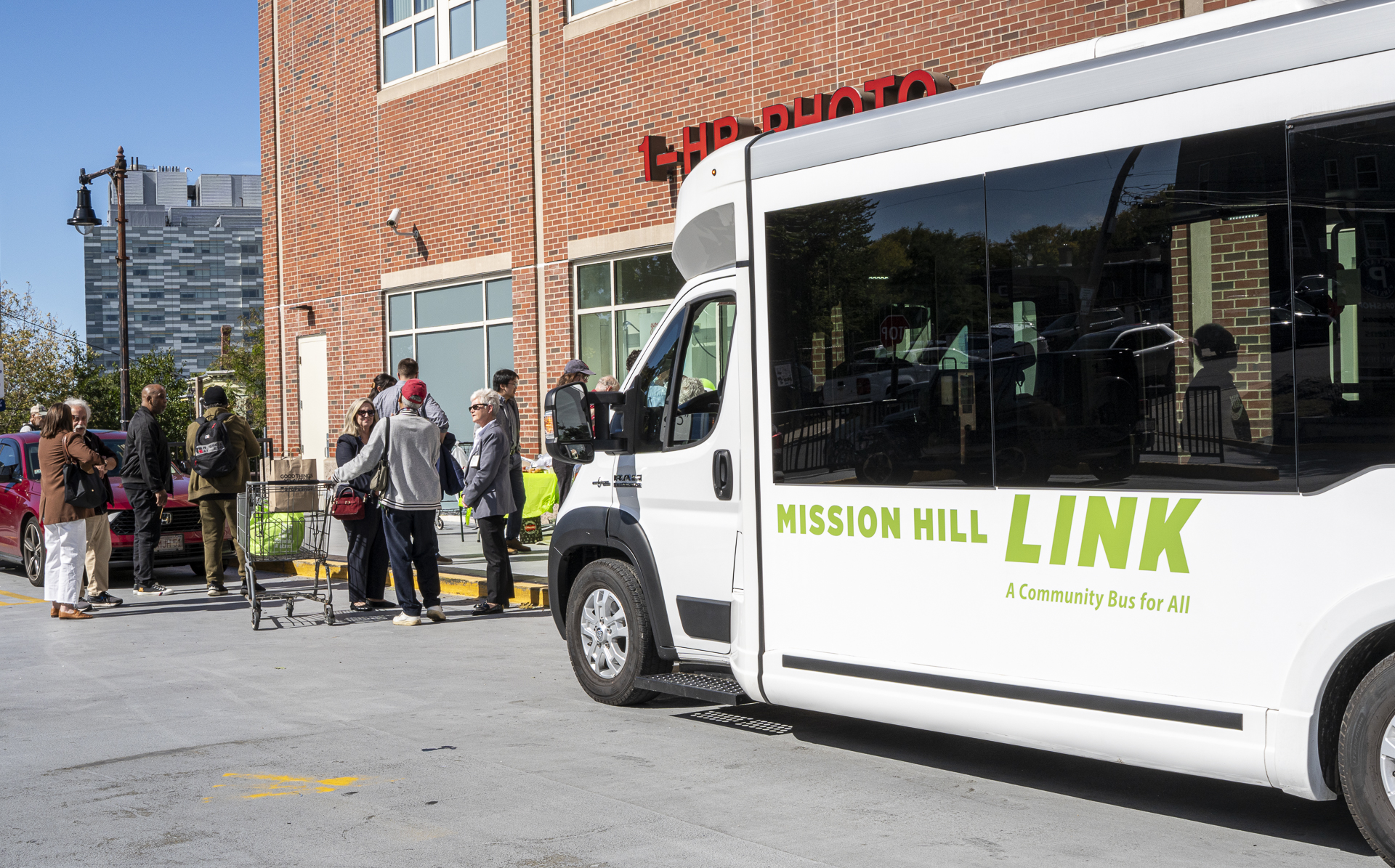
Jay Trivedi, CEO of Upham’s Corner Health Center, said that his organization, along with the Food Co-Op, and the Jamaica Plain Corporation will bring vans from Upham’s Community Care’s outreach to Dorchester and Roxbury.
“We are excited,” he said, “to design a mobile program that will bring health care access, food security, and economic mobility directly to our neighborhoods, meeting our community members where they are at, especially for those facing systemic barriers.”
Ojikutu said that the coalitions will be awarded $200,000 each.
“That is actually a planning year,” she said. “So during this year, we’re going to work with each coalition to develop what it is they’re actually going to do and what their deliverables will be. By the end of that year, they’re going to be asked to resubmit another budget proposal. We will likely be giving out different amounts per grantee, but hopefully enough that they can meet their goals and we can eventually really see a change in resource distribution.”
