
By Kevin Deabler, Special to The Reporter
Dorchester could be defined by many terms and adjectives, but its identity as a coastal community may be lost on many in the Commonwealth. We’ve come to understand “resilient” as the best way to describe our diverse population. This understanding comes to us over time, by living here and designing transformative projects alongside city and state agencies who are tasked with protecting citizens from the threats of sea-level rise. To us at RODE, neighborhood resilience is measured by our response to external pressures, whether from environmental, political, or economic circumstances.
The plan to fix Morrissey Boulevard seems to represent what many see as a solution to climate change; it’s important, however, to know what it really takes to create a more resilient and equitable future. It would be a shame to focus solely on the elevation of a single commuter artery without considering the daily lives of residents living, learning, and working in and around the coastal edges of Dorchester.
Let’s take a step back for a minute to ask ourselves why coastal resilience is such an important issue for Dorchester.
As architects, we view coastal resiliency as an essential factor in every project because we know the built environment is increasingly vulnerable. We are aware of the horrendous damage wrought by storms and wildfires on cities all over the world. Coastal communities are often the densest concentrations of people and their history, which are both connected to the underlying ecology. While threats become public priorities, architects know that the complexity extends far beyond measures of protection and includes social equity, human safety, regional stability, and environmental health.
It’s also important to stop and look at what we have here in Dorchester. Our neighborhood includes beautiful inland river frontage along the Neponset, an extensive network of marshlands, and several miles abutting the Bay. Our kids play their sports on the fields and enjoy playgrounds around these edges. And many miles of pathways are walked, run, or biked on by residents of several surrounding neighborhoods.
That’s just the land itself. Our residents have seen waves of migration, influx and outflux, upswings and downswings. And that’s just in the last 50 years. Everyone reading this would likely agree it’s a special place worthy of our best efforts to make what we do going forward conscious of both the land and its people.
We’re passionate about this topic because, after nearly 20 years of being resident designers, we know that Dorchester’s resilient identity is important to preserve. Our focus has never shifted from the opportunities available to improve the quality of life through private developments like Dot Block and “Savin Village” or a non-profit endeavor like Fieldhouse Plus. We employ a design process that listens to community input, so their perspectives become ours.
Our neighborhood needs better access to the waterfront, more safety if we are to continue to host high volumes of commuters, and spaces that enhance the lives of everyone living and working here. We believe that design and sound planning should play an essential role in the future of Morrissey Boulevard. A good outcome should be weighed on its ability to open up the waterfront to more people than it currently does.
It’s encouraging to see the completion of one extension of this network between Tenean Beach and the Beades Bridge. Resiliency should be about restoring nature as well. So it may look different, and that’s okay.
Design is about engineering experience, not simply adopting rigid solutions to fix traffic problems. We can afford to let our imaginations do some work here.
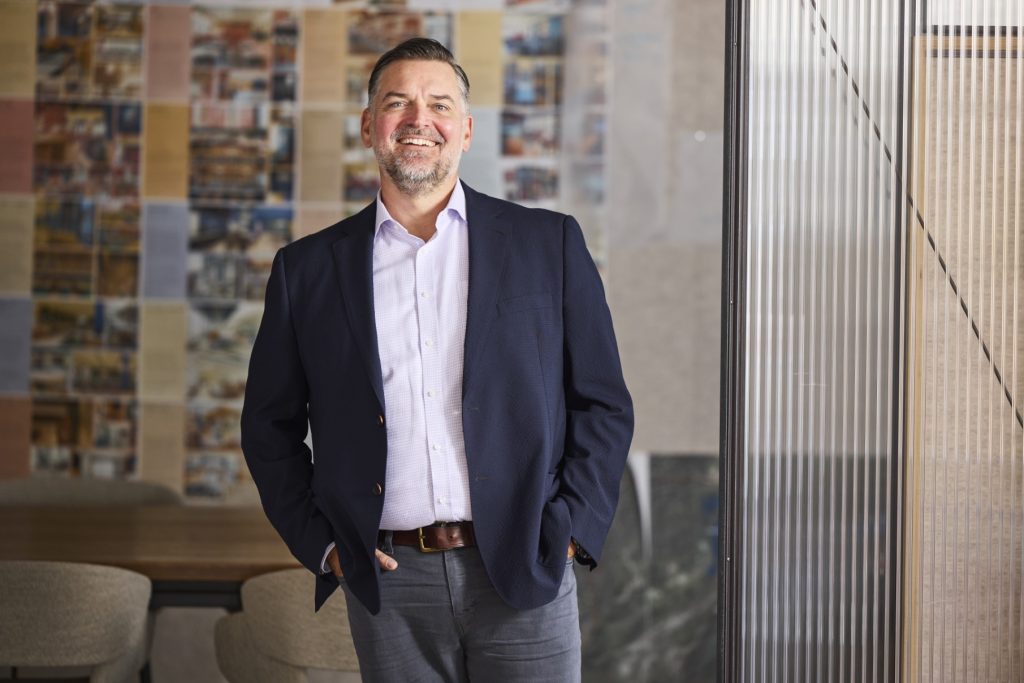
Kevin Deabler is the co-founder and principal of RODE Architects and a resident of Dorchester.
