
Milton lawmaker slams MBTA’s slow roll approach
Seven years after MBTA officials announced a ten-year plan to “transform” the Mattapan-Ashmont trolley line, representatives for the agency told attendees of a public meeting on Wednesday evening that they are only 15 percent of the way toward meeting their goals with a massive funding shortfall standing in the way going forward.
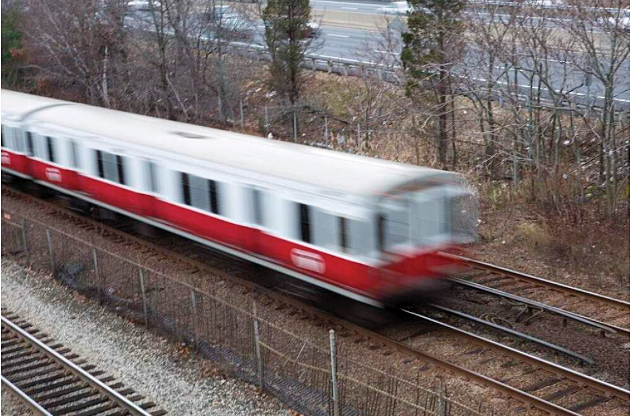
In 2018, officials said they would renovate stations, rehabilitate eight existing Presidents’ Conference Committee (PCC) street cars, and modify bridges, track, and retaining walls to make them sturdy enough to accommodate a replacement fleet of the newer Type 9 street cars currently in use on the Green Line.
But only five PCC cars have been rehabbed, with a sixth soon to be completed.
Tempers flared at times during the Zoom meeting with Dorchester, Mattapan, and Milton residents and elected officials on the call to discuss the status of the project.

State Sen. William Driscoll of Milton was particularly vocal, arguing that despite assurances that there would be regular meetings, the agency hasn’t given the community regular updates since 2022.
“It’s been three years,” he said. “And we’re at 15 percent still. The T has built a Green Line extension. The T has built South Coast Rail. The Mattapan line has five refurbished trolleys in that same time frame.”
Adding to the delays, the MBTA has received just $114.5 million of the $500 million it needs to complete the project.
“We’re hard at work in figuring out a funding strategy in order to be able to meet that gap,” said MBTA Assistant General Manager Angel Donahue Rodriguez.
Still on the list of needed repairs are a new maintenance building and power station for the Type 9 cars, new catenary overhead wires, Americans with Disabilities Act-accessible ramps for the current trolleys on the line, and a reconstruction of the Mattapan and Ashmont terminals for the trolleys.
While the 88-year-old PCC street cars turn in a tight loop at Ashmont, depositing passengers at street level, the loop is too tight a turn for the Type 9 trolleys. They are equipped with cabs for conductors at either end of the car and can, therefore, back in and out of a terminal. But reconstructing Mattapan and Ashmont stations will require significant funding — funding that has not yet been allocated to the MBTA.
“The bookends of this line will need to be dramatically altered to receive a Type 9,” said Sam Zhou, chief engineer and assistant general manager at the T. “We’re not near a major rehab of either station.”
Rider Roxanne Musto questioned whether it would make sense to rehab all eight stations on the route. Average weekday boardings at Valley Road and Capen Street, for example, are less than 10 percent of the number of boardings at the Central Avenue station.

“When we look at the line holistically ,we always look at potential cost savings and what ridership is there,” Donahue-Rodriguez said. “We are in the middle of doing that.”
On the positive side of the ledger, the bridges on the 2.6-mile line have been assessed and none will need to be totally replaced to handle the Type 9 streetcars, which are “heavier than the PCC,” Zhou said. “The bridges can be rehabbed and can handle the increased load.”
He also noted that all the track along the route has been replaced, making for a smoother ride for the current orange-colored cars.
Work on a new stairway and accessibility ramp at Milton Station is expected to be completed next year. And the retaining wall between Milton and Central Stations has been evaluated and is said to be structurally sound.
The Type 9 cars that are expected to come to the Mattapan line will be made available when the Green Line upgrades to Type 10 cars. But, as Driscoll noted, the Type 9 cars have a lifespan of 20 to 30 years. If the Mattapan project takes until 2030 to complete, the Type 9 cars could be nearing obsolescence by the time they’re put in use on the line.
“We could be looking at receiving 15-, 20-year-old cars at some point with only 10 years to go,” he said.
But ordering new cars would be time consuming and potentially expensive, with products from Chinese and European manufacturers subject to tariffs.
“There are no American companies building transit vehicles,” Donahue-Rodriguez noted. “There are some market headwinds.”
Ridership on the line this year — 5,248 average weekday boardings — is at 80 percent of the 6,580 weekday boardings recorded in 2018, up from the 3,823 recorded in 2023.
