


By David Manzo, Special to the Reporter
He refused a bed or a couch at the soup kitchen. The only place Edward would sleep was on the cold tile floor of the kitchen, surrounded by the knives that he insisted on placing around himself. Unsettling as that was, it was actually a step forward for Edward, who insisted on sleeping outside, even in the snow.
Helping the guests of Haley House soup kitchen in Boston navigate homelessness, mental illness, despair and loneliness is always a lesson in humility. In Edward’s case, it began with accepting that his mind was in a place that none of us could imagine.
During my junior and senior years at Boston College, I’d arrive at Haley House by 6 a.m. to begin my shift – first greeting the line of 60 hungry guests, then preparing meals, distributing clothing, maybe comforting a man after his seizure, or cleaning the soup kitchen after the last guest left at noon
Haley House was founded in Boston in 1966 in the tradition of “The Catholic Worker” by newlyweds John and Kathe McKenna. They invited men experiencing homelessness into their small apartment for food, shelter, and community. Simply, they lived the Gospel imperative from Matthew 25: “For I was hungry and you gave me something to eat, I was thirsty and you gave me something to drink, I was a stranger and you invited me in.”
Kathe and John embraced Dorothy Day’s core message that focused on love, justice, hospitality, and nonviolence. In addition to a soup kitchen, today’s Haley House operation, in multiple Boston locations, provides more than one hundred units of permanent affordable housing, operates an urban farm, and supports individuals returning from incarceration with education and work skills, in addition to maintaining a social enterprise.
After graduation I became a full-time volunteer and lived in a community above the soup kitchen for three years. It was during this time that I met Edward. Dealing with him required caution. Entering the kitchen unannounced might cause him to start or get upset. So, whenever I entered the kitchen, whether alone or with a group of housemates after a dinner gathering, I never failed to say, “Edward, it’s me.”
Three words that were part warning, part comforting reassurance, and part plea for a peaceful interaction.
When I first saw Edward, he lived in a cardboard box in the schoolyard next to Haley House with his life’s possessions in a few large plastic trash bags. Polite and timid, he responded to a greeting with a nod, not a word.
For months, two members of our community, Jeanne Fazzino Lain and Annie Porzio Doyle, tried unsuccessfully to coax Edward to seek shelter, especially during Boston’s wintery nights. He refused. They persisted. He refused.
Then on a Monday in early February, snow fell. And fell. Along with Arctic cold and high winds, inches turned into feet. The blizzard killed 99 people in the Northeast, but not the 100th.
For many, the memory of the Blizzard of 78 is that of abandoned cars, closed schools, and businesses making do during a week-long state of emergency. For me, it was witnessing the miracle of Jeanne and Annie’s months of prodding and building a trusting relationship result in saving the life of a man living in a cardboard box in a schoolyard.
That night, Edward abandoned his cardboard home of many years for the warmth and security of Haley House. Offered a bed, he refused. Given his clouded mind and poor judgment, he compromised and slept on the kitchen floor. It was a first-step, a warm step. Later, he placed around him on the floor the knives we used in the soup kitchen to prepare for meals. It was more for comfort than defense in his odd new environment. At least we hoped that was so.
Despite his fears and struggles, a sweetness shined through. Edward’s greatest gift was his kindness toward the young people who lived near Haley House. The mail slot at Kathe McKenna’s home across the street from Haley House often included a note for her four-year-old daughter from Edward.
Yet, the mental illness demons never quit. One Saturday morning, an FBI agent named McCarthy appeared at Haley House answering Edward’s complaint. After a brief conversation with him, the agent left, having assessed that Edward’s description of us as “a bunch of subversives” did not merit the FBI’s attention. We breathed a sigh of relief.
I smiled when I opened Daniel Dain’s recently published book, “A History of Boston.” It not only described the early days of Haley House, but it also included a photo of 12 volunteers in front of the soup kitchen door, one of whom was Edward.
Maybe there are thin places, moments where heaven and earth seem closer, where it is easier to feel God’s presence. I did not expect to find it in a blizzard nearly 50 years ago watching my housemates save Edward’s life.
Jeanne recently reflected on her efforts to coax Edward inside saying, “Annie and I gave each other the courage we did not have separately and that is truly the power of community.”
In Dorothy Day’s 1952 essay, she shares, “We have all known the long loneliness and we have learned that the only solution is love and that love comes with community.” Jeanne and Annie together lived the message of that essay, which was appropriately titled, “The final word is LOVE.”
One day Edward disappeared from our lives. We never knew why. It was just his time to move on.
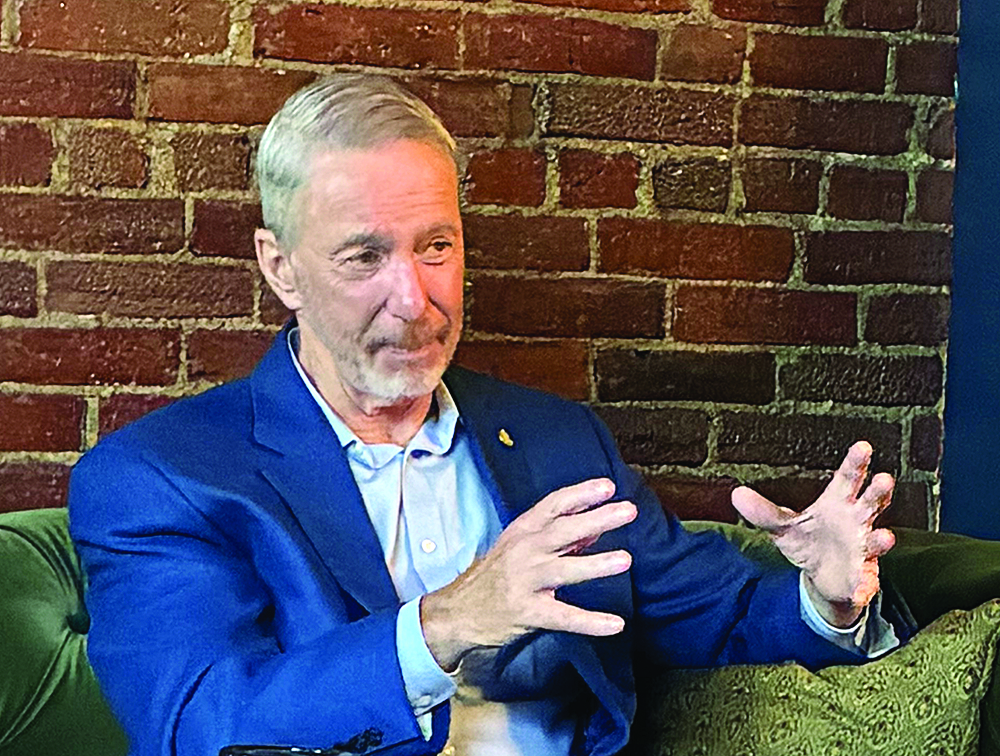
David Manzo was a member of the live-in community from 1977-80, served as its board chair from 1980-91 and is currently a member of Haley House’s board of directors. He is now in his 46th year as an adjunct professor at Boston College.
