
Brookview House started with an ideal in the minds of a group of church friends who were not willing to accept family homelessness in Boston, and now 35 years later, they are celebrating how that ideal has shaped how family homelessness is successfully addressed.
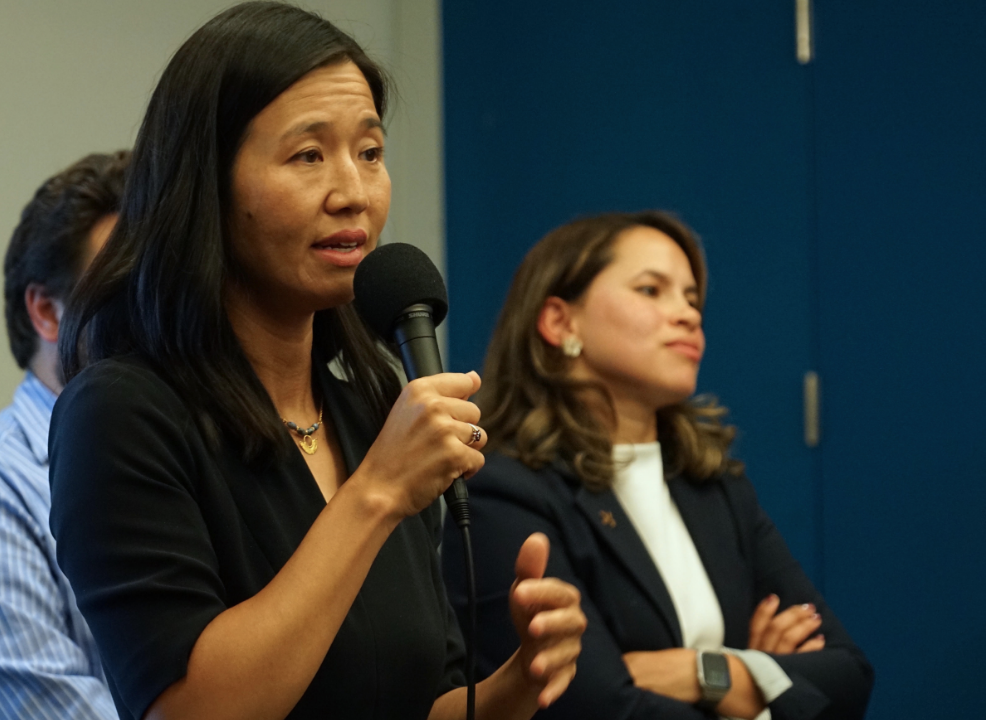
At a gala celebration last month in the Venezia function hall in Neponset, Brookview House CEO Deb Collins noted their groundbreaking work in the field of family homelessness prevention.
“Brookview House has a lot to be proud of,” she told The Reporter. “Over the last 35 years it has been first in a lot of areas. We’re now looking to continue on the foundation built for us. We were the first in the country to have transitional housing and the first homeless shelter to have a licensed after-school program…We are going to continue moving forward in this powerful direction.”
Brookview House is based on Dorchester’s Brookview Street near Blue Hill Avenue, and it also has supportive housing sites on Moreland Street in Roxbury and Hansborough Street in Dorchester.
In total, they have 18 units of emergency shelter housing and 36 units of permanent supportive housing. The program helps women and their children – some of whom are in domestic violence situations – stabilize, train for jobs, and transition into permanent supportive housing. To date, they have placed more than 500 families into permanent housing.
But it all was started with a simple idea shared by three friends who attended the Cambridge Friends Meeting – a Quaker meeting group – and felt that family homelessness needed to be addressed after having observed the state’s solution of putting homeless women and their children up in hotels and motels.
“We thought family homelessness was inexcusable and unacceptable and would be fixed,” recalled Martha “Em” Solish McManamy, who worked with friends Susan Davies and Anne Gelbspan. “Mayor Flynn spoke about eradicating homelessness. People were unaccepting of it…The concept of families being on the street or not having a stable place to live was relatively new.”
Forming the group Homeless Women’s Housing Initiative in 1988, they met with the City of Boston with its massive amounts of vacant land and literally picked their spot on the map. The city sold them the land for $1, and McManamy recalled an easy process in getting the eight-unit project done.
“We went to work, and it was done in record time; it all worked out beautifully,” she said.
“It was an incredible experience for me,” she added. “I believe that sometimes people are put in the right place and time to contribute something.”
Since then, success stories have been abundant, such as Michelle Botus – who went from being a mother facing homelessness in a domestic violence situation and finding Brookview House, to later being the leader of a similar housing program, Project HOPE Boston near Uphams Corner.
“As the ED of Project HOPE,” Botus said, “what I want to do is based on the Brookview model. Because when I was there, for the first time in my adult life, I began to see myself as a leader.”
This month, as it continues to celebrate its 35th anniversary, Brookview House has launched a fundraising appeal.
