

It’s 1975. Boston is in deep trouble. A loss of 250,000 people over the previous 25 years with a housing stock that was built to accommodate 800,000 people has devastated the real estate market. Houses in Dorchester are going for $5,000-$10,000, and many aren’t selling at any price.
Houses go up in flames at a rate of nearly one per day in western parts of Dorchester. Abandoned houses are demolished, leaving hundreds of scarred vacant lots. Commercial districts endure the closing of numerous stores, as suburban shopping plazas draw away middle- class shoppers. Most stores have grates on their fronts that make many business districts look like war zones.
The desegregation decision by a federal court has unleashed civil unrest in parts of the city, including Dorchester. What makes it worse is the incessant bad news being reported in the newspapers about Dorchester, creating fear about the neighborhood across the metropolitan area.
Cabs won’t take fares at the airport if the destination is Dorchester, and nicknames – Dirty Dot, Stab n’ Kill – become laugh lines for suburbanites. At the Carney Hospital, a map shows how suburbanites could get to and from the hospital while spending the least time on Dorchester roads.
The word that’s used repeatedly is “blight,” as in “blighted sections of the city.”
And then, in August 1975, a poster appears. Created by the Boston Redevelopment Authority (BRA), it announces “and you thought you knew DORCHESTER.”
The front side is a collage of photos of various Dorchester neighborhoods that depicts attractive houses, the Neponset River and a beach scene, stained glass windows, the historic Blake House, attractive Victorian embellishments to houses, and the newly built UMass Boston campus.
The back side is a street map of Dorchester and Mattapan with a statement about Dorchester. It starts with “Lots of people think they know Dorchester” and emphasizes that it is large and diverse and “could be called Massachusetts’ second largest city.” It then describes the diversity of housing styles, including “Victorian mansions” and “modestly priced” housing allowing for “high quality, economical living within easy commuting distance.” The map includes descriptions of most sub-neighborhoods along with their positive aspects: the Red Line, quiet residential areas, cricket matches, thriving commercial area, historic buildings, spectacular views, mixtures of people, and so forth.
The description ends with “It is a place everyone should get to know. We hope this poster will encourage you to do just that.”
The BRA had determined that when there are more people moving out than in, blight occurs. But several staff members of the agency’s planning department lived in the Ashmont area and they, along with Rolf Goetze, the director of housing revitalization, developed a plan to market Dorchester. The first part of their plan was the creation of a poster that would encourage people who had been seeing and hearing in the media about crime and other problems of Dorchester to take a ride and give it a second look.

Their message may have been aimed at suburbanites, but its major impact was actually on Dorchester residents. I was among the residents who heard the sirens of fire trucks going to house fires, who saw buildings demolished and moving trucks taking families to the pristine suburbs. But I loved my neighborhood near Codman Square and its residents, who desperately were trying to make things work and deal with the massive change happening around them.
When the poster came out, it gave me something by which I could express my pride in my neighborhood. I got one and framed it in my apartment. So did lots of other Dorchester residents. Perhaps thousands were printed and wound up framed on Dorchester living room walls, reminding residents that they had a nice neighborhood that they were proud to be part of.
The marketing certainly had an impact. Jeremiah V. Murphy, a Globe columnist, started writing about Dorchester’s housing stock, comparing it favorably to suburban housing. And while Dorchester Savings Bank had changed its name, it announced that it would create a mortgage fund for Dorchester housing, which allowed people to get mortgages, which had been almost impossible previously. Additionally, changes in immigration law started bringing people to the neighborhood from the Caribbean, Latin America, Cape Verde, and Vietnam, a situation that improved demand in the housing market. Amidst all this, a burgeoning gay community, priced out of the South End, discovered Dorchester and made it home.
The beat went on. Dorchester residents rallied to actively promote Columbia Point for the location of the John F. Kennedy Library and Museum. A neighborhood group started the “Dorchester Media Watch” and met with The Boston Globe to insist that they cover positive aspects of Dorchester and stop always referring to Dorchester negatively.
Gordon McKibben, the Globe ombudsman and father of the environmentalist Bill McKibben, started reviewing stories about Dorchester for bias. The areas around Ashmont and Codman Square started having house tours that celebrated the Victorian sections of the neighborhood. Thousands attended or read about these tours.
By 1980 a corner had been turned, and Boston slowly started gaining population, which resulted in fewer demolitions and more interest in Dorchester.
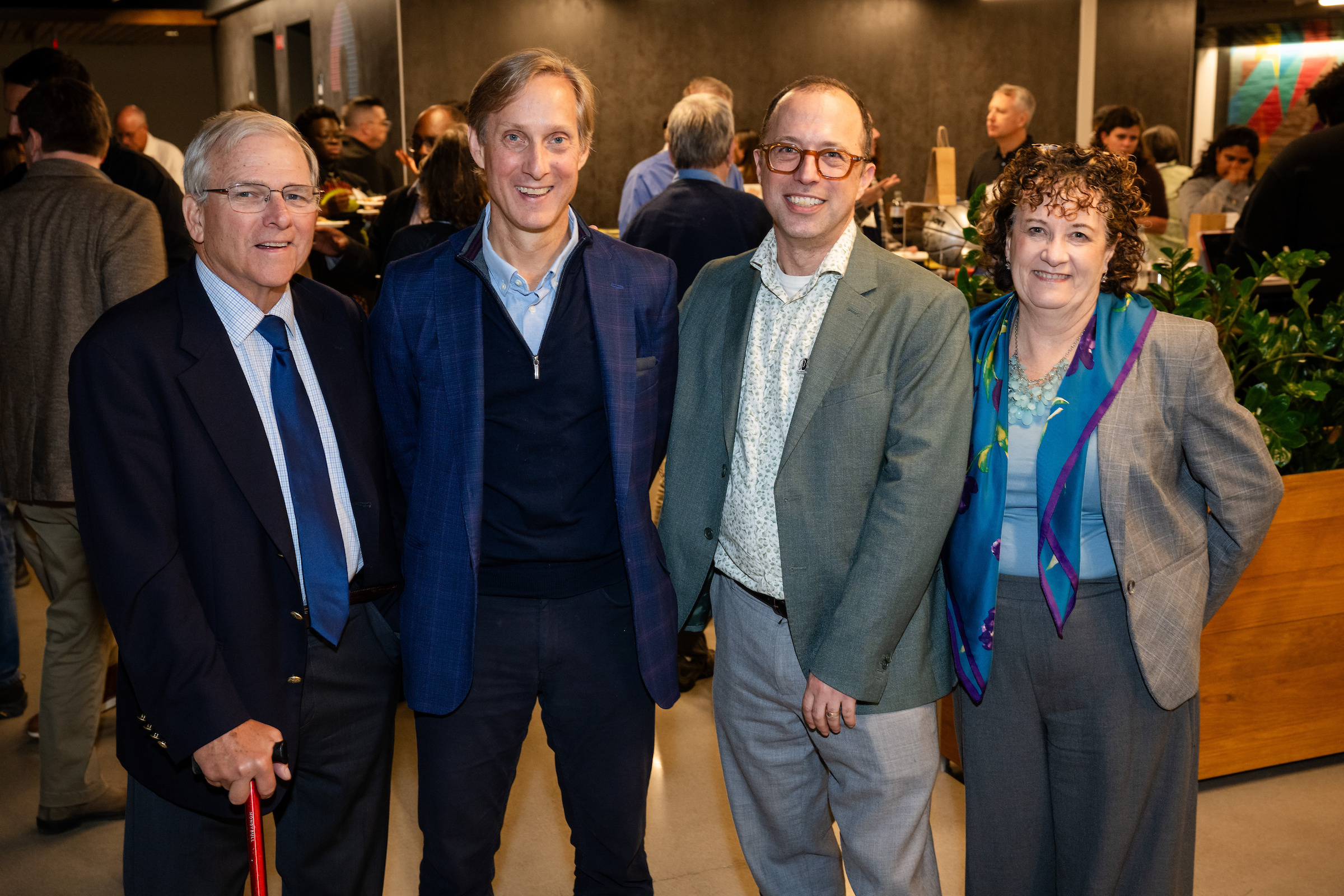
I recently met with John Weis, Bob Rugo, and Vickie Kaiser Rugo, who were part of the group of BRA planners who lived in the Ashmont area and helped in creating the poster. John noted that at some point after it came out, he went to a meeting at the home of Marge Muldoon in Codman Square and was pleasantly surprised to see a framed Dorchester poster in her living room. He realized that it had great meaning for Dorchester residents.
The Poster ignited Pride. Dorchester community organizations started building what were called “public-private partnerships” with city agencies and foundations that helped in redeveloping needy areas.
In 1983, The Dorchester Reporter was founded by Ed and Mary Forry and gave Dorchester “timely and insightful news, opinion and information.” They introduced the OFD (Originally From Dorchester) and DOT stickers and called attention to positive news in the neighborhood.
Dorchester is now an incredibly diverse community. We continue to have challenges, some the same. But one new one is that Dorchester has become so popular that many people can no longer afford to live here. But the neighborhood has always had tremendous numbers of activists who have worked hard to solve our problems and that continues today.
I’ve learned in my time that pride and hope are major characteristics that neighborhoods must have to solve problems and live in harmony. Fifty years ago, the Dorchester poster was a catalyst for Dorchester’s pride and hope.
Recently, some residents and BPDA Chief of Planning Kairos Shen indicated that it may be time for a new poster that celebrates Dorchester’s excitement and diversity.
I look forward to putting it up!
