


Photo: Re-enactors fired off a cannon atop Dorchester Heights on March 17, 2026. City of Boston photo by John Wilcox
By Ella Adams, State House News Service
Wind whipped across South Boston on Tuesday afternoon (March 17), in the same spot where colonial forces made a move 250 years ago that caused the British to evacuate and end an 11-month siege on the city.
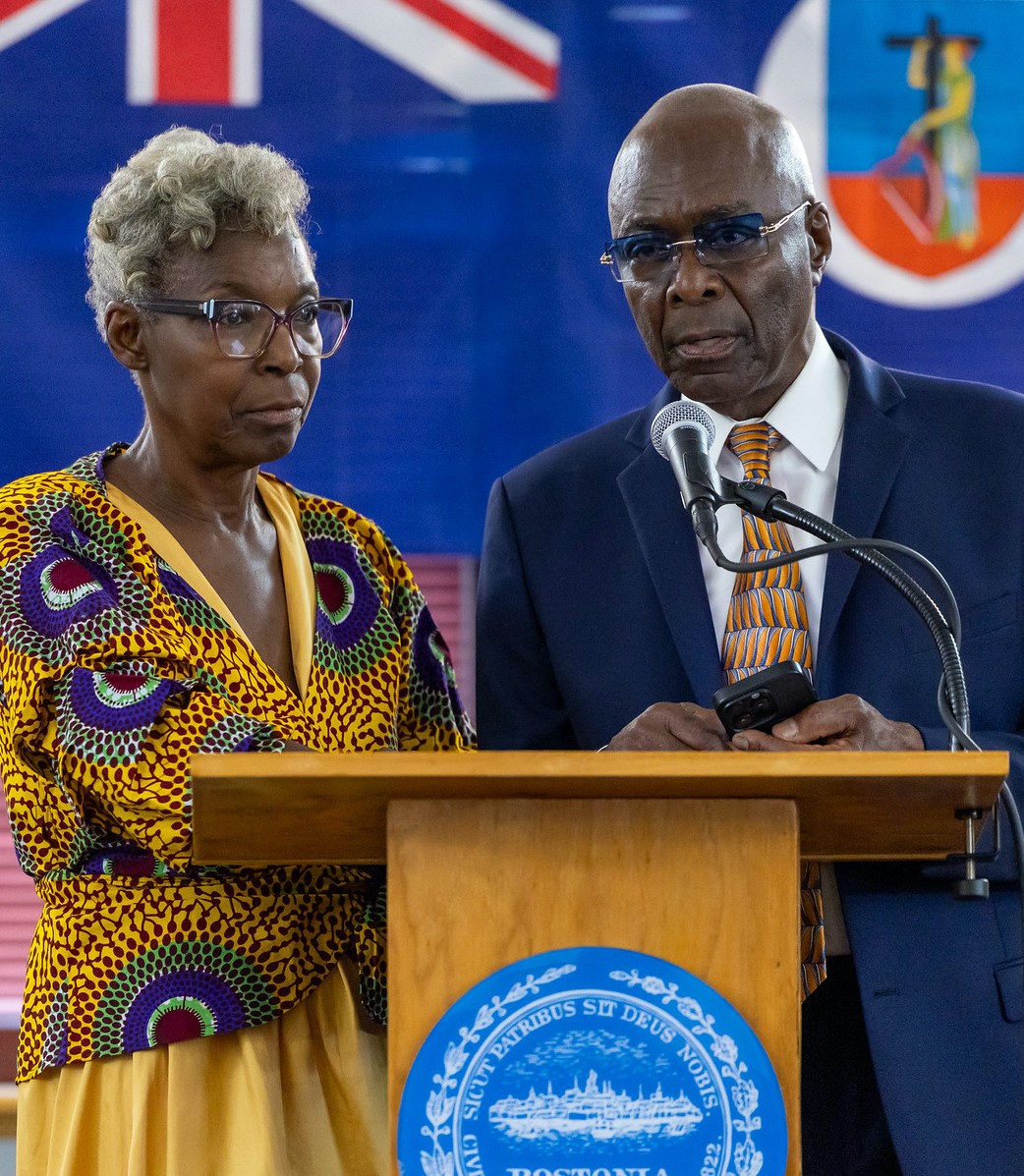
Bright against the lightly clouded sky, the Dorchester Heights Monument stood over a tent filled with elected officials, politicians, students, and state and federal figures. Horns, drums, flutes and cannons rang out across Thomas Park, paired with the clopping of horse hooves and lowing of cows.

Photo courtesy City of Boston/John Wilcox
“This monument stands as a tangible reminder of the choices and bold actions taken here. A testament to the power of place, and enduring strength of ‘We the People,'” Superintendent of the National Parks of Boston Tarona Armstrong said at an event marking the 250th anniversary of Evacuation Day. “Let us ensure that these places and the stories they hold remain powerful, relevant and accessible.”
Aiming to end the British siege of Boston — which was in place from April 1775 until March 1776 — General George Washington devised a plan to occupy Dorchester Heights, Rep. David Biele of South Boston told the crowd. General Henry Knox transported artillery to Boston from Fort Ticonderoga, New York, and colonial forces fortified the hill on the night of March 4, 1776. The British awoke to cannons at the heights aimed down at them below, Biele said.
On March 17, 1776, 11,000 British soldiers and hundreds of British loyalists evacuated Boston, Biele continued.
“It was General Washington’s first victory of the war, and it proved that the revolution was winnable, that ordinary people could change the course of history,” Boston Mayor Michelle Wu said.
“The values that Bostonians defended here, the right of people to govern themselves, to speak freely, to build communities on their own terms, to take care of their neighbors, to defend their home field — these values still demand the same kind of resolve summoned by those Bostonians on this hill 250 years ago,” Wu added.
South Boston’s Thomas Park, where the monument sits, was constructed between 1852 and 1854. The park became one of the first public parks established by the city, and Dorchester Heights became a national historic site in 1951. The Evacuation Day celebration coincided with the completion of the restoration of the monument — a $35 million project funded through the Great American Outdoors Act, Armstrong said.
Congressman Stephen Lynch touted the bipartisan effort by Congress that funded the restoration effort, “so that future generations can continue to visit, to learn and to reflect here, and hopefully to remember what they did here and why they did it.”

Photo: Re-enactors fired off a cannon atop Dorchester Heights on March 17, 2026. City of Boston photo by John Wilcox
The South Boston Citizens Association fought to make sure there would be a landmark for the 1776 evacuation, the group’s president, Tom McGrath, said. He called the “courage and determination of the Continental Army,” which forced the British fleet to leave Boston, a “turning point in the fight for American independence.” The state has been holding events for months in celebration of the country’s 250th birthday in July and the battles and figures that played a role in it.
“Being here today, it’s hard not to feel the weight of this place, the world changing. I mean, literally, we would not have a fourth of July if we didn’t have Evacuation Day, right?” Gov. Maura Healey said. “It’s that, that world changing what happened, and at the time, of course, there was uncertainty. The outcome of the struggle ahead was far from guaranteed. But this place changed everything.”
Healey added, “We share a pride, a purpose, a belief that the ideals born during the revolution are not just part of our past, but something we carry forward. Our history in Massachusetts is not abstract, it’s not distant. It’s living.”
Evacuation Day ties stretch all the way to U.S. Department of the Interior’s Kevin Lilly, who lives in Houston, Texas. His great-great-grandfather came from Limerick, Ireland to the shores of Boston at the age of 17 in 1862, he recalled.

City of Boston photo/John Wilcox
“I know my father, who has passed, would be incredibly touched by the fact that I came back to the city of his great-grandfather’s evolution, especially on St. Patrick’s Day and on this Evacuation Day,” Lilly said. “I’d also like to recognize that it was the intense and incredible faith of the patriots that stood on this hill. God was at the center of this revolution. This was a divine act. I truly believe that.”
A Trump administration official, Lilly became the assistant secretary for Fish and Wildlife in the Department of the Interior in 2025.
“As a Texan, I realize that there would be no Texas had there not been a Dorchester Heights. There would be 37 less states, had it not been for Dorchester Heights. I know we talked a lot about Knox, and I just can’t imagine that — I’m freezing right now,” Lilly laughed, referring to stories told about Knox’s trek from New York to Massachusetts with oxen through a New England winter to transport cannons, guns and artillery.
