

Jane Jacobs in NYC. Photo courtesy Boston College
In the early 1960s, when Jane Jacobs was a neighborhood activist fighting a highway project in Lower Manhattan, Mayor John Collins was hailing the wonders of “The New Boston.”
In the mayor’s words, the demolition, construction, and urban renewal displacement were “a race against time and blight.” But, in Jacobs’s best-known book, “The Life and Death of Great American Cities,” old buildings and thickly settled urban neighborhoods were treasures, with economic and social value.
While Collins boasted of a Prudential Tower “reaching skyward” and new high-rise apartments with a view of the Charles River, “Life and Death” lamented the demolition of Boston’s West End and saluted the adaptive vitality of another thickly-settled, old neighborhood, the North End.
The two storylines –the work of Jane Jacobs and the consequences of “The New Boston” – came together March 8 in Fields Corner, in a conversation at JustBook-Ish between Richard Keeley and Karilyn Crockett.
The occasion was Keeley’s recent book, “Exploring the Thought of Jane Jacobs,” subtitled “The Conversation of Cities.” But the exchange was also about the Boston area’s opposition almost sixty years ago to construction of the “Southwest Expressway,” as detailed in Crockett’s 2018 book, “People Before Highways.”
Until his retirement from Boston College in 2018, Keeley was the senior associate dean in the Carroll School of Management and director of programs for the Winston Center for Leadership and Ethics. His book is based on twenty years of “correspondence, conversation, and friendship” with Jacobs, whose archives, after Keeley’s persuasion, were donated to BC.
Crockett is a professor of urban history, public policy & planning at Massachusetts Institute of Technology, as well as a research and policy consultant for the Greater Boston Chamber of Commerce. She also served as the city’s chief of equity under former mayor Marty Walsh.
Unlike visionaries for “The New Boston,” “Life and Death” zoomed in on neighborhoods at street level. Its metric was hours of human activity and presence, especially on sidewalks, with a “diversity” of people and pursuits over different times. Their “eyes on the street” were a plus for public safety, but also an incidental prompt to conversation and a force of attraction that would have been harder to experience in the more spacious reaches of suburbia.
Keeley’s book distinguishes between the “eyes” of an individual and a “we,” a composite presence with power to intervene. Even without deeply personal ties or a tightly embraced identity, the sidewalk plural constituted a “civic friendship” that could tolerate differences and withstand what he called a “healthy tension.”
In “Life and Death,” the diversity was demonstrated within the bounds of a neighborhood, but also in more central public spaces, such as Bryant Park in Manhattan or Rittenhouse Square in Philadelphia. The two parks are sheltering, yet open to a mix of pedestrian traffic. Rather than seclusion, they offer a way to be around other people, even if they figure only as a spectacle.
“People’s love of watching activity and other people is constantly evident in cities everywhere,” observed Jacobs, a Scranton, Pennsylvania, native who spent 33 years living in Greenwich Village.

Richard Keeley discussed Jane Jacobs’ legacy at Just Book-Ish in Dorchester on March 8. Chris Lovett photo
As Keeley explains, there’s a difference between a space and what has the feel of a place. “A good place, a home-like place, gathers people,” he writes, distinguishing Jacobs from planners and urban thinkers who focus more on form and function. “The focus on function,” he argues, “ignored the subjective experience of the city-goer for the sake of the plan.”
Promotional imagery for “The New Boston” showcased the streamlined and more spacious density of high-rise buildings, the smooth path of highways between city suburbs, along with the expansion of Logan International Airport. But, as Sam Bass Warner pointed out in his “Streetcar Suburbs,” even neighborhood streets crammed with three-deckers at the beginning of the 20th century would have seemed an escape from the more densely huddled masses of older tenement buildings.
Absent from the imagery were calls for dinner from a tenement window or streets teeming with children, as in paintings by Allan Rohan Crite. Like Walt Whitman, beholding the ebb and flow of mid-19th century commuters in “Crossing Brooklyn Ferry,” Jacobs processed a city’s seemingly mundane activity as another kind of order: her “sidewalk ballet.” Her distaste for Modernist high-rise development was less about its size or style than its manipulative compartmentalization, how the order of her “ballet” could be hamstrung by the sorting of planners.
The 1950s and early 1960s were marked by warnings about Boston’s economic decline, with dire consequences for tax revenue. In his 1993 book, “Building the New Boston, Thomas O’Connor detailed the physical hazards and deterioration that were part of the rationale for the demolition of the West End. But the characterization of the neighborhood as a “slum” was also disputed by Herbert Gans, who lived in the West End for eight months before summing up his research there in “Urban Villagers.”
His eyes on the street were preceded by those of W.E.B. Du Bois, who was commissioned to do a study, completed in 1899, on the community’s failure to thrive in Philadelphia’s predominantly Black Seventh Ward. Embedded in the neighborhood for 18 months, Du Bois catalogued the community’s assets and shortcomings, while highlighting the barriers to opportunity, even for its most qualified members. His message to Philadelphia’s leaders: the ills of the neighborhood were also a failure of the city.
In the mid-to-late 20th century, Boston’s inner-city neighborhoods were commonly described as overcrowded and more claustrophobic, unlike the suburbs made more accessible by government-supported highways and mortgages. As Keeley pointed out, Jacobs acknowledged racial discrimination in home sales and access to mortgages. But density, as described in the 1940s by James Baldwin’s “The Harlem Ghetto,” was also experienced subjectively, as the pervasive “sense of congestion” rooted in bitterness and frustration.
Though urban renewal displaced Black populations in other US cities, the projects in Boston uprooted city residents of various backgrounds, from the West End to the South End and Chinatown. Other projects would meet with opposition in Charlestown and Allston-Brighton, as did institutional expansion in Roxbury’s Mission Hill, and airport expansion in East Boston. But community sentiment was divided over the combination of improvement and displacement by urban renewal in Roxbury’s Washington Park.
In 1966, land-takings began for the Southwest Expressway, a road that was intended to fill the gap between stretches of Route I-95 north and south of Boston. In the city, the highway was supposed to run along railroad tracks in the Southwest Corridor, from Readville to Lower Roxbury, where it would connect with another circumferential road that would go through the Fenway and across the Charles River to Cambridge and Somerville.

Karilyn Crockett (center) at a 2018 book event at Roxbury Community College. Chris Lovett photo
As related in Crockett’s book and in Jim Vrabel’s “A People’s History of the New Boston,” the takings eliminated hundreds of housing units, triggering opposition from communities along its path. Just as leaders had coalesced behind “The New Boston” after World War II, the highway resistance produced its own contingent. Even before the decision to halt the project in 1972, one of the opposition leaders, Chuck Turner, was thinking beyond the road itself to how land use and development could serve local communities.
As Crockett recalled from her later interview with Turner, he insisted that the campaign “was never about a highway, and that they really wanted to make sure that the city was affordable to people, that it was accessible, that all the benefits of a prosperous city could be experienced by working people, by people who lived here, and that that fight was still ongoing, and he said that if they had known that stopping the highway might in fact hasten gentrification, that they might not have stopped it.”
Though Jacobs herself played a key role in stopping a highway, “Life and Death” provides little tactical detail on how the civic friendship in her neighborhood was mobilized to take on another power sector. In Crockett’s view, other events in the 1960s should have prompted thoughts from Jacobs about the importance of grassroots action, possibly with an eye toward the civil rights movement. “I still feel,” she told Keeley, “like her observations and her work don’t really speak to the moment in the fullness that it could because of all the things that were going on in 1962, ‘63, right down the line.”
As summed up by Keeley, “Life and Death” and later writing about the economy of cities showed that Jacobs was keenly aware of the difference between growth, as measured by efficiency or productivity, and human development. That includes, as he noted, “the process that leads to development of new economic energy.” One example cited by Keeley and Jacobs was how Venice pivoted from being a provider of resources to a trader in added value based on higher skills. If the Jacobs notion of development could have appealed to highway opponents in Boston, it might have also been embraced by boosters of the city’s “knowledge economy.”
O’Connor credited the “New Boston” decades (1950-1970) with stabilizing the city’s financial condition and quickly restoring investor confidence. “There was no question that the transformation of the New Boston during the Collins administration was both dramatic and spectacular, attracting the admiration of visitors, the raves of urban planners, and the investments of corporations,” he concluded. “In terms of its impact on the working classes, the minorities, the poor, and the homeless of the city, however, its long-range social effects were incalculable and its short-term political effects were yet to be measured.”
One measure, by the Boston Redevelopment Authority, was the ongoing change in the city’s housing supply. Between 1950 and 1980, when the number of units increased citywide, the number in Roxbury was reduced by 35 percent. Over the sixty years through 2010, Roxbury was the only neighborhood to experience a drop in the percentage of owner-occupied units.
The disruption and displacement from urban renewal and road projects would lead to personal trauma, as well as demands in the Black community for access to housing and home ownership. In 1968, shortly after the assassination of Martin Luther King and a new wave of urban unrest around the country, the city’s political and business leaders responded with a new program, under the Boston Banks Urban Renewal Group (“BBURG”). It offered federally backed mortgages to Black homebuyers, but almost exclusively within a limited area, encompassing parts of Roxbury, Dorchester, and Mattapan—much of it in what remained of Boston’s Jewish community.
Once in operation, the program set off a stampede of sales by panicked white homeowners to speculators, who then flipped the same properties with a hefty markup to Black buyers. According to a 1972 study by the Boston Globe’s Urban Team, many of the new owners would default on mortgage payments, additionally burdened with costly repairs and a national economic downturn.
Within a few years, a program advanced as a remedy for blight and racial injustice left behind a rash of vacant houses that were taken through foreclosure, with lenders being reimbursed by the federal government. Among the casualties of BBURG was Crockett’s family, who lost their home near Codman Square that had been purchased in 1972 with a mortgage of $19,000.
“I live now four streets away from that house,” Crockett told listeners at the bookstore, “and I went on Zillow to see what the value is today. That house that I was born in is valued at $980,000. The same house. And to know that, in one single transaction, the impact that has had on my family’s ability to have wealth, to have equity. That’s almost a million dollars of equity lost.”
By the 1970s, urban renewal would take a new course in the South End, with federal dollars mainly supporting rehabilitation. There was less demolition, though there would still be displacement, much of it from gentrification.

By 1979, the vogue for makeovers extended to Dorchester’s Meetinghouse Hill neighborhood and the 1880 mansard used for the first installment of the popular PBS series “This Old House.” (Shown above, image courtesy This Old House.) But the more dramatic example of redevelopment with community control was the Dudley Street Neighborhood Initiative, founded in 1984.
In the 1992 Fenway “Urban Village” plan, Boston’s strategy for new housing was, as with Jacobs, to embrace density and the street-level diversity from mixed-use development. This version of Boston was a “walkable city,” less car-dependent, with more tie-ins to rapid transit and bike lanes, all within blocks of the Emerald Necklace and the booming Longwood Medical Area.
As Keeley recalled from his first encounter with Jacobs in 1980, she was less than overwhelmed by the recent revitalization of Faneuil Hall Marketplace under former mayor Kevin White. But White’s tenure has also been credited with helping to lay the groundwork for the replacement of the elevated Orange Line, combined with a new linear park and bike path along the Southwest Corridor.
A showcase of beauty, diversity, and alternative commuting, the park had also been advocated as a way to reduce a barrier between neighborhoods—in addition to eliminating the blight of two rail infrastructures above street level. Less apparent when the park opened in 1987 was how the adaptation would leave the neighborhoods more exposed to gentrification. Decades later, the ability of a linear park to enhance pricey development would be reaffirmed by the Rose Kennedy Greenway and New York’s “High Line,” anchored at one end by the luxury high-rise district of Hudson Yards.
By the time Boston’s housing production rebounded in the decade before the pandemic, some Jacobs concepts had morphed into market buzzwords. Her “diversity” was commodified as “vibrancy,” her “unslumming” rehabbed as “repositioning.” Lost in translation was the reason why, according to Jacobs, even “slum dwellers” might stay in a neighborhood by choice. “The choice,” she explained, “has much to do with the slum dwellers’ personal attachments to other people, with the regard in which they believe they are held in the neighborhood, and with their sense of values as to what is of greater and what is of lesser importance in their lives.”

Under Marty Walsh, a “walkable” magnet for the “creative class” would also be upgraded to a “smart city.” Mobile phones gave fingertip access to products and services, with less need for travel time and in-person contact. The economy of streets was increasingly outsourced to smartphone shopping and food delivery. With the onset of precautions during the Covid-19 pandemic, there would be even fewer “eyes on the street.”
Among more recent challenges to cities, Keeley’s book cites the loss of residents “with long-term commitment,” reflected locally in Boston’s downturn in middle-class households and school-age children, along with a rising number of short-term rentals. Even amid the housing surge before the pandemic, many of the new units were smaller, favoring more churn and higher prices. A more recent sign of change: plans to redevelop a former community and youth center on East Cottage Street, also once used for civic association meetings, into an extended-stay hotel with a ground-floor restaurant and rooftop café.
For Keeley, the changes in cities add up to an “erosion of residential life.” And, with more vacant commercial space, the conversational street becomes less communicative. “That conversation,” he acknowledges, “has been badly strained by the pandemic and its aftermath: cities once shut down have been slow to recover business, visitors, and residents. Fewer people and fewer uses mean a faltering conversation.”
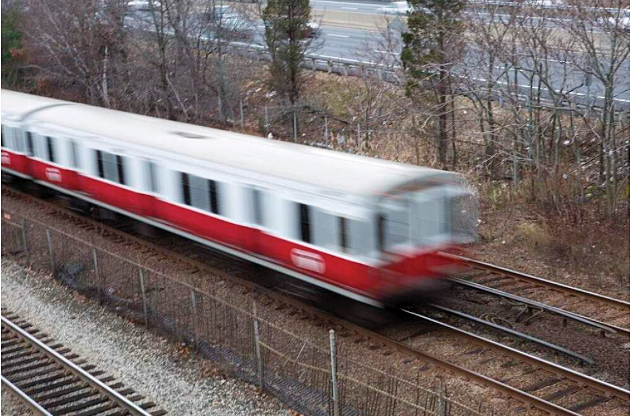
By contrast, the conversation at JustBook-Ish was surrounded by shelves of reading material and windows that looked out on Dorchester Avenue. While Red Line trains rolled by in the window behind the two authors, an eye on the street could have spotted a wellness medical center, an eye care boutique, a French bread shop, a Jamaican restaurant, wireless phone businesses, a florist and, across the avenue, a dollar store next to a fish market and restaurant called “Bait to Plate.”
The connection between place, conversation, and Jacobs was there to savor.
“I think she’d like Dorchester. I’d like to think so,” Crockett reflected. “I think she’d like a little bit of Dot Ave on a Sunday afternoon. She’d be into it. She’d like this kind of gathering.”

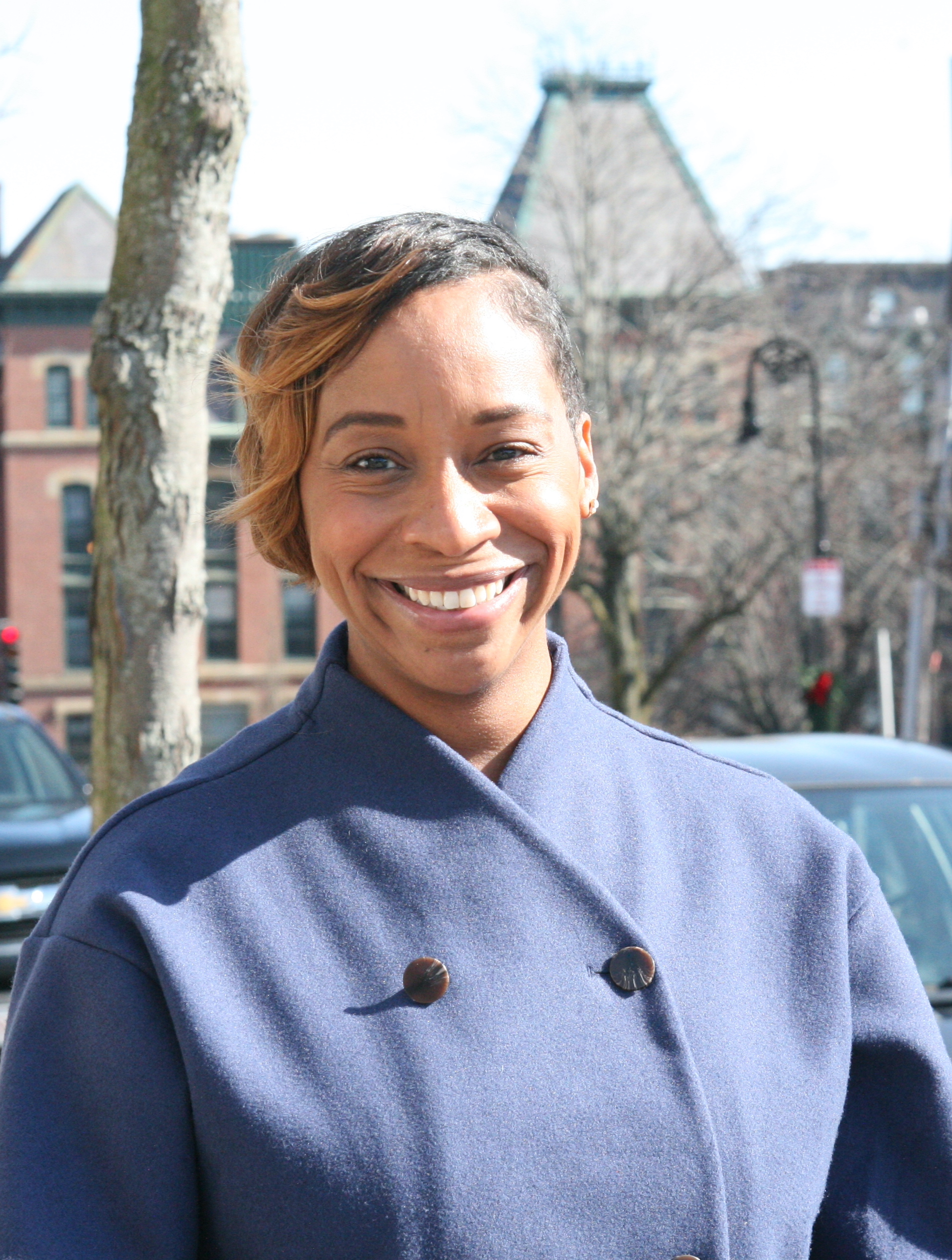
Richard Keeley, left and Karilyn Crockett at JustBook-Ish on March 8, 2026. Chris Lovett photo
