
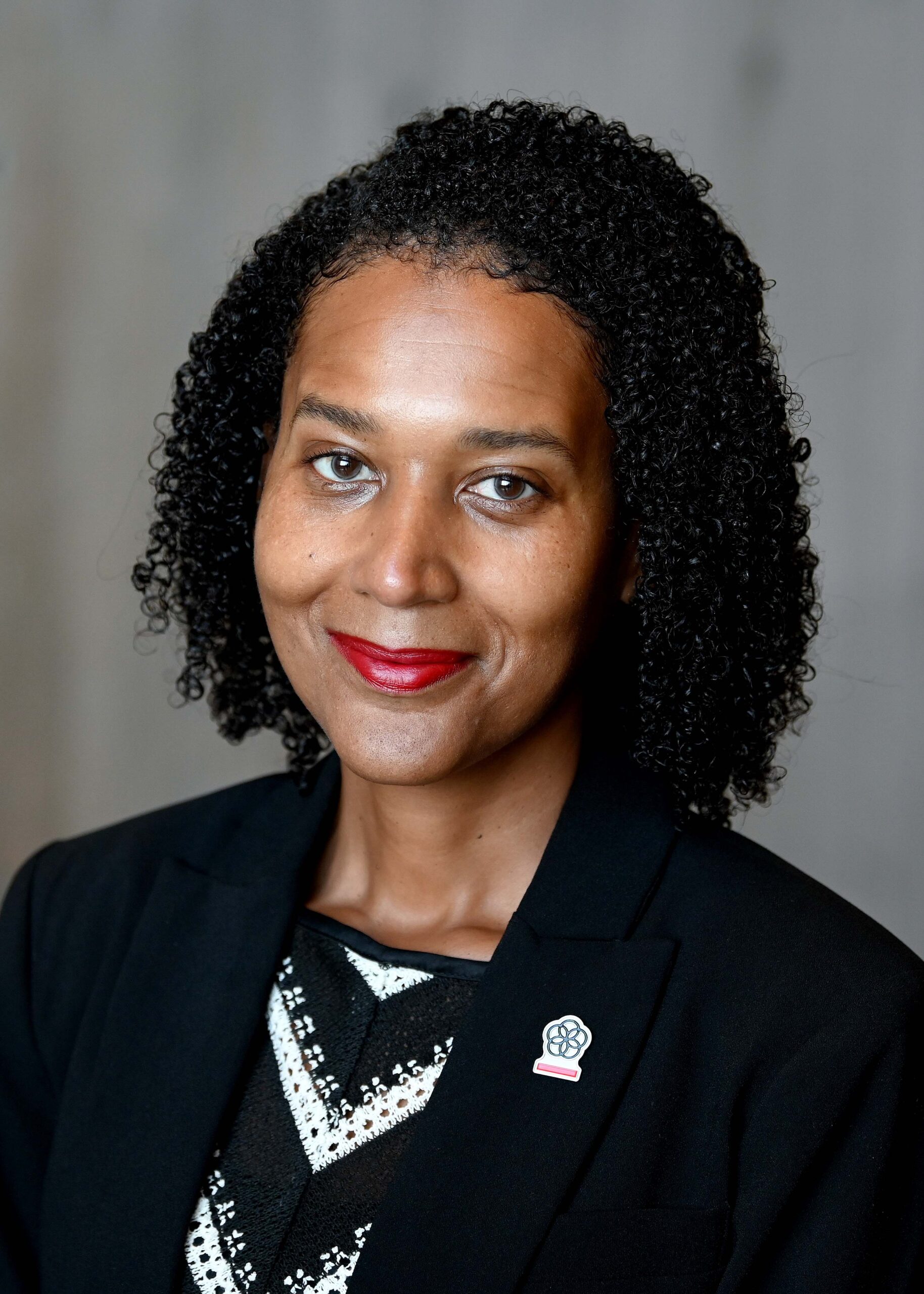
Tens of millions of federal transportation dollars are now lined up for an ambitious public works project to modernize Blue Hill Avenue. But in a wide-ranging interview on the DotLife podcast that just dropped, Boston Mayor Michelle Wu makes it clear that the federal funds aren’t her only consideration in moving the project forward into construction.
Wu emphasized that no final decisions have been made about the design of the corridor, including a controversial proposal for center-running bus lanes.

“Nothing is set in stone. Nothing is final in terms of the design,” Wu said. “We want to hold on to every dollar that can improve communities’ lives, but we also wouldn’t take federal money just because it’s there if it’s not a design that works for our community.”
The project—focused on one of the city’s busiest transit corridors—has drawn renewed attention following news reports that an additional $80.3 million in federal dollars have been committed to the project through the MBTA. That funding builds on an earlier $15 million award, bringing the federal contribution to roughly $93 million, alongside state, MBTA, and city dollars.
“There is about $93 million of federal funding… plus the state funding, MBTA funding that’s already committed to the project,” Wu said, estimating the total funds on hand now are roughly $143 million.
But she acknowledged: “There are still… colleagues who do want us to give up the $143 million of state and federal funding… to halt this project,” she said.

In the interview, Wu said she is in regular communication with MBTA General Manager Philip Eng, who along with Wu has been the chief champion of the Blue Hill Avenue project, particularly the dedicated bus corridor that would decrease commute times for tens of thousands of regular bus riders.
“I am in conversation with the general manager constantly about a lot of things. Blue Hill, we’ve talked about a lot, and he is going through also and really seriously listening to feedback from our elected officials and community members to think about what other design details could actually be much more responsive,” said Mayor Wu.
She added: “Even if that means asking our federal partners to adjust some of those design details, we want to hold on to every dollar that can improve communities’ lives, but we also wouldn’t take federal money just because it’s there if it’s not a design that works for our community.”
When asked if she thought the project’s design elements could be resolved and ready for construction by spring 2027, Wu seemed doubtful.
“We are still a ways away,” she said. “The hope is that we can arrive at design solutions [by] spring into early summer and then finish the design block-by-block addressing some of these details.”
City and MBTA officials are continuing to review feedback, she said, and will consider potential adjustments.
“Nothing is final… this is really about getting everyone to understand what is happening and how this has been responsive to feedback,” Wu said.
“The details are in the design,” she said. “I remain hopeful and determined that we can find a solution here that really does respond to significant community feedback.”
“At any time of day those buses are full… taking every generation to all sorts of needs,” Wu said. “To be able to restore some reliability there in one of the most congested corridors would make a big difference.”

The Blue Hill Avenue project reflects a broader tension facing City Hall: how to move forward on major infrastructure projects while factoring in community input, which has been— in this instance— highly critical of the bus-lanes in particular.
“It can’t be speed over specificity,” Wu said. “We need to ensure we’re continuing the momentum… but get things right and not have to then go back and undo.”
“We need to arrive at a decision that community members will be able to feel good about,” Wu said, “and understand how this has been responsive to feedback.”
