

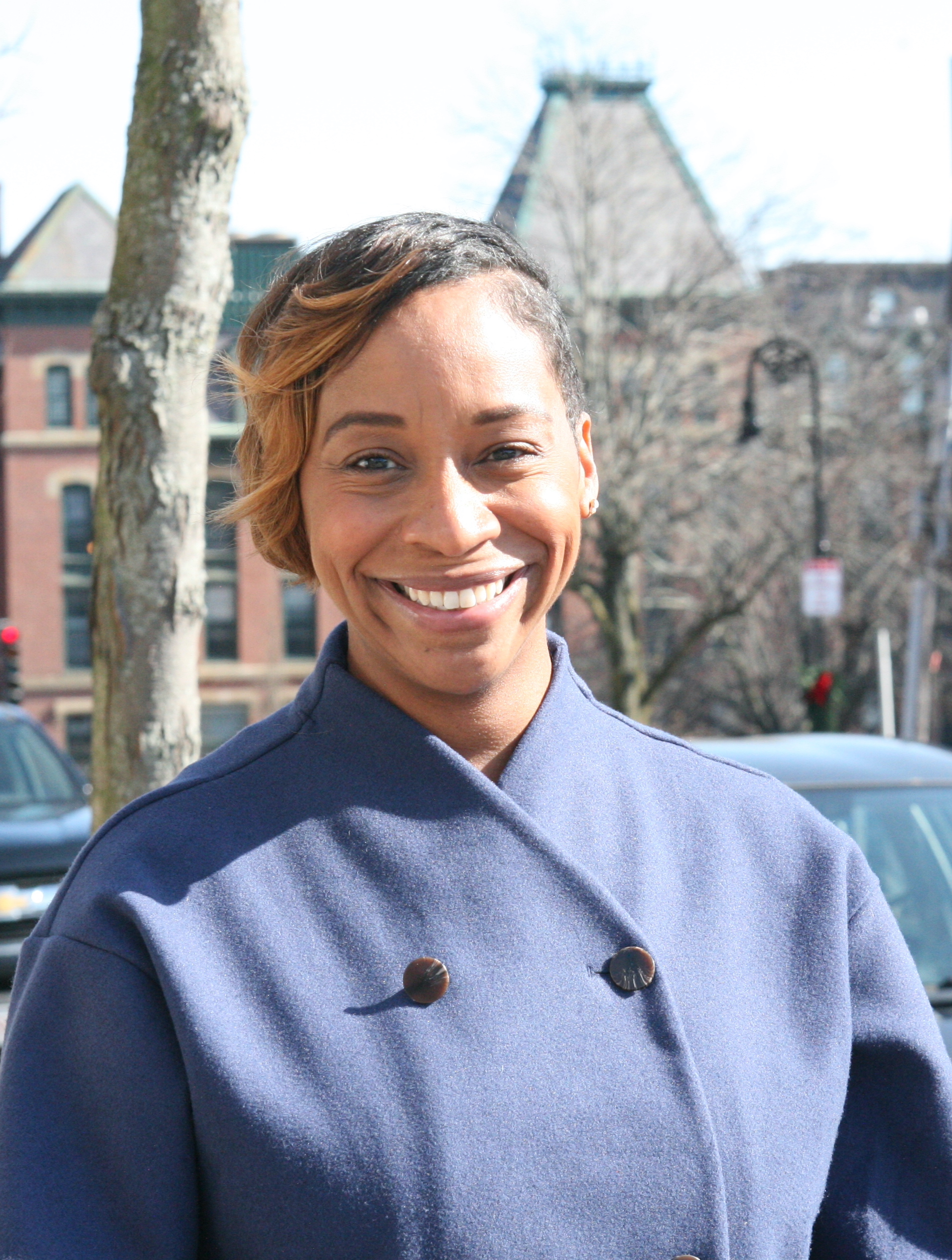


By Chaplain Clementina Chéry, Special to The Reporter
Throughout April, organizations have recognized National Crime Victims’ Rights Month as a time to honor survivors of violence, remember loved ones lost, and recommit ourselves to justice. But for many families, grief is not something observed for a month. It is lived every day, often in silence.
We don’t choose grief. It chooses us. Whether it will last for our lifetime is not a question. It most certainly will, and we cannot control that. The real question is, what will we do with it? We have a say in the answer.
The Silence That Follows Loss
There is a particular silence that follows trauma. The silence of an empty chair at the table. Of a phone that no longer rings. Of a community that doesn’t know what to say—or says nothing at all.
I know the silence.
After my son, Louis Brown, was murdered in December 1993, my world changed forever. I was left with grief, questions—and a quiet that felt unbearable. Like so many impacted by violence, I was navigating not just loss, but isolation.
But I have learned this: Silence can isolate us—or it can prepare us to listen.
Grief does not come from one kind of loss. Here in our city—and communities everywhere—people are grieving in many ways: loss of loved ones, trauma of separation, the weight of injustice, the loss of safety, stability, or belonging. Some grief is visible. Much is not. Many carry it in their bodies, as anxiety, exhaustion, or disconnection.
Grief is not only about death. It is about love, loss, and the longing for things to be different. When we realize that grief lives not only in individuals, but in communities, our responsibility becomes greater. We are called not only to heal ourselves, but to create conditions for collective healing to begin.
Not all grief can be spoken. At the Louis D. Brown Peace Institute, the organization we founded in my son’s name to help survivors of homicide victims and promote peace, we learned that healing involves not just words but the whole person: body, mind, and spirit.
Through practices like Peace Play, a healing exercise grounded in sensory experience, survivors express feelings and trauma that they cannot yet verbalize. Through touch, symbols, and imagination, grief begins to move.
A child who cannot explain his pain can place a figurine in a sandbox to represent what he is feeling. A parent who cannot speak can still create meaning. A story locked inside—by loss, trauma, fear—can begin to emerge. Healing is a process, not a destination.
What We Carry
A story tells of two friends walking through the desert. After one hurts the other, the pain is written in sand. Later, when one saves the other’s life, the gratitude is carved in stone. When a listener asks why, a simple answer is given: “We write our pain in sand so it may be carried away. We carve our gratitude in stone so it is never forgotten.”
In our own lives, we make this choice constantly. What do we hold onto? What do we release? What do we carry forward?
Healing does not mean forgetting. It means learning how to carry loss—with love.
One of the greatest dangers of grief is isolation. One of the greatest powers of community is connection. At the Peace Institute, we see what happens when people come together. Families who once suffered in silence begin to speak. Communities fractured by trauma begin to heal. Pain begins transforming into purpose.
Healing comes incrementally, in moments when someone feels seen, heard, and no longer alone. That’s the journey from silence to solidarity.
And what does solidarity look like? Supporting survivors must be more than symbolic. It must be active. It means showing up for families impacted by violence—physically, emotionally, spiritually. It means investing time and resources in community-based activities and programs. It means creating spaces where people feel safe to show their grief, to hold it out for others to see, rather than hiding it in dark and private places. It means choosing to love, even in the face of loss.
Solidarity also means physically gathering together. Each year, thousands join us for the Mother’s Day Walk for Peace. I invite you to this year’s walk on Sun., May 10, to stand with families, honor lives lost, and be part of a community that chooses healing. There is a place for everyone in this movement.
We are not meant to carry grief alone. Nor are we meant to build peace alone. If we are to create safer, healthier communities, we must move, together, from silence to solidarity, from isolation to communion, from pain to purpose, from hurt written in sand to forgiveness carved in stone.
And may we remember that grief chooses us, but we choose how we respond.
Clementina Chery is president and chief executive officer of the Louis D. Brown Peace Institute.
