

The Supreme Judicial Court ruled Friday that Raymond White, convicted along with another man for gunning down two security guards at a supermarket on Columbia Road in Dorchester in 1971, got a fair trial and so deserves to spend the rest of what’s left of his life in prison.
Unusual for a first-degree murder conviction, White’s case had never gone before the state’s highest court for a detailed review – which the court said was partly due to inaction by his lawyers, partly because he managed to escape prison in 1980 and remained on the lam for eight years, and partly because even when he was given a chance to appeal, he didn’t, for years.
In its ruling, the state’s highest court said the evidence against White, now in his mid-70s, was so strong that it meant that some things that happened during his trial which were legal then, but later ruled unconstitutional by federal and state courts, would not have changed the verdict, and so it reaffirmed a Superior Court judge’s decision to deny him a new trial.
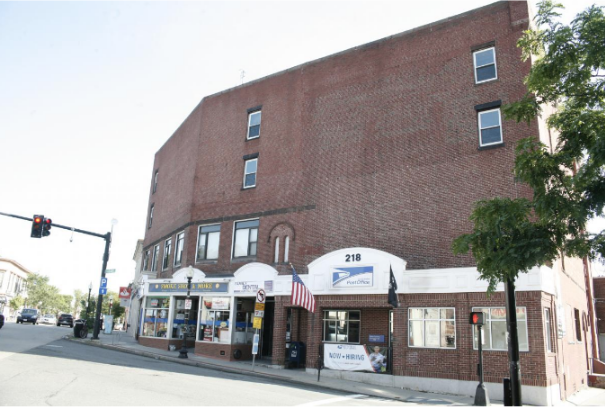
To get to that point, the court first had to summarize the facts of the double shootings at Freedom Foods, a former Purity Supreme that was Dorchester’s first Black-owned supermarket, at 264 Columbia Rd., where the Lila G. Frederick Middle School now stands:
On Saturday, August 14, 1971, an employee of Freedom Foods supermarket on Columbia Road in the Dorchester section of Boston asked a bank to send additional cash so the store could cash checks for its customers that day. Such cash deliveries took place on a recurring schedule on certain days of the week and month. On this occasion, the requested cash ($29,325) was transported from the bank by Calvin Thorn, who was employed by a private security company. Thorn arrived at the supermarket at around 10:30 A.M. with the cash stored in bank bags in the trunk of his car. He went into the store and brought Harry Jeffreys, another employee of the same security company who was stationed inside the store, outside as additional protection. Jeffreys was armed. As Thorn unlocked the trunk of the car to remove the bags of cash, two men ran out of the supermarket and shot Thorn and Jeffreys multiple times from about three feet away. Jeffreys managed to return a single shot, hitting one of the robbers in the groin. Thorn and Jeffreys both died from their wounds.
There were several eyewitnesses to the crimes. One, the supermarket’s “bundle boy [who loaded groceries into the trunks of customers’ cars],” saw the two robbers take several bags of money from the trunk of Thorn’s car and then run toward Columbia Road. The taller of the two wore sunglasses and a white cap and clutched his groin as he ran. The bundle boy followed the two men and saw them get into a parked car and then drive away in the direction of Franklin Park. The car was missing a chrome strip on its right side, and the bundle boy memorized the car’s registration number, which was conveyed to the police.
The supermarket manager saw the robbers running away and recognized one of them as the defendant, who had recently worked at the store as a security guard and had been employed by the same security company as the two victims.
Within 75 minutes, police had identified two possible suspects – White and James Hall – and tracked them to the apartment of Hall’s sister, down Columbia Road:
There were fresh, wet spots of what appeared to be blood on the stairs leading to the apartment and on the floor of the hall in front of the door to the apartment. …
Inside Nina’s apartment, the officers found the following. Hall was lying on a bed naked, bleeding from the area of his groin. Sunglasses flecked with what appeared to be blood were under the bed, and a white cap was in the closet. Next to the bed was a bucket containing about one quart of blood, some articles of blood-soaked clothing, two live .38 caliber rounds, and six spent .38 caliber shell casings. Two .38 caliber handguns, a Colt and an Iver Johnson, were on a pile of laundry in a closet. Later ballistics testing showed that the bullets that killed Jeffreys had been fired from the Colt and that the bullets that killed Thorn had been fired from the Iver Johnson. Police investigation later revealed that the defendant had purchased the Colt about seven weeks before the robbery. Near and under the bed were three bank bags and a paper bag containing cash later determined to be in the amount of $19,325. Additional bundled cash in the amount of $7,000 was inside a vacuum cleaner in a closet. Both the bank bags and the stamps on the money were from the same bank from which the supermarket had ordered cash that morning.
On a street near Nina’s apartment, officers found a parked car matching a witness’s description. There was human blood on the front seat, the steering wheel, the steering column, and the dashboard all the way over to the right-hand side of the car. The car also contained a box containing nineteen live rounds of .38 caliber ammunition. That box, which had originally contained fifty rounds, had been purchased by the defendant a little over a month before the robbery and bore Hall’s fingerprints. …
Nina testified at trial under a grant of immunity. She testified that the defendant stayed with her on occasion and that, on the morning of the robbery, the defendant and Hall had left her apartment together between 8 and 8:30 A.M. When they returned at around 10:45 A.M., Hall was carrying an Army duffel bag with something in it and was bleeding heavily from his left thigh. At Hall’s request, Nina placed the two handguns in the closet. While Nina, who was a nurse, applied a tourniquet to Hall’s leg, Hall said to the defendant, “If you had done what you were supposed to, I never would have been shot.”
Both men were tried and convicted in 1972 on two counts of first-degree murder – which at the time meant an automatic death sentence, even though Massachusetts had not executed anybody in decades.
In 1976, the SJC affirmed Hall’s conviction after an appeal, but White’s attorney never “perfected” his client’s appeal by filing a list of legal and trial error that could free him, nor did a new attorney appointed to represent him.
What followed was decades of further appellate-lawyer mistakes and inaction, the court said. In November, 1980, White filed his own pro-se appeal, which was granted, but then he escaped while on a furlough from Walpole prison on Dec. 30, 1980, he escaped Walpole state prison, which ended that. After he was captured in 1988 and put back in prison, he was again given the chance to appeal, but, the court said, kept delaying, in filing the requuired paperwork. Finally, in 2014, he filed an appeal, which a single justice of the SJC allowed, in 2016. But in 2018, the entire court ruled that it could not hear his case until he had first asked a judge in Suffolk Superior Court for a new trial. He did, but in 2023, Suffolk Superior Court Judge Joshua Wall denied his request, which he then appealed to the SJC.
It’s been so many decades since his initial conviction that some laws related to trials have changed. But the SJC said that even under these new standards, a jury would likely have convicted White, anyway.
One of his challenges: That having him sit in the prisoner’s dock – where today only people awaiting arraignment are normally placed, “impermissibly eroded the presumption of innocence,” just because it’s the prisoner’s dock, but also because when witnesses were asked to ID him in the court room, they might have assumed it was him simply because he was placed there. Although the practice was legal at the time of their trial, a federal appeals court in Boston ruled in 1979 it was unconstitutional – and then the SJC itself adopted a similar position in 2004.
But in White’s case, “any error was harmless beyond a reasonable doubt,” the court concluded yesterday:
The evidence of the defendant’s guilt was extremely strong. He was recognized during commission of the crimes by the supermarket’s manager, who was personally familiar with him as someone who had worked in the store. The manager testified unequivocally that he got a “side glance” at both robbers and “could identify [the defendant] right off.” Shortly after the shooting, the defendant was found by police in his sister’s apartment, along with the murder weapons (one of which he owned), bloodstained bags of money stamped by the same bank teller as the stolen cash, and Hall, who was bleeding from a bullet wound consistent with that inflicted on one of the robbers. The defendant had bought the ammunition used during the crimes. Given this evidence, “the jury’s impression of [the defendant] was more likely the result of his testimony and the government’s evidence, rather than speculation about his placement in the dock.”
Similarly, where he sat would not have ultimately mattered because of the context of the trial, which included his lawyer vigorously raising issues about the veracity of their identification of him, the court said:
The defendant has given no reason to suggest that the supermarket manager’s in-court identification was influenced by the defendant’s placement in the dock. The two other witnesses testified that the defendant “look[ed] like” one of the robbers but did not positively identify him at trial. Defense counsel effectively cross-examined all three witnesses to highlight the limitations of each one’s identification testimony. In addition, defense counsel emphasized in closing the uncertainty of one witness’s identification. The jury were thus made aware of reasons to be skeptical of the identification testimony regardless of the defendant’s placement in the dock. Under the applicable law, there was no error.
Also at issue: An agreement between prosecutors and a third man who had also been implicated in the shootings to go easy on him if he testified against White and Hall, which, contrary to a legal requirement, was never given to White’s attorney, even when he asked specifically if there were such a document. In that man’s case, prosecutors successfully moved to try him separately from White and Hall and then, after they were convicted, dropped all the charges against him.
White’s appeal also raised the issue that at the end of their trial, the judge described the issue of “reasonable doubt” in terms the average person might understand
As with the prisoner-dock issue, the SJC concluded that while this was wrong, it again would not have changed the outcome:
Clayton’s testimony concerned Hall almost exclusively. To the extent Clayton mentioned the defendant, it was only to testify that the defendant was present in Nina’s apartment after the crimes. Clayton’s testimony on this point was duplicative of the testimony of many other witnesses, including police officers, Nina, and the defendant himself; it was not a disputed point at trial. In these circumstances, it is “not reasonable to think that disclosure [of a government deal] would have changed the verdict[s] of the jury.” Gilday, 382 Mass. at 178-179 (defendant was not prejudiced by suppression of evidence of potential deal with witness when witness’s evidence was “less detailed and damaging to [the defendant] than the testimony of others”).
Also at issue in his appeal was a change in the way judges could define “reasonable doubt” to jurors:
In 1977, we concluded that giving jurors specific examples from everyday life in defining reasonable doubt “understate[s] and tend[s] to trivialize the awesome duty of the jury to determine whether the defendant’s guilt was proved beyond a reasonable doubt,” and we announced a new rule that “all references to examples taken from the jurors’ lives should be avoided.”
But in yesterday’s ruling, the justices said that after reading what the judge in White’s and Hall’s case told jurors, they concluded the judge had not gone quite that far in his directions, that telling jurors that “reasonable doubt” means “the sort of a doubt that would make you pause in considering an important and grave affair in your life” was not specific enough to warrant changing the verdict.
