

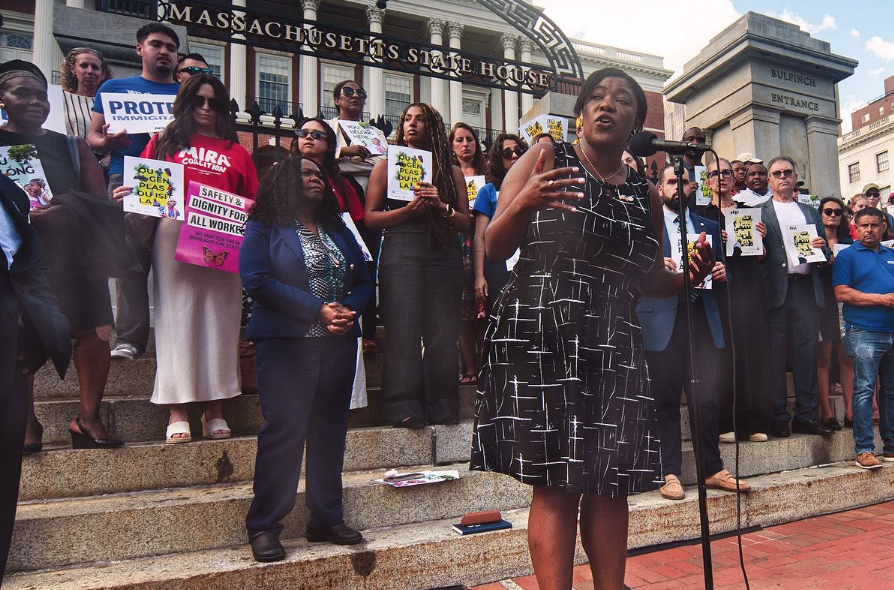
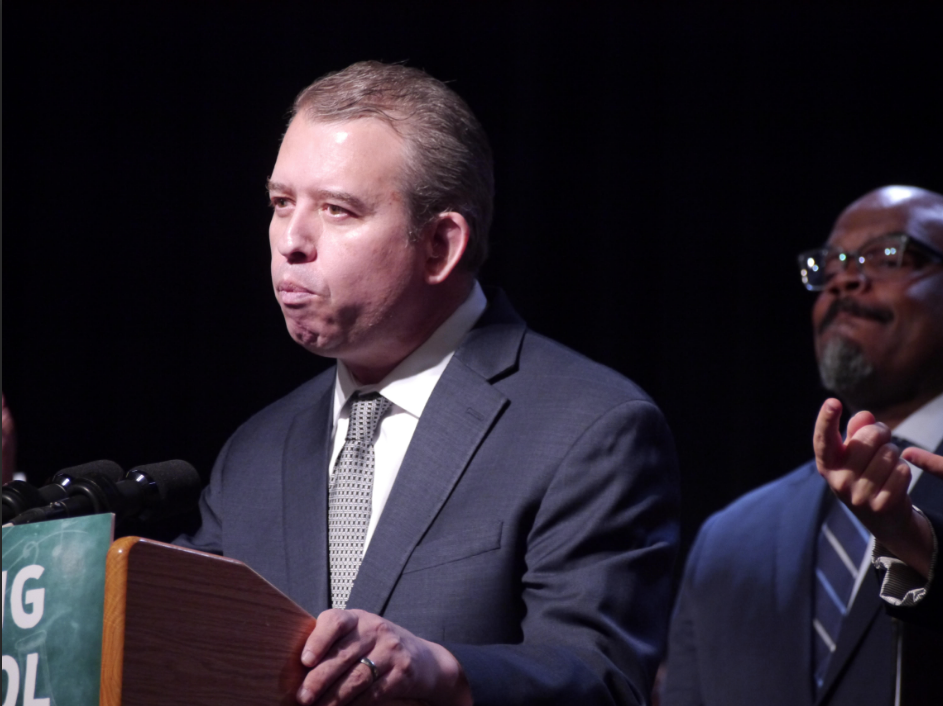
On Monday this week, City Councillor Ben Weber, who chairs the Ways and Means Committee for the Boston City Council, sent a memorandum to his colleagues titled “Initial Thoughts from the Chair on How the Amendment Process Could Work.” Following are excerpts from his message.
The Mayor’s proposed budget for the 2027 fiscal year cuts a wide swath of city programs.
These include grants for veterans ($724,000), small businesses ($1 million), Black male advancement ($500,000), the arts ($1 million), food justice ($400,000), legal services for immigrants ($350,000), women’s programming ($100,000), housing vouchers ($2 million), legal services to parents with kids in school who receive eviction notices ($450,000), and a lot more.
In addition, while preserving 10,500 summer youth jobs, the Mayor’s proposed budget would cut $6 million from the year-round youth jobs program, eliminating nearly 1,800 youth jobs during the school year. This is on top of a BPS budget that despite an increase of nearly $100 million, still calls for the elimination of roughly 500 positions, including many teachers and paras.
The good news is that the City Council has a tool to deliver for Boston residents. In November 2021, Boston voters approved a City Charter amendment that granted the City Council the authority to amend the Mayor’s proposed budget. Before that, the Council could only vote to accept or reject the budget.
As a result [of the amendment], the City Council does not have to rely on the Mayor to change the budget; rather the Council can exercise its amendment powers by moving funds within the budget to address the needs of our communities.
Because of the impact the proposed budget’s cuts will have, many advocates are now calling on the City Council to reject the budget outright, rather than make amendments, causing the Mayor to submit a new budget. If I am understanding these calls correctly, in rejecting the budget, we would be calling for the Mayor either to revise the budget to make the changes we are calling for or the Mayor would increase the size of the budget by, among other things, increasing revenue projections and/or spending from reserves.
For me, the most important thing is to ensure that the City has a budget in place by the end of June. If the City Council fails to approve a budget before the start of the 2027 fiscal year, the City has to revert to the FY26 budget month-by-month until a new budget is approved. Because the FY26 budget is less than the FY27 budget, layoffs may be needed to accommodate higher wages and health care costs that will occur regardless of the status of our budget.
In speaking with the drafters of the charter amendment, however, it is clear that they did not contemplate a scenario where the City Council would reject a budget when we had the power to amend it. The Legal Department, in a memo issued on May 14, issued some guidance about how the process would work if the Council rejected the budget at various times, which is helpful for our deliberations.
While my colleagues should consider all of their options when weighing how they will be voting on the budget, I want to share some initial thoughts about what the amendment process can accomplish. Initial analysis shows that we can move funds that would go a long way toward restoring programs without inflating the size of the budget or impacting city services.
I am not in favor of inflating the budget for a few reasons. First, dipping into our reserve funds or inflating revenue projections creates the real risk of budget deficits if the revised projections are too high. As the supplementals being filed to cover FY26 budget deficits demonstrate, we made errors in our calculations for this fiscal year, including over-estimating the amount that some of our revenue sources would generate.
In addition, these moves could jeopardize the City’s AAA-bond rating, which allows us to borrow money to build infrastructure the City needs at the lowest possible interest rate, saving the City millions of dollars. Indeed, New York City and San Francisco recently had economic outlooks downgraded by the bond rating agencies because they drew from reserves and because they were overly optimistic in their revenue projections.
Lastly, if there was more revenue in the budget, good budgeting practices would likely require those funds to be directed to historically underbudgeted line items, like police overtime. Thus, adding revenues (without amending the budget), would simply result in those funds going to other priorities. To increase our revenues for our specific priorities, like housing affordability, we should be pushing harder for the transfer fee [a proposed municipal tax on high-end property sales], which is projected to bring in over $160 million a year in revenues to the City.
The Mayor has stated that a new budget would be the same size or smaller. If the budget is
going to remain the same size, a vote to reject the budget is putting off the hard work of finding the funding for the programs we want to support.
I hope we can begin the conversation of how to amend the budget soon, but here is one way it could play out if my colleagues reach a consensus. My team looked through all of the non-personnel line items (e.g., supplies, maintenance, contracts) and tallied the 5-year average amount underspent for each item. Conservatively, we estimated the funds we could generate by taking 50 percent of the 5-year average of unused funds for each line item, excluding all line items that were either in police or fire, and also excluding line items that were already cut by more than 50 percent of the average underspend in the FY27 proposed budget. We came up with $6 million.
Jobs that are kept vacant are another type of underspending. We looked at personnel line items for every department, except police and fire, to look for vacancies. The City already discounts these positions in the budget in something called salary savings. We excluded all of the public safety departments and the positions that were already cut through salary savings. If we cut just 30 percent of the vacant positions and very conservatively estimate each of these positions with an annual salary of $35,000, we found another $7 million.
In addition to this amount is a line item called Execution of Courts. These are funds to pay for court judgments and settlements. Due to a statutory requirement that we pay the full amount of this line item regardless of how much is budgeted for it, we have used money from this line item the last two years to fund amendments, leaving around $1 million in that line item. If we remove $4 million from Execution of Courts, this would create a fund of roughly $17 million for amendments without impacting services.
Realistically, it would be difficult to get consensus for using all of these funds, which would
remove money from nearly every non-public safety department. But conservatively estimating that we find around $11 million in funding that my colleagues could agree on, we could put together an amendment package that restores most or all of the funding for youth jobs, housing vouchers, veterans grants, the Equity Cabinet’s grants, the Mayor’s Office of Arts and Culture grants, legacy business grants, GrowBoston, Age Strong grants, Access to Counsel, and ESOL classes for BPS parents.
We have a lot of work to do on the City Council to actually craft a package and get it passed on the Council floor by our deadline of June 10. A package of amendments could be higher or lower, increase funding for some of these programs, or fund different programs altogether. But I hope my colleagues do not simply look past the amendment process because exercising the authority granted to us by Boston voters in 2021 can produce significant, tangible benefits to our Boston residents who need us to deliver.
