
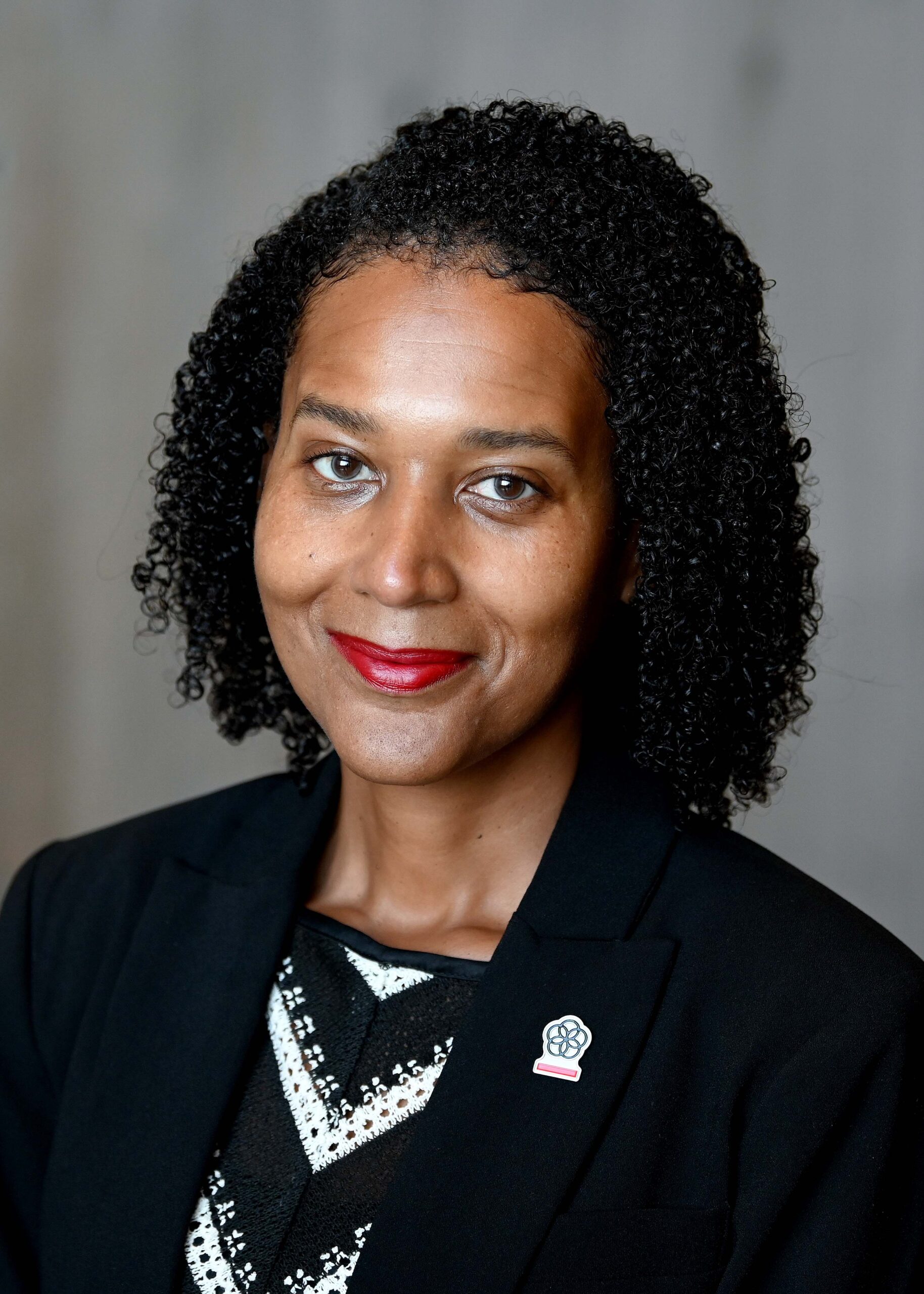
Above: District 3 City Councillor John FitzGerald on June 10, 2026. Chris Lovett photo
After weeks of failed attempts to reach consensus and a two-hour disruption by obstreperous protesters, the Boston City Council voted decisively on June 10 for an amended version of Mayor Michelle Wu’s $4.9 billion FY27 operating budget
Using its power to amend the mayor’s budget, without increasing total spending, the council approved $11.8 million in new spending, offset by subtractions—or “pulls”—from other items. Filed by the Ways and Means chair, District 5 (West Roxbury/Jamaica Plain) Councillor Ben Weber, and the vice chair, District 3 (Dorchester) Councillor John FitzGerald, the changes were approved, 12-1, with the only “no” vote cast by Councillor At-Large Julia Mejia.
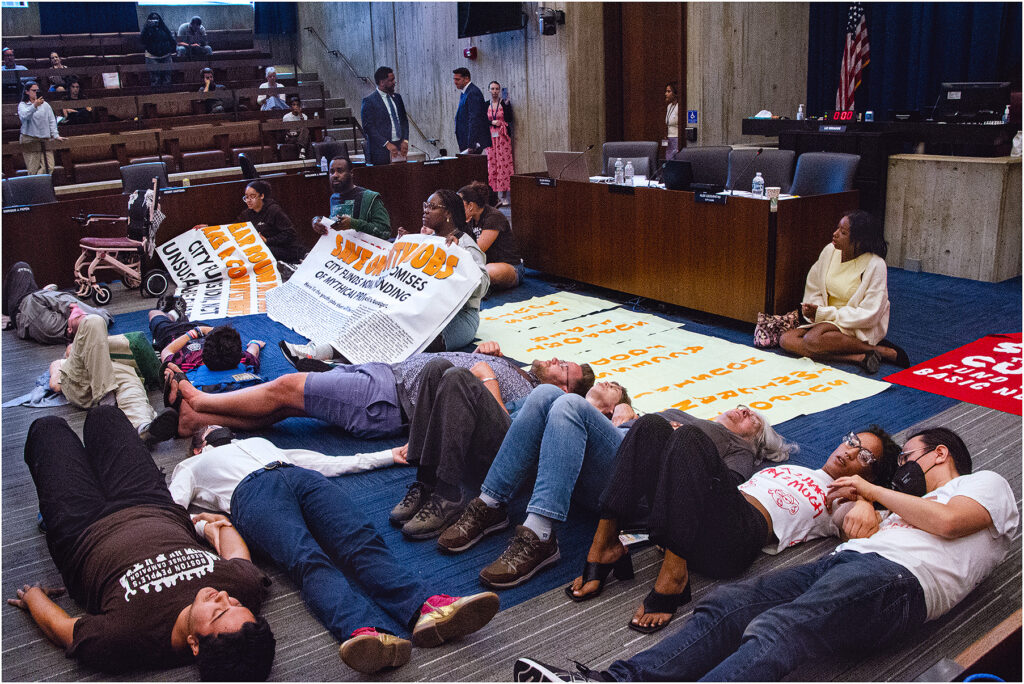
Protestors disrupted the council meeting on June 10, 2026 for more than two hours. Eight were arrested. Chris Lovett photo
The amendments add up to only 0.2 percent of the operating budget, which increased from the previous year’s figure by 2.1 percent—the lowest spread since the Great Recession. But a letter two days earlier from Wu’s chief financial officer, Ashley Groffenberger, warned councillors that a number of their changes could result in layoffs or cutbacks in services and operations in city agencies, including the Boston Transportation Dept. (BTD). Wu could veto the changes, but the council could override the mayor by mustering at least 9 votes.
Two days after the vote, on June 12, the administration drew attention to “pulls” from the BTD.
“Throughout the budget discussions,” an administration spokesperson related by email, “the administration was very clear with the Council that taking further cuts would result in layoffs, including for the BTD (Boston Transportation Department) line item. We are currently reviewing the Council’s full amendment package, including assessing operational and workforce implications for departments. We will provide an update on the consequences of the Council’s decision as soon as our review is complete.”
Among the $8.1 million in changes advanced by Weber were housing funds for rental subsidy vouchers, access to counsel, rent stabilization aid, and downpayment assistance for homebuyers.
Also included were funds for senior programming, arts and culture, the offices of Black Male and LGBTQIA2S+ Advancement, food access and support, and an additional $750,000 for youth jobs.
As he introduced the amendments, Weber told councillors, “This package moves more money than the council has in recent years, on a more challenging budget and with a forecast for more trouble ahead. We are under more pressure than ever to make smart decisions that are going to set up Boston for future success.”
FitzGerald’s package, partially enabled by “pulls” from the BTD, included $200,000 each for addressing open drug use in parts of the city and for a procurement readiness pilot program for “minority and women-owned” businesses. The package also included money for legacy businesses, wellness grants for emergency medical responders, the Human Rights Commission, and discrimination testing by the Fair Housing Commission.
FitzGerald also filed an amendment restoring $1.2 million to the Mayor’s Office of Immigrant Advancement (MOIA). Because his wife works for a nonprofit that has been funded by MOIA, Weber recused himself from deliberations and left the chamber until the measure had been approved.
“This amendment package isn’t as strong as many of us would like,” FitzGerald admitted while introducing his package. “We do understand the constraints with which we are operating.”
By the time the vote took place, the total amount of “restoration” spending had been pared back. During Wednesday’s meeting, District 2 (South Boston, South End, Chinatown) Councillor Ed Flynn objected to last-minute negotiations taking place out of public earshot.
“There was a lot of things we had to do and to stay by the rules and everything, and it took a lot,” FitzGerald told councillors. “And this process is designed to be chaotic, so I know it’s time to concede that.”
The main issue raised during the protest was the mayor’s original cutback in city spending for youth jobs. Wu later announced a public-private coalition that aimed for 2,000 school-year “earn-and-learn” opportunities, and additional youth job spending was added in council amendments. But advocates continued to raise concerns about the shift of some opportunities from nonprofits to the private sector, along with the greater reliance on money from outside the city budget.
“We cannot rely on promises of private corporations for the supposed 2,000 jobs. We are still waiting for an MOU (memorandum of understanding) regarding the mayor’s youth private funding announcement.” Mejia would later remind councillors, when making her unsuccessful attempt to add funding for jobs and nonprofits in a budget amendment.
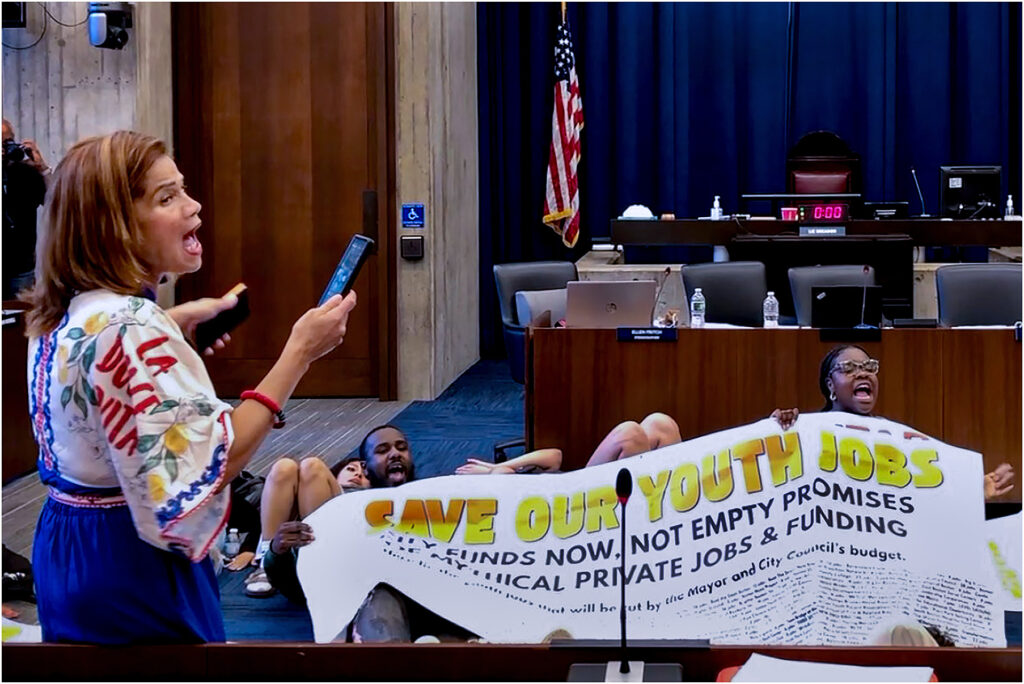
Above, Councillor Mejia joined protestors— some of whom were later arrested— in a protest inside the council chamber on June 10, 2026. Chris Lovett photo
Amid chants and shouting, the protesters also urged a blanket rejection of the mayor’s budget, in hopes that the action would increase the council’s limited power to change spending plans. That argument was seconded later by Mejia, who had joined in the chanting while recording part of the protest on the chamber floor with her smartphone.
Hours later, District 7 (Roxbury) Councillor Miniard Culpepper spoke on late-breaking changes to the amendment package coming to his attention after the protest and interruption.
“Something happened when they took over. Everybody left. It was like smoke. They came back in, then we end up with this,” he said, declaring support for a more limited “restoration” with diminished enthusiasm.
“This is not the package I went to sleep with last night, excited about,” he said. “We thought we were beefing it up,” he went on to add. “And, instead of beefing it up, it got beefed down. But I’m going to vote for it because, if I don’t… we might not get anything.”
Budget amendments were also advanced, unsuccessfully, by Flynn and Councillor At-Large Erin Murphy. But one of the main groups pushing for changes in the mayor’s original plan, the Better Budget Alliance, reacted to the vote by declaring a partial victory.
“Yesterday’s budget vote was, above all, a testament to the power of our organizing,” the group posted on Instagram. “We had wins, and we had moments that will set us up for an ever-stronger movement next year.”
Though they ended up approving the final amendment package, FitzGerald, Culpepper, Flynn, Murphy and District 4 (Dorchester/Mattapan) Councillor Brian Worrell had pushed in May for a wholesale rejection of Wu’s original budget, in a vote that failed to win a majority.
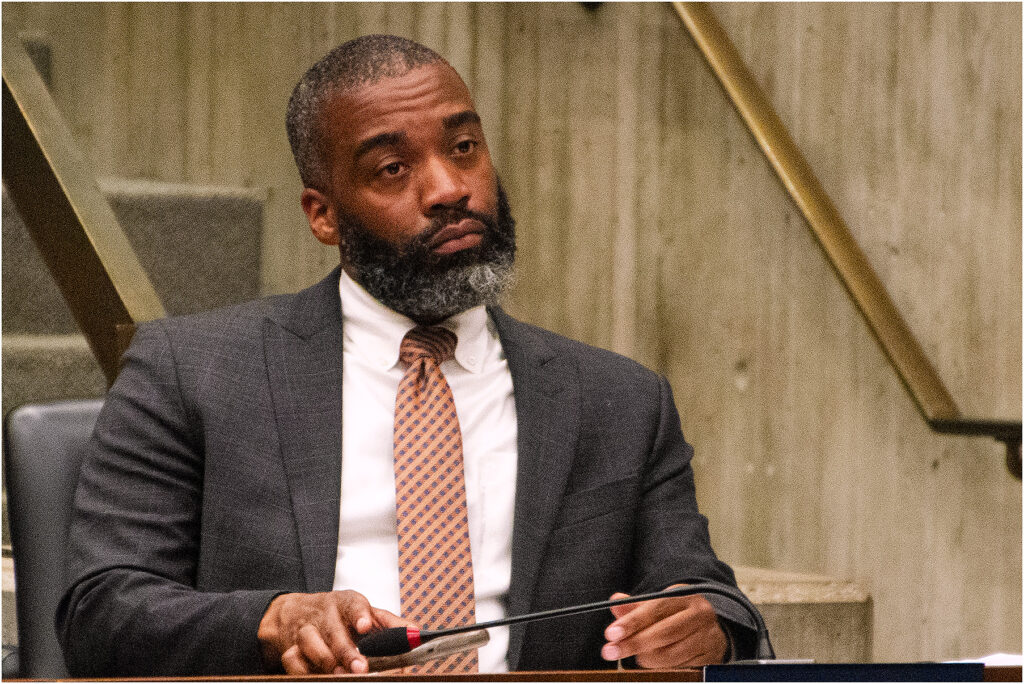
Councillor Brian Worrell is shown during June 10, 2026 budget deliberations. Chris Lovett photo
“Time and time again,” Worrell said before his vote on June 10, “we hear the same message. ‘There’s no money. It’s going to get worse. Do not ask for more, do not expect more, and don’t even imagine more.’ But, in one of the wealthiest cities in the country, with a 4.9 billion budget, nearly 2 billion in reserves, and a track record of collecting more than 200 million above projected revenue, I have to ask, who says there’s no money?”
The final vote took place after word had been spread that the protest had resulted in seven arrests on a charge of trespass, followed by release the same evening. Without specifying the action, Worrell summed up the weeks of response to budget-planning by city residents and advocates as a call for stronger action from the council.
“We have to change the process itself,” he argued. “The council needs real power over how revenue gets set and how the budget gets built. And that’s not just the ability to react to what lands on our desks. That is the next fight: making sure this council is not just hearing residents’ concerns, but has real power and all the information needed to act on them.”
As councillors worked on the budget, the mayor’s administration drew attention to rising expenses—especially for city employee health coverage—and declining revenue from new development. In an interview on June 5, following the council’s separate 8-5 vote cutting jobs for some of the paraprofessionals in the Boston Schools Dept., FitzGerald cast the FY27 budget as the lead-up to more difficulties.
“None of these things I see in the very short term are going to change,” he concluded. “Next year, we’re going to be in a position that might even be worse off than this current upcoming fiscal year, when we have to vote on the ‘28 budget, so I just really want to make sure if this is the beginning of a rough patch for the city of Boston, the more you do on the front end, the softer landing you’ll have throughout.”
