

By Cara Gillis, Special to the Reporter
When we moved into our house on Hinckley Street 24 years ago, we experienced what I think of as the true Dorchester neighborhood. There were neighbors you knew well and neighbors you simply waved to while walking down the street, but everyone understood that if someone needed help, you stepped in.
When I was home with a toddler and pregnant with my second child, a neighbor would clear my sidewalk whenever a weekday snowstorm hit. If your car battery died, someone had jumper cables. If you needed to borrow a tool, there was always a nearby door you could knock on. It wasn’t perfect, but it was a community. The other parents at our local preschool became the ones we sat with in the stands when our kids played Little League and later at high school graduation ceremonies.
Since moving to Dorchester (or, returning to Dorchester in my husband’s case) every house on our street that has come up for sale has been purchased by an investor or developer who does not live in Dorchester. The multi-family homes that were owner-occupied still provided rental housing, but they also provided stability.
The owners lived among us. They cared about the street because it was their street, too. They often rented to people they wanted as neighbors and sometimes charged below-market rents because community mattered as much as profit.
Today, absentee landlords outnumber homeowners on our block. The difference is impossible to miss.
Spaces are carved into additional bedrooms to maximize rental income. Rents are so high that multiple roommates are often required to afford a unit, resulting in what was once three cars per property becoming six, nine, or more. The street was never designed to accommodate that level of density. Tenants come and go. Gardens disappear. Maintenance becomes the minimum necessary to protect an investment. Neighbors often don’t even know who owns the property next door, let alone whom to call when a problem arises.
The beautiful Victorian house next to ours – the childhood home of author Dennis Lehane – once housed a family raising children upstairs and an elderly disabled couple downstairs. In 2019, it was purchased by a vacation rental company that operates it as an Airbnb by using loopholes in the city’s short-term rental ordinance. This same company owns at least two more properties in our neighborhood and more in the Greater Boston area.
The elderly tenants were given two weeks to leave so that additional bedrooms and bathrooms could be installed. Today, the units rent for hundreds of dollars per night, bringing a constant revolving door of visitors to a residential street. Some guests are wonderful. Many are not. Entitlement felt by visitors paying hundreds of dollars a night is a real thing. Parking restrictions are ignored. Sidewalks are blocked. Recycling rules are disregarded. The company maintains an immaculate, upscale interior for paying guests while the property itself feels devoid of the character and personality that once made it a home.
Most frustrating is that city officials know these properties exist. The penalties (when the rules are enforced) for violating the ordinance amount to little more than a cost of doing business. Meanwhile, we are constantly told that Boston faces a housing crisis. The housing is already here. Too much of it is simply being diverted away from residents and toward short-term visitors.
The effects extend beyond housing. Absentee landlords do not attend neighborhood meetings. They do not volunteer for Love Your Block. They do not organize block parties, coach youth sports, or help shovel a neighbor’s sidewalk. They are running a business, not participating in a community.
That same dynamic now appears in the proposal for a 42-unit hotel on East Cottage Street.
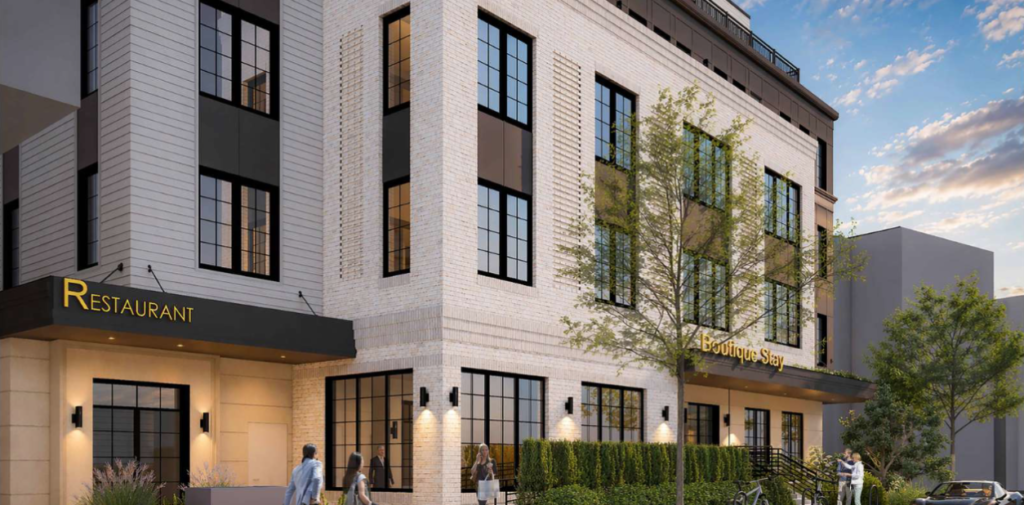
The developer argues that Dorchester lacks options for extended stays and neighborhood hotel accommodations. Yet Dorchester already has the highest number of short-term rentals in Boston, many clustered in this very area. Adding another 42 units dedicated to transient occupancy does not address a neighborhood need. It simply expands an already growing market.
The proposal is especially troubling because it resembles a dense residential development in nearly every respect. It will increase traffic, add pressure to already limited parking, place additional demands on neighborhood infrastructure, and concentrate a significant number of people on a relatively small site.
The difference is what it does not bring.
Housing creates neighbors. Neighbors build relationships. They support local schools, volunteer in community organizations, shop locally, and contribute to the social fabric that makes a neighborhood safe and cohesive.
A hotel creates density without creating community.
In Dorchester, we have also seen how quickly the use of a hotel can change a community. Once built, the neighborhood loses much of its ability to influence what happens there in the future. The impacts remain, but the connection to the community does not.
Taken individually, absentee landlords, short-term rentals, and a proposed hotel may seem like separate issues. They are not. They are part of the same trend: treating neighborhoods as assets to be monetized rather than communities to be strengthened.
Like Hinckley Street, much of our neighborhood feels as though it is approaching a tipping point. The qualities that made Dorchester special – stable neighbors, civic participation, pride of ownership, and people looking out for one another – are being slowly replaced by transience and profit maximization.
As Dorchester shifts from a neighborhood of residents to a neighborhood increasingly treated as an investment vehicle, the question facing our city is not simply what can be built here. It is what kind of neighborhood we want to leave for the next generation.
Once a community is lost, it is much harder to rebuild than a building.
