
Above: A sign in the crowd of hundreds which turned out for the vigil for Louisa Gag on July 16. Jesse Costa/WBUR
Mayor Michelle Wu on Friday outlined a series of immediate and longer-term changes to Boston’s street-safety program following the death of Louisa Gag, a city transportation planner and longtime advocate who was struck and killed by a truck while riding her bicycle in Mission Hill earlier this month.
In a six-page letter to residents dated July 24, Wu said the city will review the Tremont Street corridor where Gag was killed, install more durable barriers along protected bicycle lanes, step up enforcement against vehicles blocking bike lanes and crosswalks, and pursue stronger safety regulations for large trucks.
Gag, 36, was struck by a truck on July 9 at Parker and Tremont streets. The Roslindale native later died from her injuries. Boston Police and the Suffolk County district attorney’s office are investigating; the driver had not been charged as of last week.
Hundreds gathered at City Hall Plaza on July 16 for a vigil, where friends and colleagues remembered Gag as a dedicated and compassionate public servant and pressed officials to move more quickly on stalled safety projects.
Wu wrote today that Gag’s death has sparked immediate changes.
“I know many Bostonians are personally mourning this unfathomable loss while also continuing the fight for safer streets,” Wu wrote.
“Residents deserve clarity about our vision for streets that are safe, beautiful, and family-friendly,” she continued. “I am writing today to detail our immediate response to the crash that took Louisa’s life, our approach to delivering street safety improvements for all roadway users, and the work ahead.”
Chief among those changes is bringing back Chris Osgood to support the Streets Cabinet full-time with Tali Robbins. Now the senior advisor for infrastructure, Osgood was the chief of streets and a key architect for transportation and public works during Mayor Marty Walsh’s tenure, but took a different role when Wu was elected in 2021 and brought in former Chief of Streets Jascha Franklin-Hodge – who left his role with the city last year.
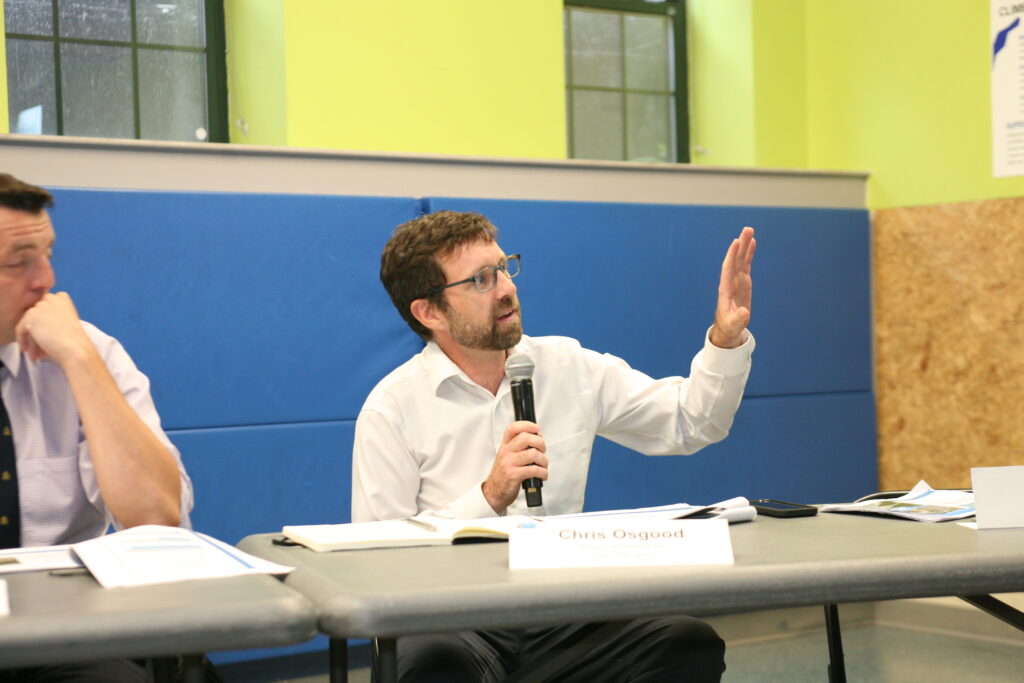
Chris Osgood, a senior advisor for infrastructure to Mayor Wu. Seth Daniel photo
Osgood also held a seat on the Morrissey Boulevard Commission. Robbins is currently the city’s deputy chief of policy. Both started on July 13 to initiate the changes laid out in the mayor’s letter today, she said.
“Over the coming weeks, I am also convening a group of advisors to assess the Streets Cabinet’s organizational structure, staff capacity, and resource needs. This group will advise on ways to improve and accelerate the delivery of safer streets and critical services,” she wrote, noting that the city will also conduct a “comprehensive safety and urban design evaluation of the Tremont Street corridor in Mission Hill to identify important fixes” alongside the police investigation into Gag’s death.
Two immediate changes are looking at the use of flex posts in existing bike lanes to determine whether “cast-in-place” or other more durable barriers will be installed instead.
“We will expand the use of more durable protective barriers wherever feasible, including by coordinating upcoming resurfacing with installations later this year,” read the letter. “And we are installing quick-build barriers in priority locations where more permanent construction is not possible this year…”
A second immediate priority, Wu said, is examining large trucks on the city’s roadways, as a large truck was involved in Gag’s death and, according to the letter, “heavy commercial vehicles” have been involved in a majority of fatal crashes with cyclists over the last 10 years. That effort will include more robust enforcement of the truck side-guard ordinance, and a full review of the routes used by heavy commercial vehicles in the city, Wu said.
More long-term goals focused on a return to the priorities in the “Vision Zero” initiative started during the Walsh administration.
One of the changes is to get caught up on re-paving city streets. The mayor wrote the city “fell behind on annual roadway resurfacing, allowing road conditions to deteriorate.” She wrote that in 2025 they put a priority on catching up and resurfaced 50 miles of roadway and are on track to match that in 2026.
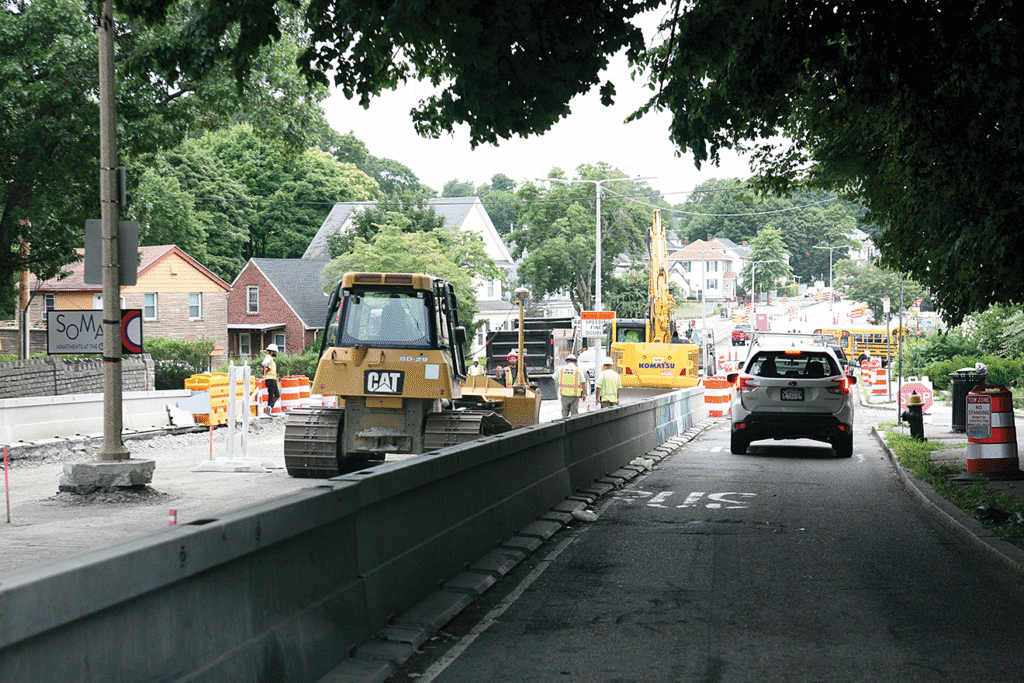
A view of Cummins Highway reconstruction in 2024. Seth Daniel photo
“Repaving is a critical opportunity to install essential safety upgrades, including those that were identified through prior planning efforts,” she wrote. “We will continue to pair resurfacing work with safety, accessibility, and public realm improvements.”
She also noted that utility companies would be held to a higher standard in repairing their intrusions on the roadways.
“Because so many of our roadways are impacted by essential utility repairs that require opening up the street, we will prioritize holding utility companies accountable for timely, high-quality road repairs after their work is completed,” she wrote.
Another directive is to better protect cycling networks, moving away from flex posts and to more durable materials even on an interim basis.
“Moving forward, we are transitioning to more durable and effective bike lane protections, such as cast-in-place concrete barriers, like those recently installed on Congress Street,” she wrote. “These barriers cost less than fully constructed curbs while providing substantially greater protection and requiring less maintenance.”
Another key element, she said, is “targeted, effective enforcement,” along the roadways, which has been a common request from the public within the planning processes for Blue Hill Avenue, Columbia Road, and Cummins Highway – a refrain many in the community have said was ignored. Mayor Wu indicated that would now be a priority.
“Even the most well-designed streets become unsafe when vehicles are double-parked or blocking bike lanes, crosswalks, or sidewalks,” she wrote. “The City is ramping up targeted enforcement efforts at high-risk locations and working to improve our technology and response time.”
Wu said her plan is to improve the 311 mobile app to help with reporting traffic and parking violations and equip parking enforcement officers with the ability to react in real time and ticket vehicles before offenders leave.
“Parking enforcement officers will also use bikes to patrol streets more efficiently and respond more quickly,” she wrote.
The city will pair that with strong advocacy for statewide legislation to use cameras for enforcement of speeding, red-light violations, parking violations using photo enforcement, and MBTA cameras that will automatically ticket those blocking bus lanes and bus stops. The city and Boston Public Schools is also moving forward to procure technology for “school bus camera enforcement,” targeting those who pass school bus stop signs.
On that same topic, the city plans to roll out better traffic management, using more new technologies like artificial intelligence for traffic lights to reduce “congestion hot spots that create frustrating and unsafe conditions.”
The final piece of the plan focuses on city construction projects on streets and roadways, listing processes like Blue Hill Avenue, Columbia Road and Cummins Highway among more than a dozen others citywide.
She wrote that a key problem for those construction projects was simply too many projects in the pipeline and not enough capacity and funding to deliver them.
“Especially in a constrained fiscal environment, it is essential that each street investment is carefully prioritized, designed to be well-integrated into the neighborhood, and built to last,” she wrote.
More than a page of the letter focused in on the community planning processes that have taken place, noting that a review she ordered last year of finished projects revealed “specific concerns had not been heard or effectively addressed through the community process, and that the final designs resulted in negative impacts that could have been mitigated.”
That has resulted in a long-overdue change, she wrote, to how projects are picked and how they are planned with the community – a major change from how things have been done in the last five years.
“Meaningful community engagement should not delay a project until unanimous agreement is reached, nor become merely a box to check before rushing to implementation,” she wrote. “Community engagement is how we address tradeoffs fairly, cultivate trust through genuine dialogue, and arrive at the most effective design details. Good design is critical to our mission of delivering safe streets.”
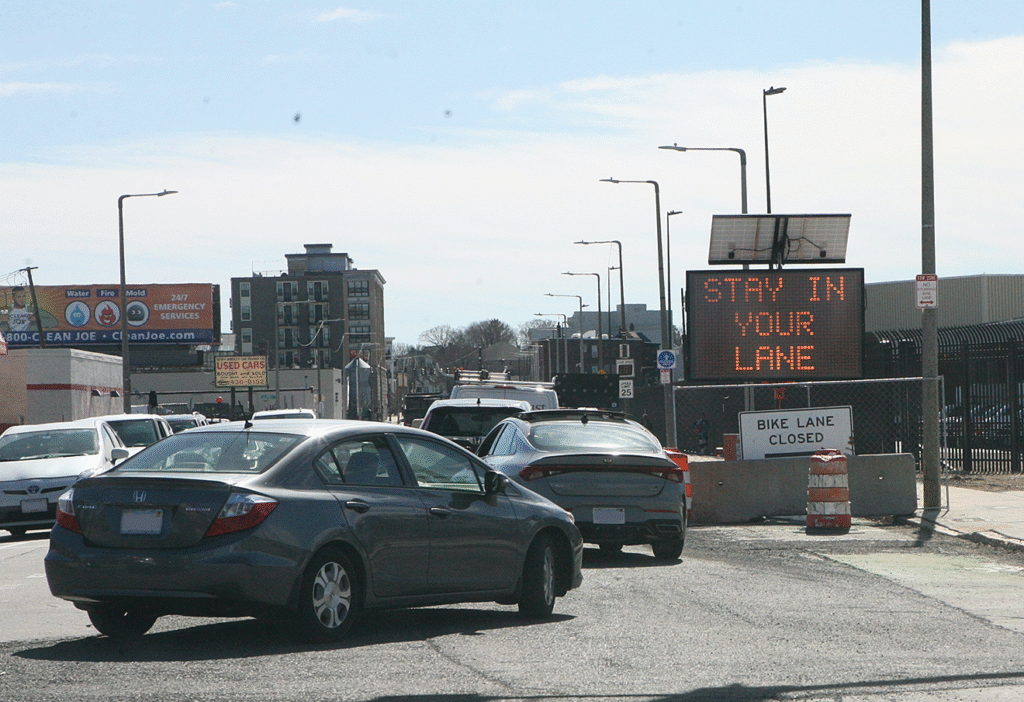
That review also led to internal changes in city departments. While the mayor wrote that internal re-tool “has taken longer than anticipated,” it has finally produced a good result to move forward on existing projects – including Blue Hill Avenue and Columbia Road in Dorchester and Mattapan.
“With this process in place, we are already strengthening collaboration with the MBTA to improve mobility and safety along Rutherford Avenue, Columbus Avenue, and Blue Hill Avenue,” read the letter. “Planning and design are also moving forward for Egleston Square; along with renewed engagement for Columbia Road, Downtown Crossing, Maverick Square, Roslindale Square, and other areas.”
The mayor concluded by referencing Gag once again, noting that her legacy will be achieved by working “to make this vision a reality” that will be “done together.”
