
Three years ago, I found myself flying to Montgomery Alabama for the Professional Agricultural Workers Conference (PAWC), an event hosted by Tuskegee University for Black agriculture workers. I was definitely out of my element, but I went as a representative of Dr. Hal May, who was unable to make it that year.
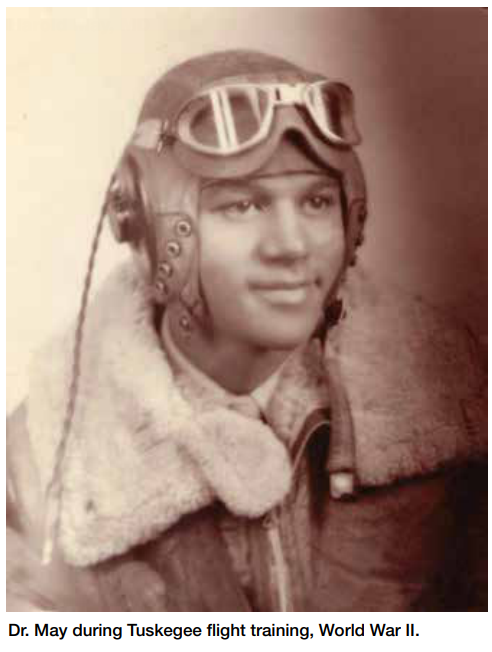
Hal’s relationship with Tuskegee goes way, way back, and he is very devoted to the PAWC. I spent my time at the conference going to sessions about new techniques for planting crops, but when I mentioned Dr. May’s name, everyone perked up. For Hal is one of the last of a cherished group – he is a Tuskegee Airman, and he turned 100 years old on Thursday this week (Aug. 19).
The Tuskegee Airmen were the valiant Black soldiers who learned to fly fighter planes in the cause of defeating the Axis powers in World War II. They fought bravely and successfully in the days before Blacks were integrated into the armed forces. Hal, a native of Peekskill, New York, was still in training when the war ended.
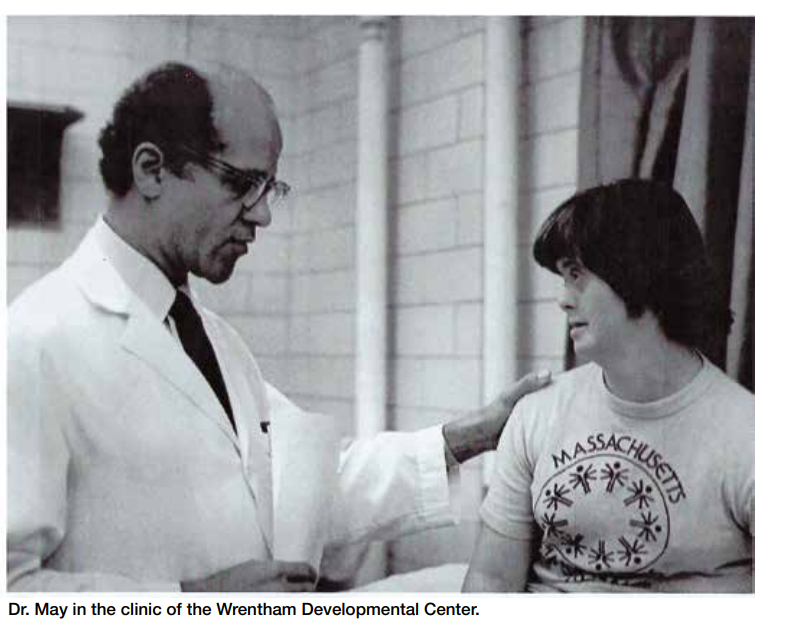
After the war, he enrolled in Harvard Medical School and became the first Black surgical resident at Massachusetts General Hospital. He worked in Haiti for many years before coming back to Boston, where he became a leader in the field of community medicine. He has spent his long life in service to others.
I had the pleasure of meeting Hal more than 25 years ago when he came to a meeting in Codman Square with a group of philanthropists to find a way to help elementary school students in Dorchester. They all understood that the education system alone could not provide the support that children in families with limited incomes needed to succeed, and Hal was intent on making sure that children growing up in poverty would have a chance.
The group decided to financially support staff at three elementary schools that would help to coordinate health, support, and other services for students and their families.
Hal’s view that only systemic approaches would work to solve society’s problems rang true with me. He uses the human body as an example of how systems need to work together to allow for life to happen, and he wants to see that society’s systems be reformed so that society can work to allow humans to thrive.
Having worked in the healthcare system as head of the Codman Square Health Center, I understood that only seeing the medical conditions of people missed the bigger picture. For a healthcare system to be successful, it needed to work systemically with other parts of our society: educational, political, environmental, community. Our model at Codman Square blended healthcare with education, nutrition, exercise, outreach, support, public health services, and political action.
Hal asked for Codman to join his organization, FAMILY (an acronym for Fathers And Mothers, Infants, eLders, and Youth), which advocates for systemic approaches to solving the problems of the world. I’ve been on his board of directors ever since.
Hal wrote his ideas down in a document called the “FAMILY GPS, the guidance system for a compassionate society.” It presents a way to change the world for the better, which can be summarized in Hal’s oft-stated maxim: Always interact as though we were all members of one family – because we are. It’s a statement built off the great philosophical statements of our planet – the golden rule – treat others the way you want to be treated, and emphasize love, compassion, and empathy in our relationships.
It’s a statement of truth and wisdom.
Despite being a celebrated Tuskegee Airman, Hal doesn’t talk about that part of his life much. I didn’t know about his airman history until several years after meeting him. He didn’t even tell us that he was recently honored by the Massachusetts Senate, the governor, and even the Boston Red Sox, Bruins, and Celtics for his role as a Tuskegee Airman.
He prefers to be remembered for his medical work in Haiti and Boston, for his efforts to improve emergency medicine and to develop a regional medical disaster plan, as a leader in the emerging field of community medicine, and for FAMILY.
Hal continues to support agricultural work in Haiti, and, as our country celebrates the 250th anniversary of the Declaration of Independence, he says that we need to update it with a “Declaration of Interdependence,” recognizing that we’re all in this together.
As he hits the century mark, Hal continues to be focused on making sure FAMILY can continue advocating his systemic approach to solving the problems of the world by helping one another as though we are all members of one family – because we are.
