
By Marinell Rousmaniere
Mayor Michelle Wu took a bold step lasts week, leaning into her commitment to drive improvement in Boston Public Schools (BPS) on a very public stage. As part of her inaugural State of the Schools address, the mayor announced the launch of Wicked Math, a major expansion of advanced math opportunities for BPS students.
This is the type of announcement that could get lost amid urgent conversations about budgets, staffing, facilities, or transportation. But it shouldn’t.
Collective attention to and investment in math education are urgent and necessary. Math scores in Boston, which had long been below the state average, took a significant hit during the pandemic. Mayor Wu’s action places this timely equity issue at the forefront of improving our schools and has the potential to be game-changing.
For years, access to advanced math has quietly reflected a resource divide. Some families pay for programs like Russian Math, Kumon, or Mathnasium outside of school. In many suburban communities, students regularly participate in competitions such as Math Olympiad, Math League, and MathCounts.
These experiences deepen students’ problem-solving abilities, connect them with peers who love math, and open pathways to advanced coursework and future careers.
But for many Boston students, these opportunities have been out of reach—not because of a lack of ability or interest, but because they come with costs and barriers that keep them out. The initiative announced this week changes that.
Wicked Math, a new partnership with EdVestors, The Young People’s Project, and The Calculus Project, will launch math clubs, strengthen math pathways, and train high school juniors and seniors to tutor middle school students. It is connected to the unified academic strategy that BPS is building, which aims to offer rigorous content consistently across all schools.
Wicked Math will provide students with opportunities to engage with math inside and outside of the classroom at no additional cost. Students will explore advanced mathematics and its potential applications, and broaden their path to additional higher-level math courses and STEM careers. Equally important is an investment in building teacher capacity so that rigorous mathematical thinking becomes part of everyday classroom practice for all students across the BPS.
Too often, math becomes a gatekeeper instead of a gateway. Early in their education journey, students begin to develop their math identity. When students have opportunities to struggle productively, solve complex problems, and engage in collaborative reasoning, they build confidence, creativity, and resilience. They learn not just how to do math but how to think.
A growing body of research points the way to what works: a focus on building strong math identities among students, access to high-quality instructional materials implemented with integrity and fidelity; high-quality, math-specific professional learning experiences for teachers, and equitable access to rigorous and relevant mathematics learning that prepares students for postsecondary and career opportunities.
And it matters: mathematics achievement is among the strongest predictors of long-term economic stability and career opportunities. One national study found that math performance had a greater influence on adult earnings than reading scores, family background, or even health. Meanwhile, Boston’s economy is increasingly driven by fields such as biotech, clean energy, and data science that rely on strong mathematical and analytical skills.
Boston has a long history as a leader in public education. We have been at our best when we focus on what matters, expand access, and insist that brilliance exists everywhere and that opportunity must, too. This initiative is another chance to lead.
Mayor Wu deserves recognition for elevating math access as both an education equity and economic priority. Superintendent Skipper deserves credit for embedding this work into the daily fabric of teaching and learning. And our educators deserve our support as they help students see themselves as mathematical thinkers.
This is a collective undertaking that reflects a shared belief: to build a better Boston where every student from every neighborhood can participate in the City’s workforce and civic life. When we expand who gets to do math, we expand who gets to imagine, create, lead, and shape what comes next for our city.
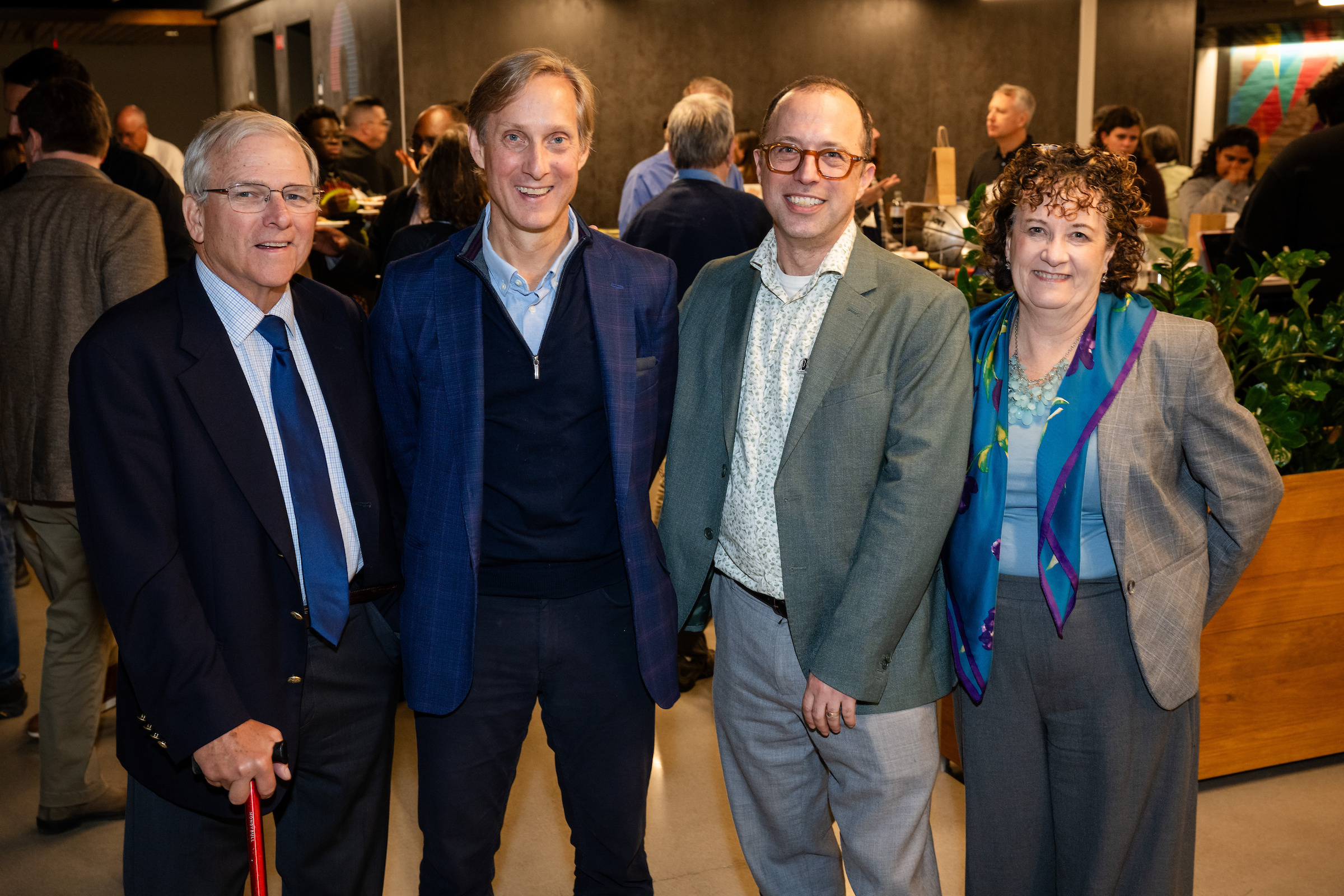
Marinell Rousmaniere is the president & CEO of EdVestors, a Boston-based school improvement organization.
