
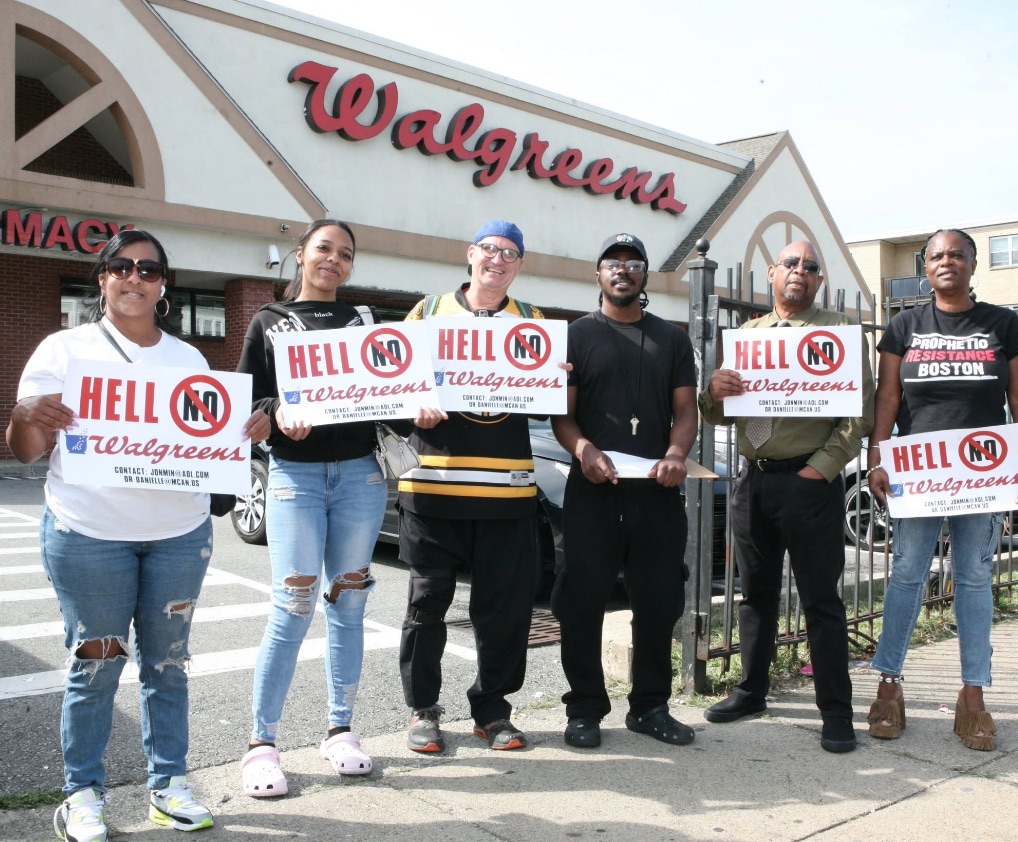

A meeting on March 31 in the community room at 86 Southern Ave. brought more than 100 people in person and online, with many there to confront city violence-prevention leaders for what they believe are misplaced priorities in funding and support. Seth Daniel photo
A March 31 huddle between the city’s public safety leaders and neighborhood activists in Dorchester offered up a sometimes harsh critique of how the Wu administration is funding and deploying street-level resources to thwart violence.
The meeting, which included about 100 people virtually and in person inside a community room on Southern Avenue, was convened as part of a series organized by the Boston Public Health Commission’s (BPHC) Office of Violence Prevention as it makes plans for summer programs.
Dr. Isaac Yablo, who leads the city’s efforts as the mayor’s senior advisor for public safety, was on hand to hear directly from activists, including some who vented about a lack of grant funding to support their work.
“I don’t think you have a pulse on what’s going on in the community,” said Mac Hudson, director of AccessMA, a program that uses formerly incarcerated people to serve the community.
“They can influence these young people but in your mind you don’t think they can…You don’t know the level of impact and influence that some people have here. You are perpetuating the same system as when white folks sat in that same seat, and the approach and thought process needs to change.”
Minister Randy Muhammad, of Muhammad’s Mosque #11 and coordinator of several anti-violence programs on the streets and inside correctional facilities, said he was optimistic when Yablo took office, but “nothing ever materialized” from their conversations.
“You have to get the money and resources into the hands of those on the ground doing the real work, because many of them have no budget,” he said.
Paulo Debarros of the Cape Verdean Association of Boston called Yablo “a good guy” who “needs more support, resources, and funding.
“We have experts that have been here and done the work and have the relationships you need already,” he said. “But you had people there that want to do the work but don’t want promises that go unfulfilled. They continue to do the work without that money, but they are angry about that. Things didn’t end well at that meeting.”
He said the Violence Intervention Program (VIP) is missing from Bowdoin Street, where a task force already exists to address crime. “I would love to see more presence of the VIP coordinator on Bowdoin,” he said. “I don’t know what they are doing, but they are not here, and we need VIP here.”
Yablo noted that the city had budgeted about $500,000 to the Louis D. Brown Peace Institute for anti-violence and survivor programming, and another $750,000 to the Boston Housing Authority for anti-violence programming in their developments.
And he added that he has devoted a lot of money to gun violence prevention, particularly for young people, and that is a priority for the office.
“Violence is a public health issue and taking a community-informed approach to violence prevention, response, and community healing helps ensure Boston is a city where everyone has an equal opportunity at a safe and healthy life,” read a statement to The Reporter this week from BPHC.
“As the Office of Violence Prevention works to prevent violence and address related trauma, we listen to community concerns and identify solutions that best support our residents. We will continue to engage and collaborate with partners to address the root causes of violence and promote healing.”
In the background of the meeting was displeasure among many in the room over the city’s termination of Romilda Pereira, a longtime street worker who was in attendance. Pereira said she had hired an attorney to dispute that decision.
After the meeting, she noted that she and other anti-violence coordinators remained committed to the work.
“We really want to see change,” she said. “Our lives have been interrupted by violence and loss. My job is to make sure no one else loses that loved one to incarceration or the cemetery.”
Editor’s note: A second meeting of the Office of Violence Prevention referred to in an earlier version of this article that had been scheduled for later this month in Dorchester has been cancelled.
