

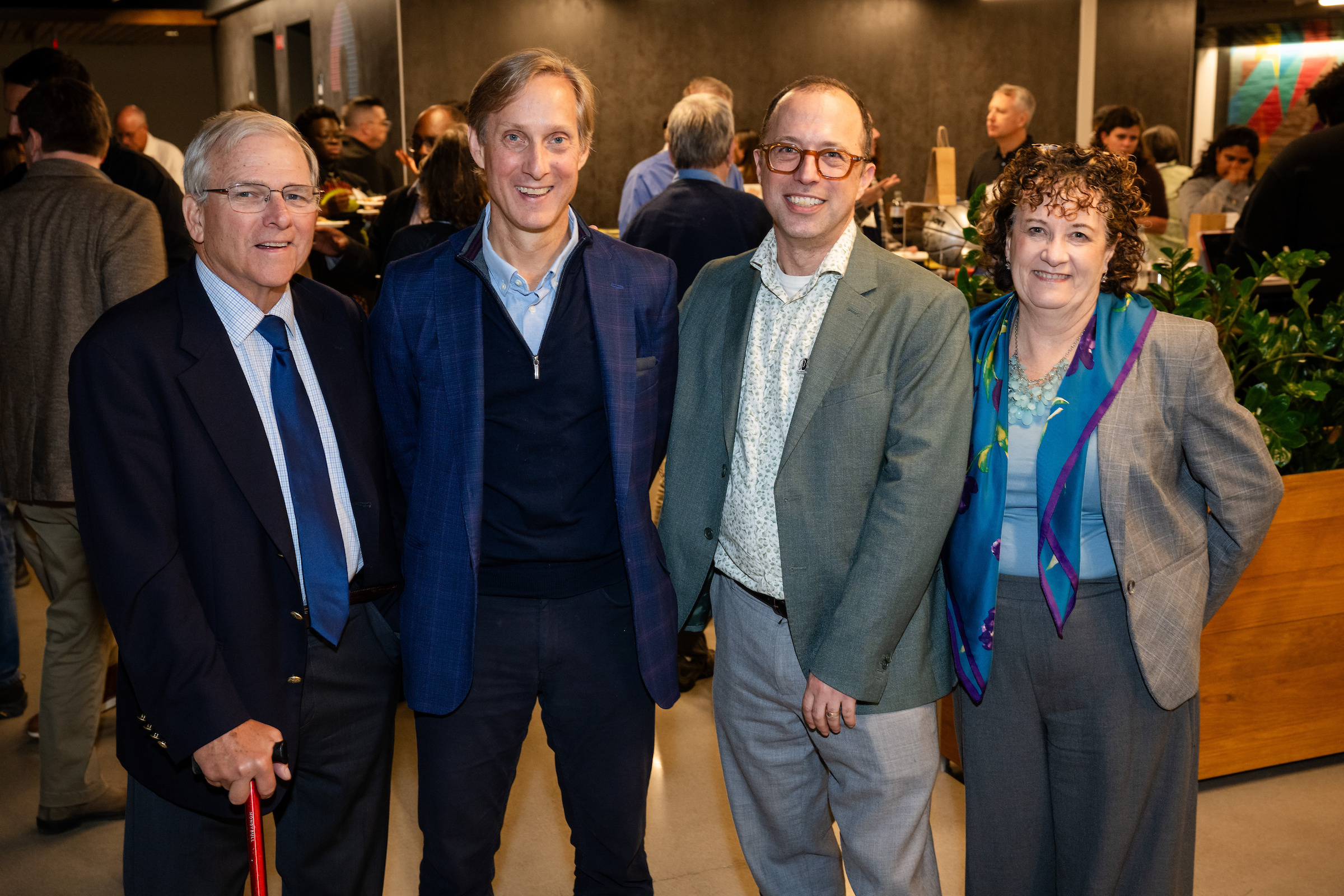

Above: Susan Burke at the PACE program in Mattapan last month. Photo by Cassidy McNeeley
Susan Burke, 79, is OFD and has no desire to leave the neighborhood that she’s always called home. Thanks to Harbor Health’s Program of All-Inclusive Care for the Elderly (PACE) on Morton Street, she can plan on staying put.
PACE serves some 100,000 participants in 33 states, including eight programs in Massachusetts. The fully integrated healthcare model provides participants and their caregivers with a comprehensive package of healthcare and support services, allowing older adults with chronic medical needs to remain at home in their communities.
This year, Harbor Health is celebrating the 30th anniversary of its popular program.
“Thirty years ago, we embraced the PACE model and challenged the assumption that nursing home placement was inevitable for older adults with complex medical needs,” explained Gretchen Reynard, senior vice president for the Elder Service Plan (ESP). “Today, the plan has grown into a vital regional resource, providing care that helps elders stay healthy while living in their communities.”
She added: “As we celebrate 30 years, we feel an even deeper commitment to our founding vision: that older adults deserve to age with dignity, independence, and comprehensive support in the communities they call home.”
Burke has been a participant in Mattapan’s PACE program for the last eight years and she said it has allowed her to remain living safely in Adams Village.
“I’m lucky enough I don’t live alone. I’m going to say my son lives with me, he’s going to say I live with him, but whatever!” joked Burke, a mother of two and a grandmother of three. “It’s a wonderful program, it really is. It helps people. Everyone has their own needs. I’m not the same as the person sitting next to me. The aides that work here try to accommodate them.”
For Burke, the ideal amount of her care is visiting the Morton Street facility twice a week. There, she undertakes physical therapy and connects with community members through daily events and activities.
Her favorite is arts and crafts, but just about everyone else seems to prefer Bingo.
“I don’t care for Bingo, I couldn’t care less if I ever played Bingo. I know people who would rather play Bingo than eat,” she says.
But at the end of the day, the center is much more than crafts and games; it’s a resource that brings together healthcare, home support, and community services all under one plan.
“A PACE program helps people who are 55 years or older, who really want to live in the community,” said Pamela Pattavina, the ESP’s director of Marketing and Enrollment. “It’s really about a place they call home. It could be an apartment, it could be their own home, they might live with their extended family, but whatever they call home is where they want to stay.

“In general, people do not want to end up in a nursing home; they would like to remain at home with services for as long as possible, and that’s what we do. We provide that for them.”
She continued, “We follow them all the way through their journey of aging. That could include hospital care, nursing home care, therapeutic, all different kinds of things. We really follow them all the way through. Not only for them, but for their family.”
PACE helps with things like doctor’s visits, medicine, rides, meals, and daily needs. All medical and support services offered by Medicare and Medicaid are included in PACE.
Added senior medical director Dr. Ilona Kopits: “It’s a true adult day health center like other ones in the city. The difference here is that a clinical component is attached to it. We’re serving a very fragile population. This is a Medicare and Medicaid population. These patients are complicated. They have complicated medical histories; our job is to take care of a really high-risk group.”
To be eligible for the program, participants between 55 and 65 must be disabled, while a disability is not required for those 65 and older.
Regardless of a person’s age, community marketing and senior enrollment specialist Patricia Hooper encourages participants to act sooner rather than later.
“You don’t have to be at the end, you don’t have to be so sick. We want them to come to us when they say, ‘I’m getting older, I might need a little help,’ or ‘I would like to have some socialization.’ You start there, and then that program builds.”
She added: “So many people come to us in a reactive state. You should be looking at this before you’re in crisis. We’re here for you early. This is not a program where you feel like you’re in a nursing home. We really want to age in place with people. Those supports early on create the ability to stay independent even longer.”
According to Kopits, each care plan is individualized for individual patients and their families. The goal of this team is to help make an intimate care plan and then change it as needed,” Kopits said in an interview.
“Maybe we thought a patient was going to be great coming five days a week, but maybe three days a week is actually better for that person. They might start off coming in a lot more. As they get older and, quite frankly, sicker, we might be going to them more. Maybe two years go by, and they can’t come in anymore, so there is a schedule of going out to see them at home.”
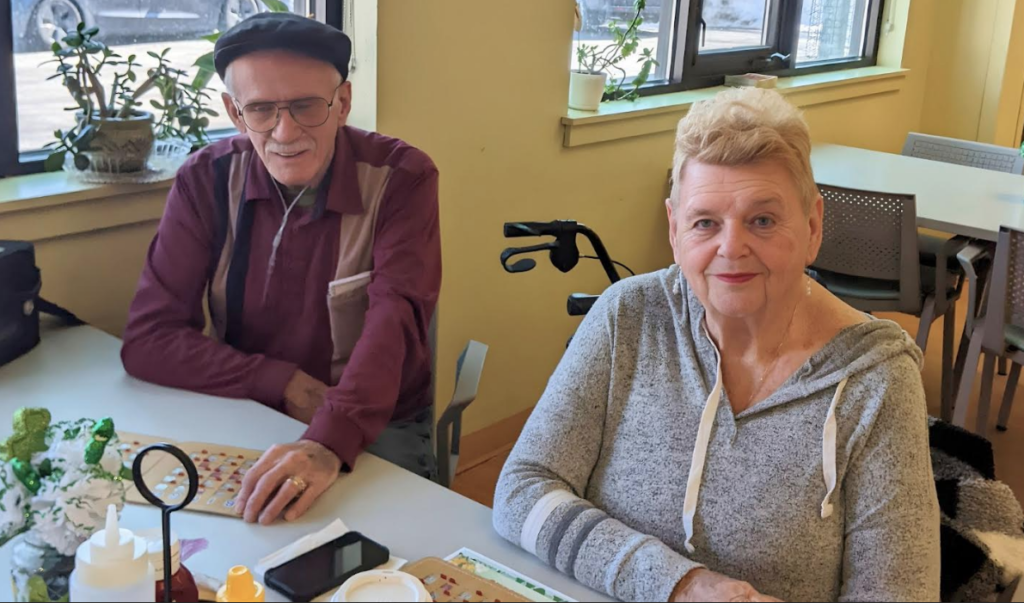
Linda Smelcher and Raymond Stevens at a recent bingo day at the Mattapan day center. PACE photo
But sometimes the opposite happens.
“There are some patients that start off one or two days a week, and we realize, actually, they need us five days a week. A lot of what it is is harm reduction. This is a safe alternative to being at home and forgetting to turn off the stove or leaving the house, and now the police have picked you up.”
Each PACE participant has an Interdisciplinary Team (IDT) made up of professionals – doctors, nurses, social workers, therapists, and dieticians – who work together to meet the needs of the participant and their families, making living at home easier for everyone involved.
“When we talk to patients, especially older patients, you want to touch on a couple of things: medication, mobility, mentation, and what matters most,” Kopits said. “What is a priority for you? What makes you happy? What is the thing you want to keep being able to do? We ask that when we are making our care plans for our patients.”
Said Reynard: “I think we’re providing a really unique resource to folks who are living in underserved communities. “It’s so unique because it’s what I would consider a one-stop shop. They have access to all the care in one place, which makes it so much easier for care coordination.”
She added, “I’ve heard several times throughout the years, people say we literally changed their lives in so many ways.”
To learn more about the program, visit hhsi.us/elder-service-plan.
