
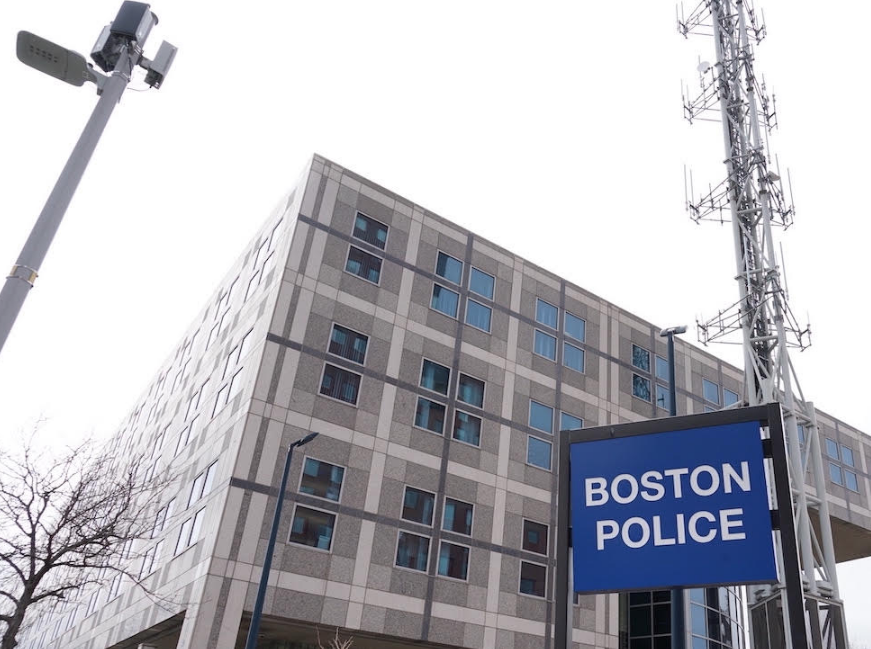

After Boston police officials repeatedly acquired and deployed surveillance technology tools without first obtaining permission from the City Council in accordance with a 2021 ordinance, councillors are advancing amendments they hope will prevent police from doing so again.
Councillor Ben Weber’s amended ordinance was filed last Wednesday and has not yet been scheduled for a hearing. All but one of his council colleagues — Julia Mejia— have signed on.
While the original ordinance made exceptions for police to deploy new technologies under exigent circumstances, the amended version would require police to notify the council within 30 days of a technology being deployed. The new ordinance would also require police to disclose the number of and locations of automatic license plate readers (ALPRs).
The push to tighten regulations comes after the Boston Police Department (BPD) last week released its 2025 surveillance report and revealed that police officials had repeatedly used social media monitoring technologies without council approval and that under a trial run, Flock had mistakenly made data from its ALPRs available to law enforcement entities across the nation.
While BPD terminated its trial with Flock, Councillor Weber says the Council should review subsequent trial runs BPD has entered into with Motorola and Axion ALPRs.
“Flock has been under national scrutiny,” he said. “With the other companies, we don’t know what they’re doing.”
The national scrutiny Flock is facing comes after news reports detailing the company’s surveillance capacity. Flock cameras record license plate numbers and can enable law enforcement to track a driver’s movements. Paired with AI systems Flock uses, the company can also predict where a driver will be at a given time.
While Flock officials have said they do not work with federal Immigration and Customs Enforcement agents, their cameras are part of a national network that police anywhere in the country can tap into.
Therefore, an ICE agent working in Massachusetts can ask a police officer in another state that works with ICE to track the movements of an immigrant in Massachusetts.
While Flock has caught flack for its extensive surveillance network, Motorola and Axon have engaged in similar practices. Motorola’s cameras are linked into what the company calls its National Vehicle Location Service.
Given the police department’s past willingness to deploy new technologies without council approval, it’s unclear to what extend the new ordinance will ensure compliance.
“It’s really embarrassing that they have to add language that says if the Boston City Council disapproves of the police using technology, they have to stop using it,” said Fatema Ahmad, who heads the Muslim Justice League.
Ahmad said the provision requiring police to disclose the location and number of ALPRs is a step in the right direction, but could go further.
“They should be getting this information for all the surveillance technologies the department is using,” she said. “That’s currently not the case.”
