

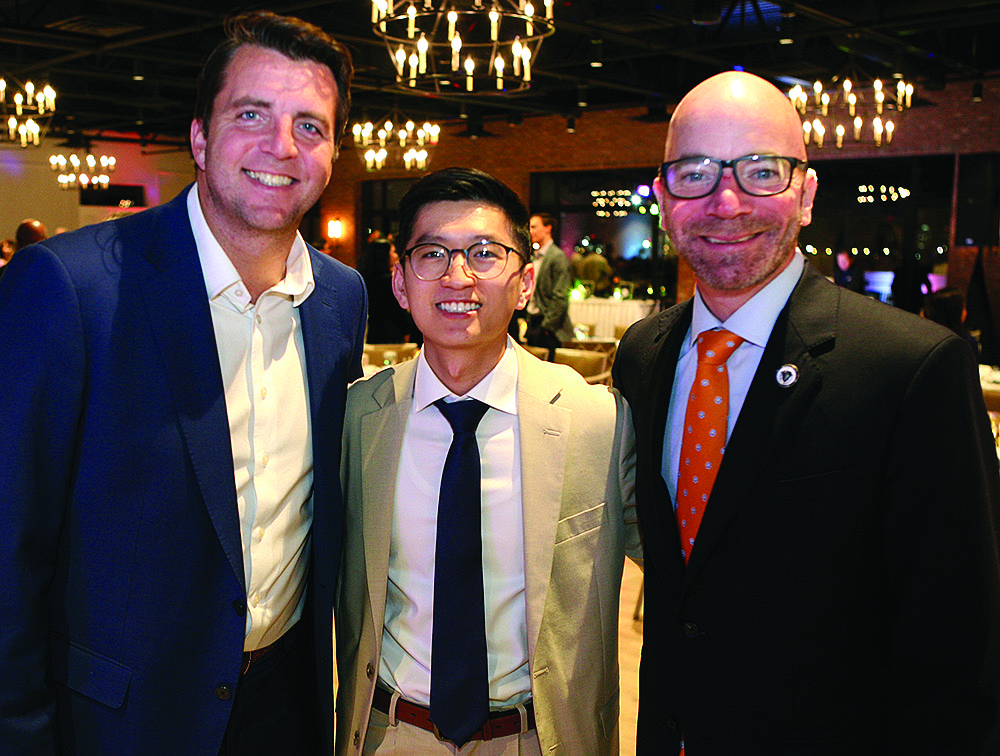
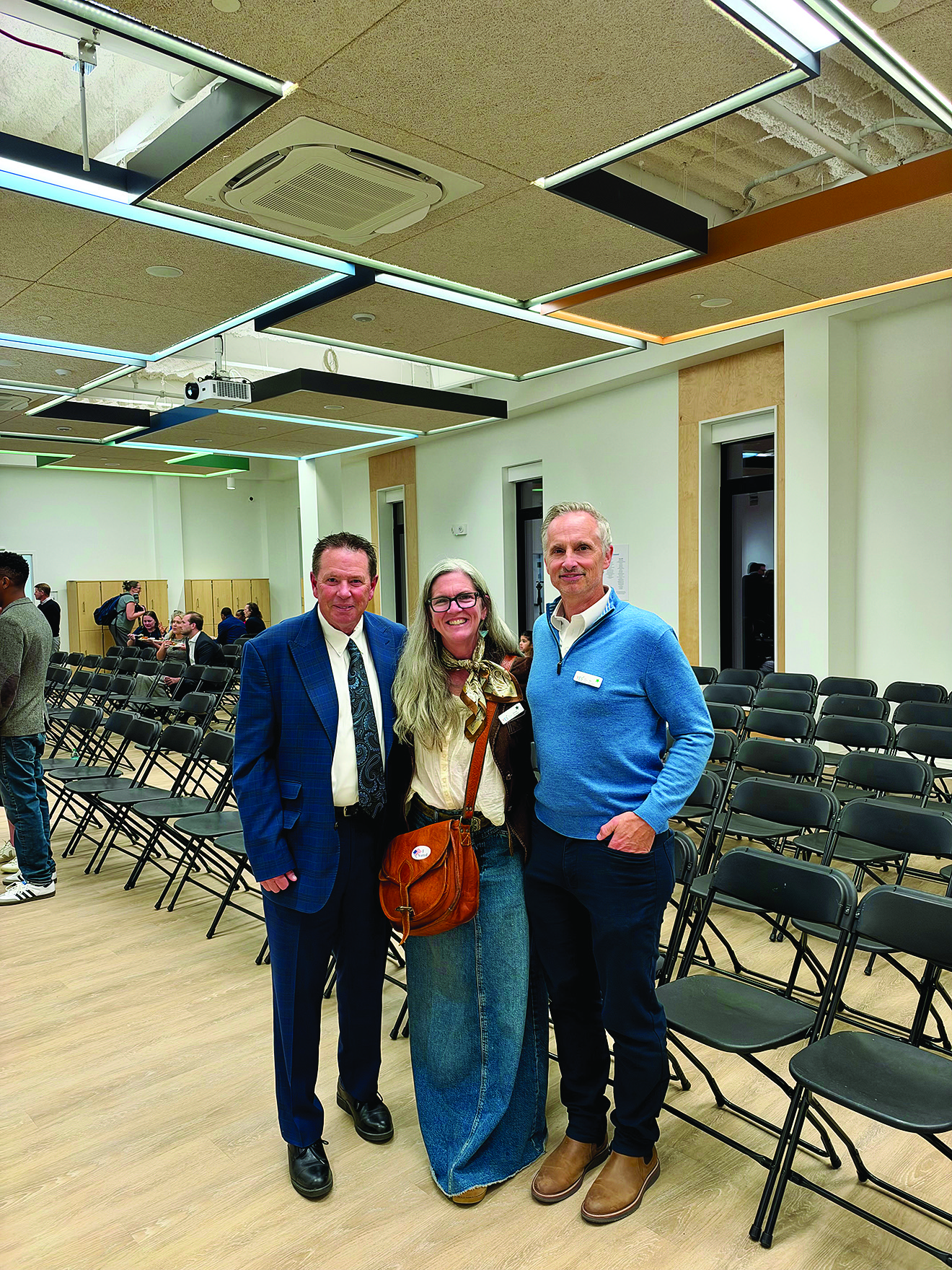
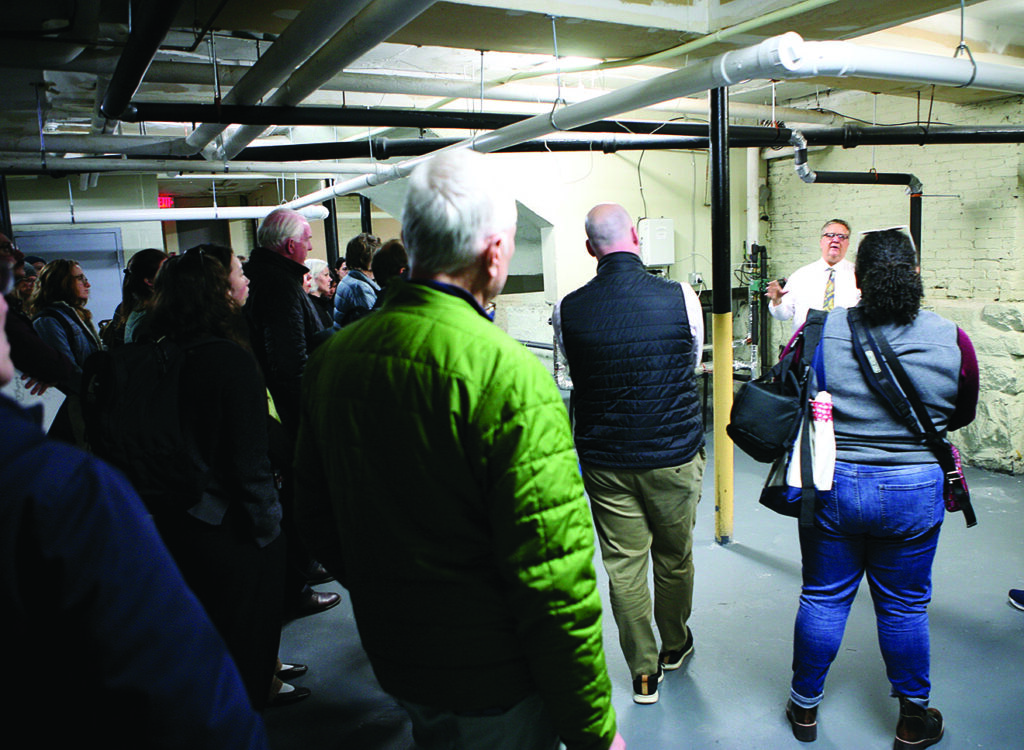
Energy efficiency professionals, manufacturers, and property managers gathered in the basement of 150-156 Columbia Rd. to observe a new technology used to lessen energy costs for heating hot water. Seth Daniel photo
Copyright © 2026 Boston Neighborhood News, Inc. This content may not be re-published or re-used without written permission.
When it comes to energy efficient heating technology, every degree counts, so the Codman Square Neighborhood Development Corporation (NDC) is employing the latest innovation to help improve the way hot water is heated in its multi-family buildings on Columbia Road.
Last week, the organization welcomed the inventor of the new process— along with The Reporter— to a demonstration of North America’s first horizontal drain hot water heat recovery system, which it installed last fall in the basement of a 24-unit building at 150-156 Columbia Rd.
“We are delighted and grateful for this opportunity,” said Ingrid Tucker, CEO of Codman Square NDC. “It is exciting to say we are the first and only community development corporation across the country that has embarked on this endeavor.”
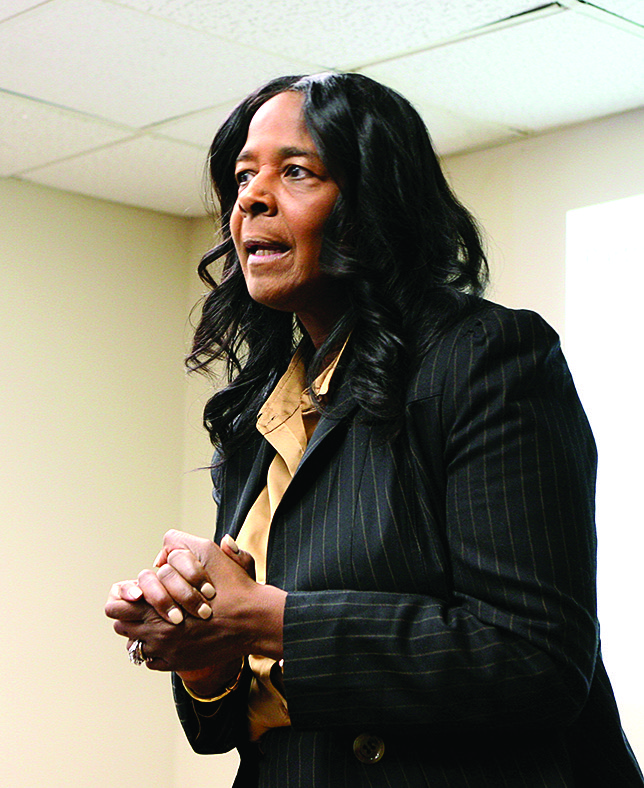
Ingrid Tucker, CEO of Codman Square NDC.
The technology is based on capturing the heat from hot water as it leaves the building. When hot water from the sink or shower goes down the drain, it naturally adheres to the inside wall of the drain pipe and heats it up.
The heat recovery system involves wrapping piping around the already heated drain pipe to pre-heat incoming cold water as it makes its way to a hot water heater.
That means the hot water heater doesn’t have to work as hard to get to 120 degrees. The method can save as much as 30 percent in energy usage.
“The water coming in is 50 degrees and the hot water heater sends it out at 120 degrees,” said Neil Donnelly, of New Ecology. “That’s a 70-degree temperature rise. When we use our technology and get incoming water up 15 degrees by just using old drain water, it gets to the hot water heater at 65 degrees and less energy is needed to heat it up to 120 degrees. In that way you’re saving 30 percent on your energy loads.”
The technology NDC employs was paid for with a grant from the City of Boston and other funding sources to explore ways to decarbonize other NDC-owned buildings at 180 Columbia Rd. and 150-156 Columbia Rd.
Vertical drain hot water heat recovery is an old technology commonly attached to drain pipes in Canadian and Swedish homes – and there is hope that residential homes in New England will also adopt the smaller units.
But using a large horizontal system for multi-unit buildings is a new frontier.
“This is a big deal,” said Donnelly. “When you’re talking about big, multi-family housing, domestic hot water use is 20 to 25 percent of total energy use and we’re talking about cutting 25 percent of that, which is 5 to 10 percent of the total building energy use. We’re seeing 26 percent savings on energy costs commonly.”
Gerald Van Decker, who invented the technology within his company, RenewABILITY Energy, has been monitoring the setup on Columbia Road for the last year. He said his company has worked primarily in residential homes.
“This is old hat in some jurisdictions,” he said. “They know it works and it works well. The water heater manufacturers don’t like our technology because water heaters last 20 to 30 percent longer with our technology…I wouldn’t sell my company to them for all the tea in China because they would shut it down. This should be in every house here and in every apartment building here.”
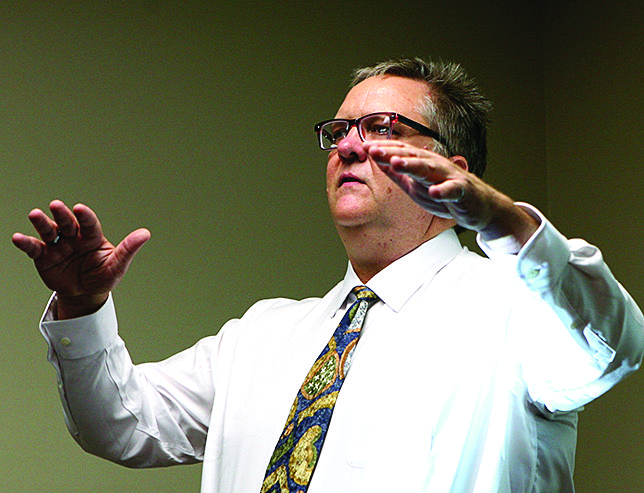
Gerald Van Decker, who invented the technology within his company, RenewABILITY Energy.
The units on Columbia Road were designed as prefabricated to make the technology replicable everywhere – with only five connections to make to the plumbing system and some re-routing of drain pipes. Van Decker said the units are specialized and set up with the intent of converting them for greater levels of efficiency in the future.
Being able to show they can reduce energy loads and save money – particularly with larger units in larger buildings with an easy install – will be a “big deal,” he said, in expanding the use of the technology.
“It was a bit of an evolution doing this design prefabricated,” he said. “We wanted to reduce onsite install efforts and control costs. It has made it so much easier.”
At this point, though, exorbitant labor costs have eaten into the savings, New Ecology’s Donnelly said. That’s because it’s new and few know how to do it. With time and training, they believe those costs will come down and the average payback time will shorten.
As to the buildings at 150-156 Columbia Rd., the total cost was $66,426 for the units and 66 percent of that was for labor. The simple payback period for the equipment is calculated at 6.76 years.
Copyright © 2026 Boston Neighborhood News, Inc. This content may not be re-published or re-used without written permission.
