

By Sam Drysdale
State House News Service
Boston Public Schools “wasted significant public funds” in its procurement of school supplies and services, and should pause payments on vendor contracts for non-essential goods, the inspector general’s office said in a report released Wednesday.
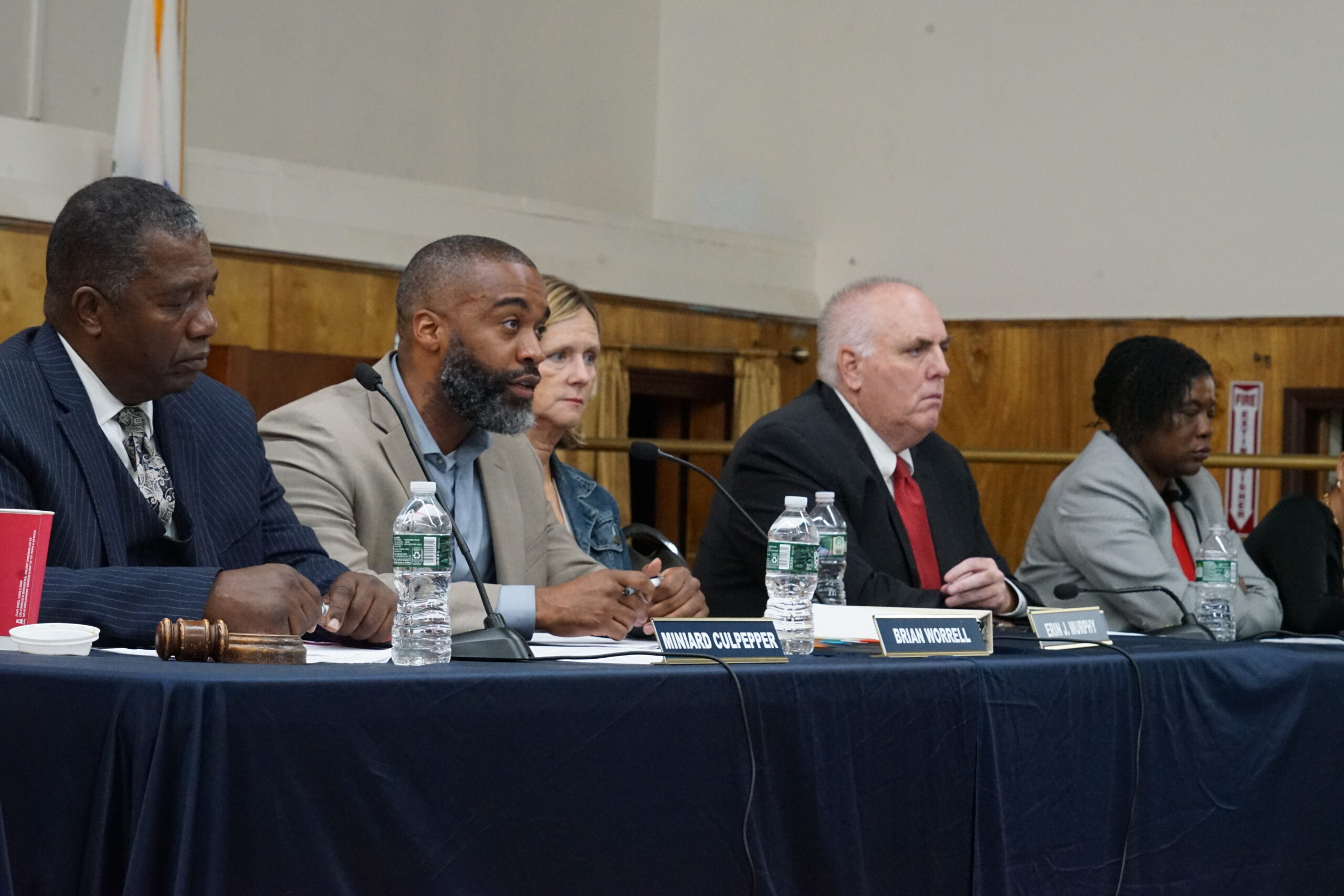
Inspector General Jeffrey Shapiro (pictured above) found the district, the largest in the state, “failed to apply foundational requirements of procurement law, basic business operations, and the principles of good governance in numerous ways, resulting in the waste of significant public funds,” including at least $857,261 in public funds spent illegally or improperly over several years.
Shapiro recommended an internal investigation and 10-day pause on the district’s payments to vendors for certain departments. The district says it plans to implement that pause with vendors for non-essential goods and services while still preparing for the upcoming school year.
Among the “various schemes involving improper and illegal processes” that Shapiro outlined in a letter with the report to Boston Mayor Michelle Wu, Superintendent Mary Skipper and School Committee Chair Jeri Robinson, he wrote that the district paid invoices through “inappropriate pass-through accounts while also paying the pass-through vendor a markup”; used service contracts to pay other, unrelated vendors for things not outlined in their contract; used a “sole source” contract to acquire goods already available through existing sources; relied on “ineffective internal controls that enabled employees to regularly violate detailed written policies”; and circumvented the city’s residency requirements for vendors by designating an employee as a contractor with a firm where they did not work.
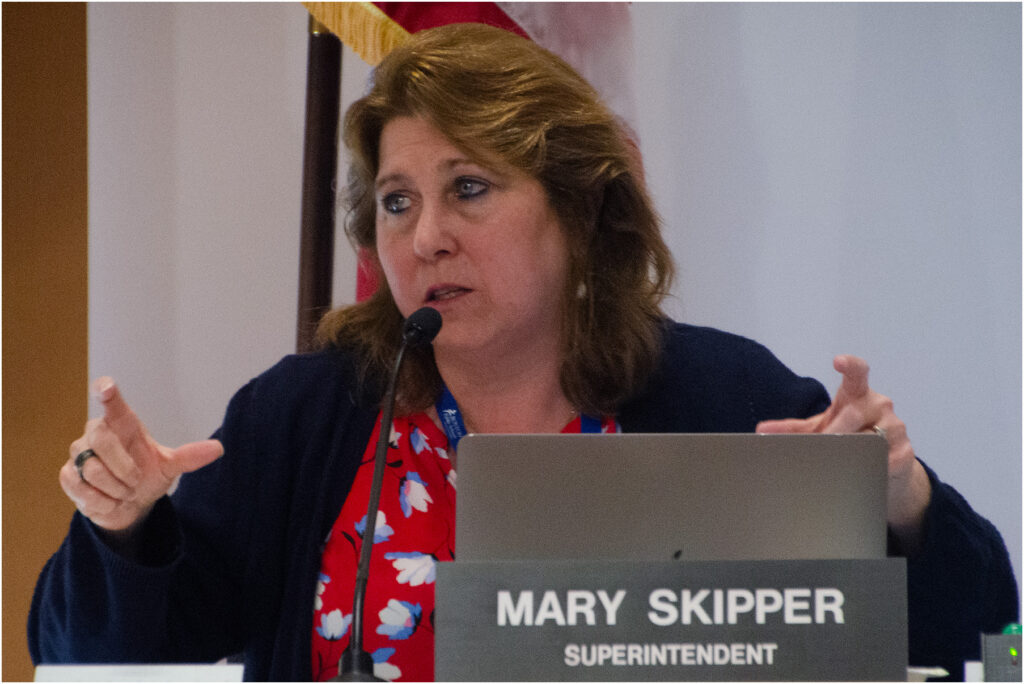
BPS Superintendent Mary Skipper. Reporter file photo
The report includes a review of practices from 2019 through 2024. The findings of the report will spur reforms, the district said, while noting that it does not suggest any BPS employees personally made money off the practices.
Shapiro wrote that it appears BPS Division of Operations “participated in, or were at least aware of, this conduct.”
The report includes some specific instances of what the inspector general’s office considers improper procurement, including tens of thousands of dollars in pass-through invoices with hidden markups — which total over $600,000 routed through five vendors, and over $75,000 wasted on markups.
When BPS owed a vendor money it either lacked a contract for or had already maxed out a contract ceiling, the report alleges staff would tell the unpaid vendor to send its invoice to a different vendor who still had contract capacity. That second vendor paid the bill and then re-billed BPS with a 10 percent to 19 percent markup tacked on.
For example, BPS owed $164,489 to Boston Mechanical and $54,481 to Homer Contracting — instead of changing the contracts, BPS routed both through a vendor called ENE, which pocketed $24,673 and $10,587 in markups respectively just for passing the money through.
In one case, BPS went through vendor Tighe and Bond, an environmental and engineering consulting firm, to pay the district’s Department of Environmental Protection licensing fees, then paid a 10 percent markup on top.
Shapiro acknowledged that school budgets are complicated, and factors like declining enrollment, special education costs, increased transportation and infrastructure costs all complicate BPS spending.
“But the issues raised by the [Office of the Inspector General] investigations are not the types of unintended consequences or mistakes that occur in the normal course of operating a large school district that must navigate a myriad of challenges,” the report says. “While very real, those factors are not among the root causes for the misconduct uncovered by these OIG investigations.”
It continues, “On the contrary, the troubling conduct uncovered involves basic business operations that have gone awry and that have remained unchecked for years.”
In a statement, the district thanked the inspector general’s office for its review.
“The report reviews activity from 2019 through 2024 and, in the two years since the IG’s Office first shared its concerns, Superintendent Skipper and the new operations leadership have implemented a number of business reforms to streamline payment and contracting systems, removed individuals and hired new leaders into key procurement roles, and significantly reduced the use of sole-source contracts, all to ensure that our students and schools are getting what they need at the best value for families and taxpayers,” the statement says.
The district said that the city and district will review the findings and develop a plan to fully implement the 25 recommendations in the report.
The inspector general’s office found during its investigations that BPS failed to act when alerted of some of this conduct by the Boston Finance Commission, an independent watchdog agency for the city. Interviews with district officials found little to no action was taken in response to these reports, a release from the OIG says.
“The failure by the Boston Public Schools’ Division of Operations to practice basic procurement and business operations is unacceptable,” Shapiro said in a statement. “Every school district in this Commonwealth must abide by the same rules when purchasing goods and services. Those rules help ensure fairness and transparency in the expenditure of the public’s money. The fact that a district with the staffing and budget of Boston could not perform basic procurement functions is astonishing.”
