
By Gage Vieno
Reporter Fellow
For many in the audience at the Strand Theatre on Thursday evening, June 25, “Tre Già, Măng Mọc: Generations of Vietnamese Diaspora in Boston” was more than a documentary screening; it was an opportunity to see decades of family history, sacrifice, and resilience reflected on the big screen.
The premiere of the 90-minute film brought together the young and the old, families, and curious community members for an evening that celebrated the history of Boston’s Vietnamese community with the telling of stories that organizers say have too often gone undocumented.
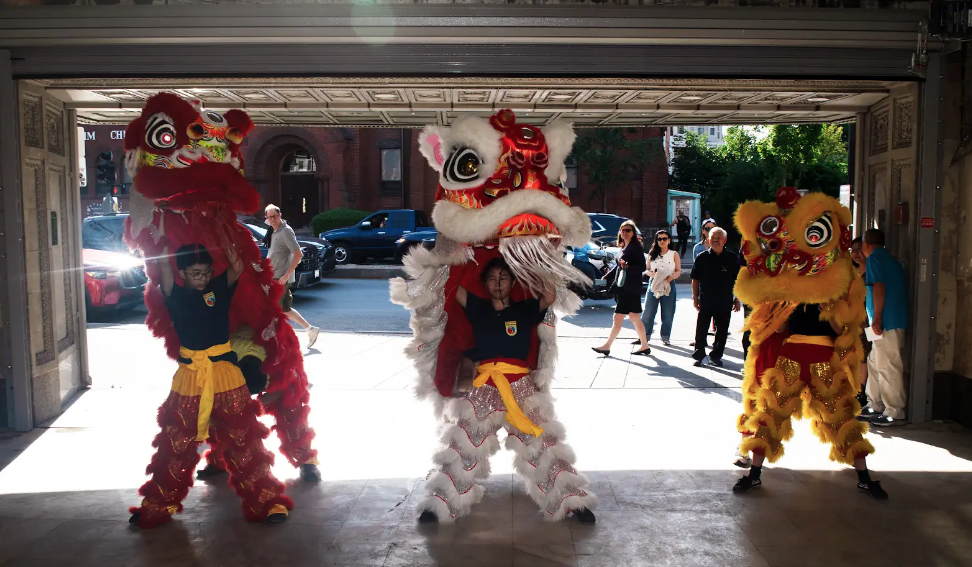
Hosted by Boston Little Saigon, the event also featured a lion dance, an exhibition, a musical performance, and a panel discussion with the filmmakers and community leaders following the screening.
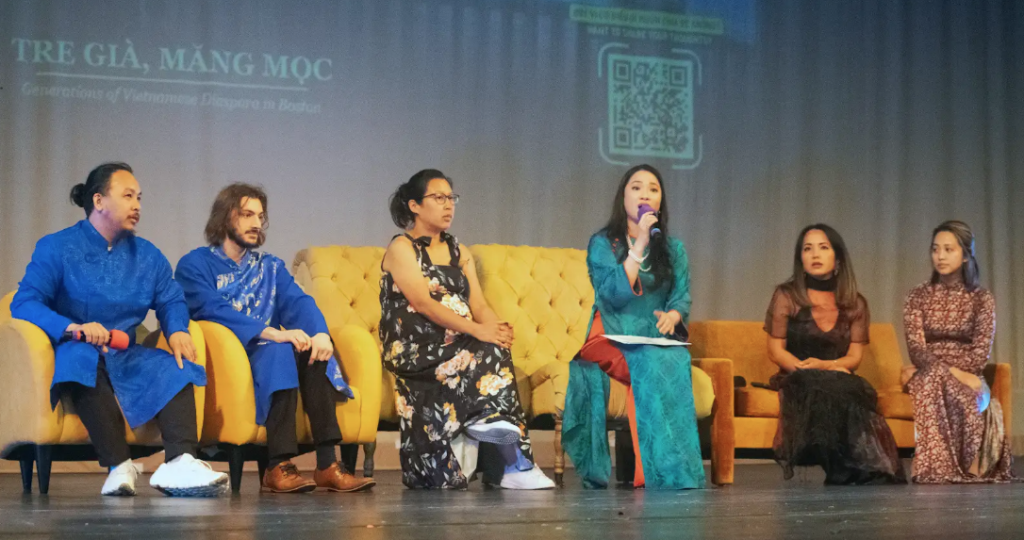
Director Lợi Huỳnh acknowledged that some parts of the film may be difficult for audiences to watch but he emphasized the importance of facing uncomfortable truths in storytelling.
“I think history is complex and history is nuanced,” said Huỳnh. “I don’t know if you can tell versions that are easy to digest without missing out on small little details that really help tell the full story.”
He also stressed the importance of engaging with the complexity of certain topics.
“I also think that it’s important for us to be able to sit with complexities, because it forces us to reflect and ask ourselves questions,” said Huỳnh. “Trauma is uncomfortable, and with truth sometimes you feel uncomfortable.”
The film arrives in a city where the Vietnamese diaspora has played a defining role in shaping parts of Dorchester, particularly Fields Corner, home to “Little Saigon.” Following the end of the Vietnam War in 1975, Vietnamese refugees began settling in Boston in increasing numbers, with many families establishing roots in Dorchester, where they found affordable housing, transit access, and emerging community networks.
Over time, Vietnamese-owned businesses, restaurants, markets, resident organizations, and cultural institutions transformed the neighborhood into one of New England’s most visible centers of Vietnamese American life. Fields Corner became a gathering place for new arrivals and later generations alike, with cultural events, language preservation efforts, and mutual aid networks helping to sustain the community across five decades and counting.
That history forms the broader backdrop of “Tre Già, Măng Mọc,” which frames Boston’s Vietnamese diaspora not as a single migration story, but as an ongoing, evolving community shaped by memory, displacement, and adaptation across generations.
Jordan Wateworth, the documentary’s editor and director of photography, reflected on his role as an outsider to the Vietnamese community, explaining his responsibility in shaping—but not centering—his own perspective.
“The community already has the story,” said Waterworth. “They already shared their stories. It was just part of my job to help bring that to the screen. It wasn’t just about being a storyteller. It was about being a steward of the story and of the community.”
Annie Lê, executive director of the film, and Board President of Boston Little Saigon, spoke about the importance of the stories, stating that “memory and history … play an important part because not everything is written in history books.”
Lê described the project as a way to preserve intergenerational memory, calling it, “The living archive that we can keep for our community.”
