
By Mela Bush and Azia Carle
Special to the Reporter
Boston is at a turning point. Once again Blue Hill Avenue is at the center of attention, with plans to move forward with a bus lane up the center of the corridor.
Our communities have waited long enough for better public transportation. We want to move faster, but we also want to move smarter. The question is not whether Boston should invest in transit improvements in these communities. The question is whether those plans are aligned with the peoples’ plans and priorities, and will they meet the needs of the communities they are meant to serve?
For years, many residents along Blue Hill Avenue have consistently opposed a center running bus lane. That opposition, however, was never about opposing better public transportation. It was about insisting on better planning, healthier investments, and co-creating solutions that reflect what the community has consistently asked for.
Residents have repeatedly called for dedicated transit that improves mobility, air quality, and community health without sacrificing mature trees, preserving, and protecting the local economy, and acknowledging the parking needs of residents and businesses. All the while quelling traffic congestion and moving transit-dependent residents around our communities faster and in clean-running vehicles.
Boston should build on the work that has already been done. Years of community planning have identified viable transportation design options that deserve serious evaluation.
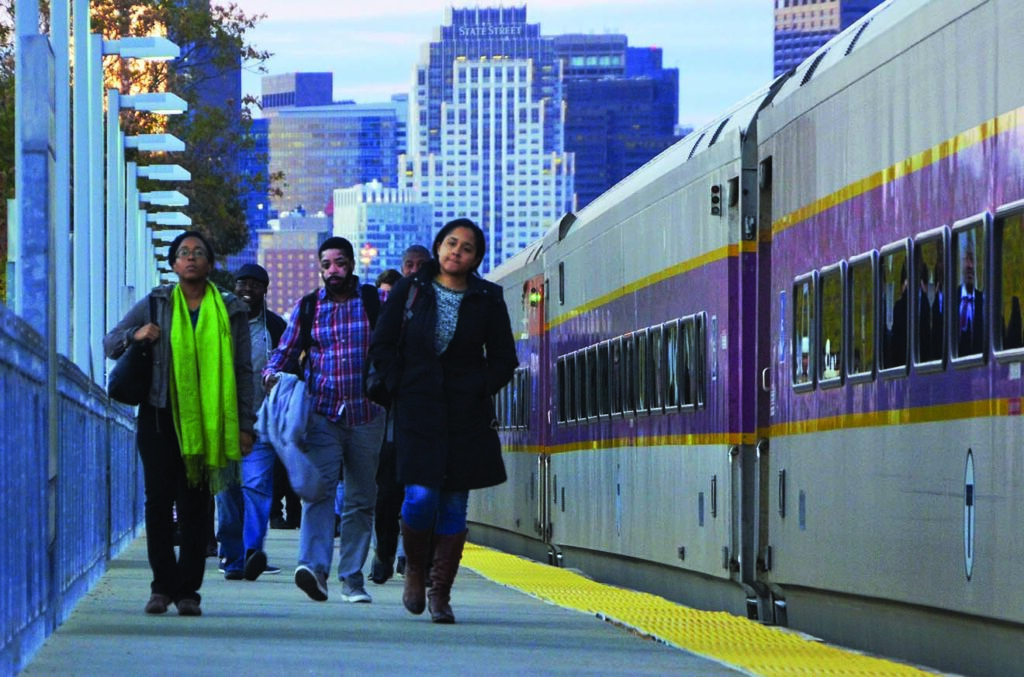
Commuters are shown on the platform of Uphams Corner station. File photo by Chris Lovett
For example, electrifying the Fairmount Line would provide cleaner, quieter, more reliable service while increasing service frequency and strengthening connections between Dorchester, Roxbury, Mattapan, Hyde Park, Readville, and downtown Boston. Repeated delays are unacceptable.
Neighborhood micro-transit could improve access to Fairmount Line stations, schools, healthcare facilities, jobs, and local business districts by solving first- and last-mile transportation challenges.
Light rail should also receive serious consideration. It offers high capacity, zero tailpipe emissions, reliable service, and permanent infrastructure that can support housing, local businesses, and long-term economic growth while providing a cleaner, healthier alternative to diesel buses.
The idea of an Orange Line extension deserves a study as well.
These are not competing ideas. They are viable transportation solutions that deserve a transparent evaluation based on mobility, environmental justice, public health, economic opportunity, longterm value, and the priorities residents have identified over many years.
For decades, transformational transit investments serving Dorchester, Roxbury, and Mattapan have been delayed or dismissed because of cost, while projects in other communities continued to move forward. Like the $2.3 billion dollar Green Line extension to Medford. Cost should never determine which neighborhoods receive generational infrastructure and which are expected to settle for less.
We all want better public transportation.
We all want to move faster.
We also want cleaner air, healthier neighborhoods, preserved trees, and investments that will serve current and future generations.
For too long, our communities have been holding our breath, waiting for meaningful investment. It is time for Boston to listen to and value the voices of the people, pause long enough to plan wisely, and finally breathe out a transportation system that delivers lasting relief.
Boston must get it right, not just fast.
Mela Bush and Azia Carle are staff members at ACTION For Equity, an organization that works to confront inequities and craft real solutions. It had its headquarters in Four Corners.
