

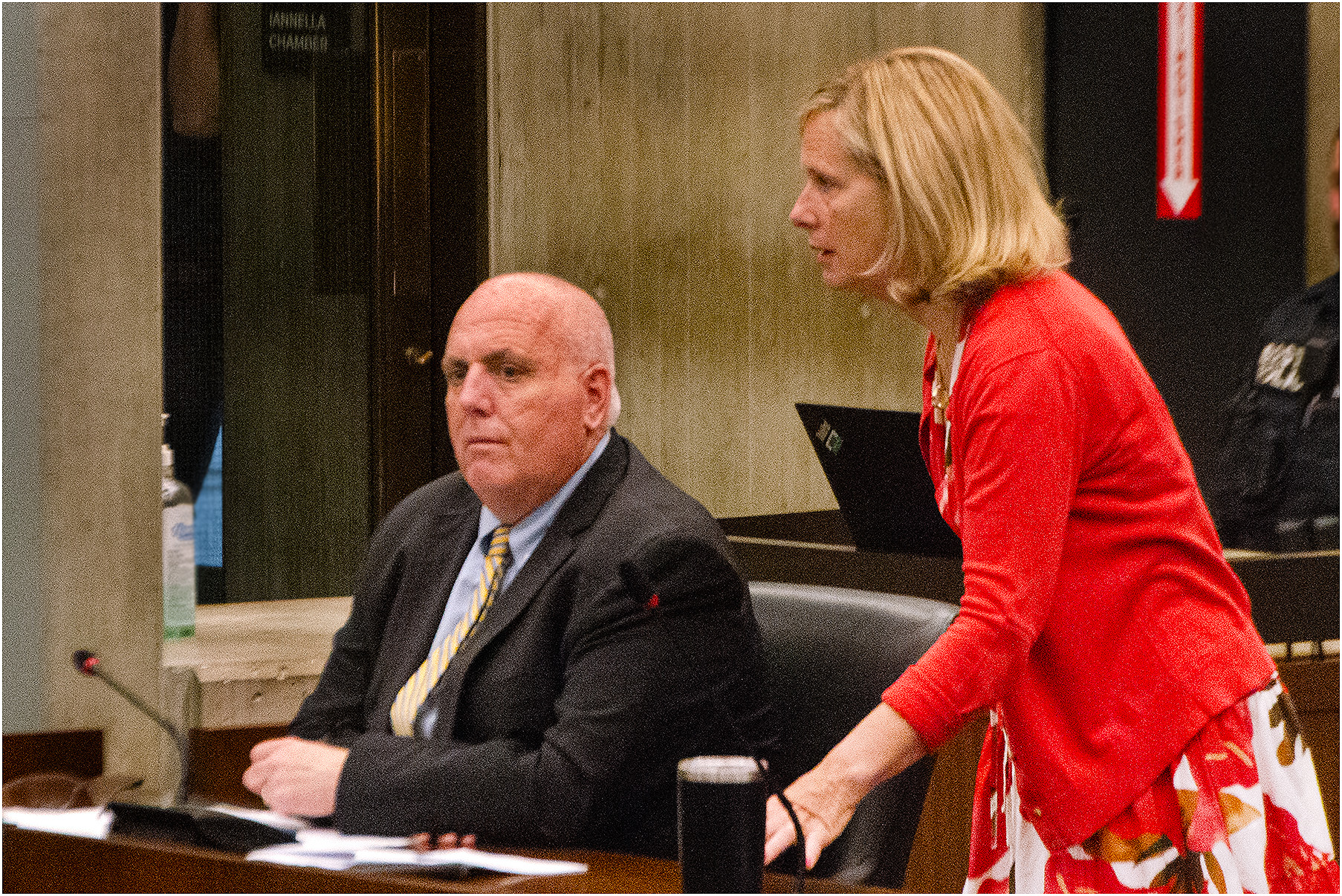
After the John W. McCormack Civic Association’s unanimous vote in its favor Tuesday night, Boston Collegiate Charter School will now move forward with plans to construct a 3,000-square-foot “cafetorium” on its Mayhew Street campus.
The school serves about 500 students from the 7th to 12th grades. No combined space for eating and learning exists on the school’s 46,000-square-foot property, said Executive Director Shannah Varón, who noted that students mostly eating lunch in the classrooms.
“There’s no convening room for the kids… there’s nowhere for kids to get together and actually hear anything,” Varón added. Attendees at the McCormack group’s monthly meeting reacted with surprise to that revelation. “That doesn’t seem fair,” one member said.
The proposed cafetorium will sit on an underutilized blacktopped space between the two existing school buildings, Varón said. The shorter building would act as a flexible location for students to eat during the normal school day, with the option to clear out tables in exchange for chairs when events like assemblies, performances, or alumni presentations take place.
The new space, she added, will hold about 100 students for meals and 295 for assemblies.
The cafetorium will rise to about the second floor of the main buildings, and be largely hidden from view by neighboring residents. Existing outdoor play space on the lot as well and the school parking lot will be preserved on the site.
The school held an informal meeting with abutters and also met with the McCormack civic zoning board on the plan about two weeks ago, Varón said. In the association voting on Tuesday, 23 members voted yes, with no one opposed.
A Zoning Board of Appeals hearing is scheduled for next Tues., Feb. 28, said Lindsay Snow of Qroe Preservation Development, who presented to the civic group alongside Varón. If the necessary relief is granted, construction drawings are expected to be completed by March.
The community will be given input into the bidding process for the project, Varón said. Community members can offer guidelines on construction details like hours, parking, rodent control concerns, and the like, Snow added.
Construction is expected to begin after school concludes at the end of June, and be finished by next spring 2018. “The majority of the messy, noisy stuff will take place during the summer when the kids are not here,” Varón said.
