
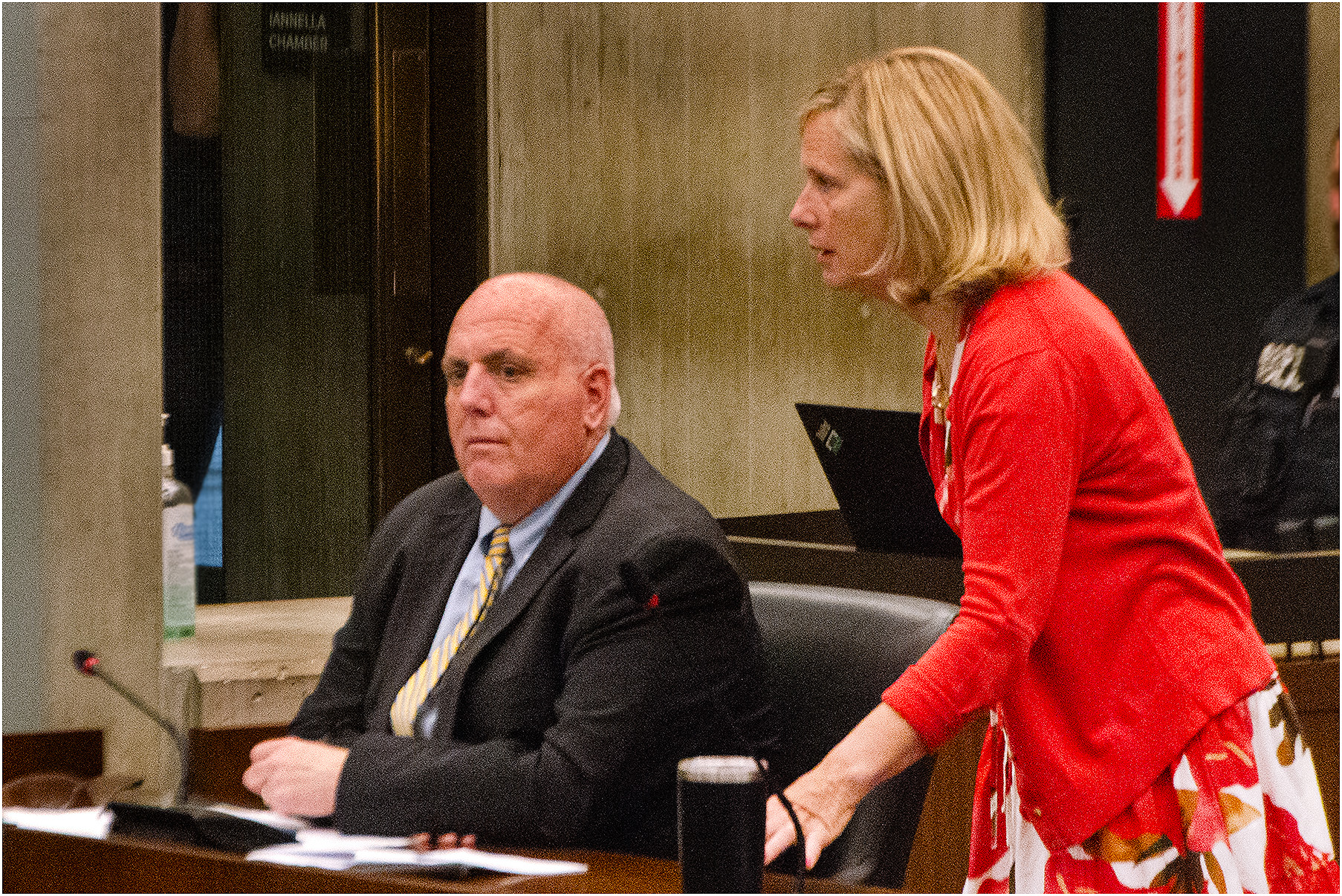
The following was offered to the Reporter by City Councillors Julia Mejia, Tania Fernandes Anderson, and Brian Worrell.
Our offices last week filed an ordinance that would create a Commission to Study and Develop Reparation Proposals for African Americans. Co-authored by community members, the ordinance would create a 15-member panel to define reparations as it relates to the reality of the Boston community, collect data and document historic harms and inequities experienced by African Americans in Boston, and develop a report with specific reparations proposals to address historic and contemporary inequalities resulting from structures and policies that have produced harm.
As expected, when we submitted our proposal, detractors dusted off the same tired rhetorical points we have been hearing for centuries. And while it wouldn’t be useful to try to counter every opposing argument presented, there is a general tone to a large number of them, and it is this: That we have somehow moved beyond the need for reparations. It’s history, all in the past. We fought a civil war, and when racism arose again, we passed the Civil Rights Act. Job done, right?
But history isn’t like a notebook, where you can turn over a new page and start completely fresh. History is ongoing and never-ending. And while Boston’s roots in slavery may feel far away, the social, political, and economic segregation of the Black community is much closer and lives on to this day.
Merchants in Boston, and anyone else who used free slave labor, profited immensely off of the enslavement of Black people, which led to more property ownership and generational wealth in white families.
A 2015 report prepared for the Federal Reserve Bank of Boston found the net worth of a Black family in Boston to be just $8, compared to $247,500 for White families. Redlining and blockbusting practices devalued property owned by Black residents, leading to lower generational wealth. Nowadays, homeownership rates for Black residents is half that of White residents, and Black households are valued 17.1 percent lower than similar homes owned by white households.
Our parents’ generation grew up before the Civil Rights Act. Their parents lived through the era of redlining and blockbusting and their parents’ parents were old enough to have been born into slavery. These are very real, present-day inequities that reparative justice seeks to define, call-out, and eliminate.
Reparative justice takes many forms. While yes, financial compensation is a part of the process, in reality it is so much more. According to the United Nations, reparation work can include:
• Restitution, which seeks to restore victims to their position before the violations occurred;
• Compensation, which is a financial award for harms;
• Rehabilitation, which seeks to provide care and services for victims beyond monetary payment;
•Satisfaction, which includes symbolic reparations such as public apologies and verifying facts; and
• Guarantee of non-repetition, which assures that this kind of harm shall never be repeated.
There are those who say that we should stop looking toward the past and just work on the future. But where we’re going is very much determined by where we’ve been, and reparative justice seeks to look at what harm has been caused in the past so that we may move forward toward a more just and equitable future. It is about Black liberation, honoring those whose shoulders we stand on, and planning for those who come after us.
The process of determining what a reparative justice model for Boston will look like will take time and patience, and we hope to have the community’s support as we move forward.
