

By Councillor Brian Worrell
After the Jan. 5 Council President vote, what I didn’t expect was to not feel alone. I felt Boston. I felt my neighborhood. It felt personal—because it is.
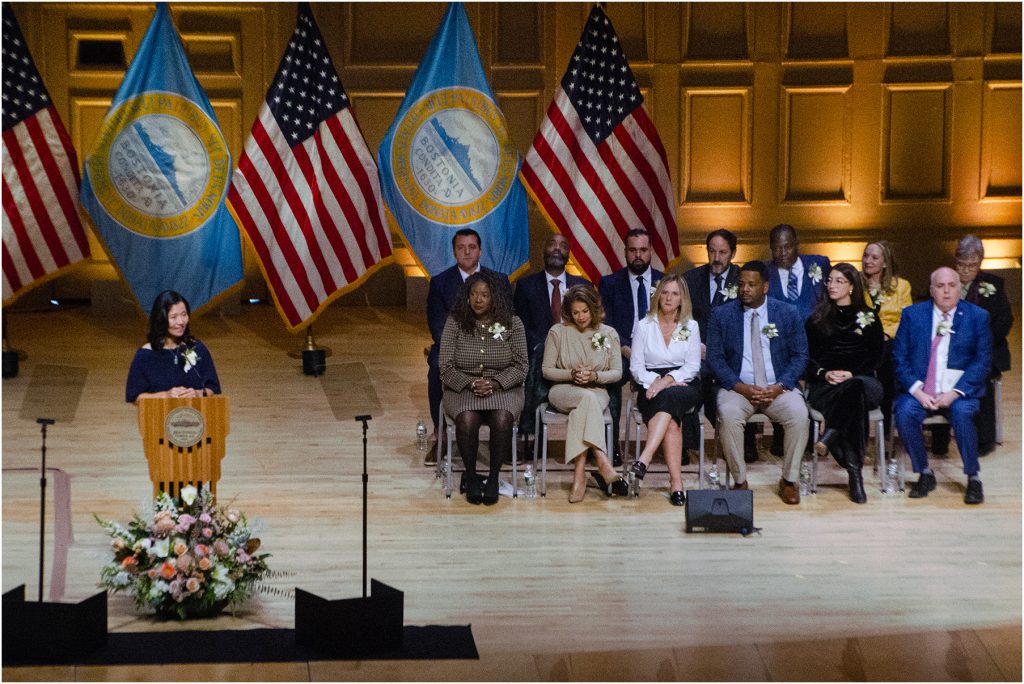
In the aftermath of the Rev. Martin Luther King Jr. Day and as we head toward Black History Month, I’ve been sitting with a different kind of question: Not just what happened on Boston’s Inauguration Day, but what it revealed about us— about whether we’re willing to do the slow, consistent work that real change requires.
Dr. King isn’t a symbol we pull out once a year. He’s a moral measuring stick. He challenged power, disrupted complacency, and demanded that people choose courage over comfort—especially when institutions tried to preserve them.
On Jan. 5, the City Council President vote ended 7–6. I came up one vote short. I respect the institution enough to accept the outcome and congratulate Councillor Liz Breadon.
I know a lot of people can relate to the feeling I had after the vote. You do the work. You stay late. You put in the extra hours when nobody’s watching. You take on the hard assignments because you care about the outcome. And despite your preparation and your track record, you still come up short.
I walked out of that chamber and my phone was blowing up — not with texts from political insiders, but with real people. Aunties. Students. Small business owners. Folks who don’t usually track the insider politics of City Hall.
That meant everything to me. Because it reminded me of the point of all of this: not titles, not headlines, not insider games — It is about the people.
I have always wanted politics to dominate the conversations in my neighborhood — not as a result of the drama, but due to an understanding of the importance that political decisions and power have related to our communities. And over the course of this process, and even now, that’s exactly what happened. People were talking in barbershops. People were calling into radio shows. People were breaking it down in group chats. Folks who usually tune out City Hall were tuned all the way in. That is not a loss. That is a win.
And that’s why I keep thinking about Mel King.
Mel taught Boston that change isn’t a single moment. It’s a chain. It’s built link by link, neighborhood by neighborhood, through organizing and participation that doesn’t disappear when the headline moves on. The dream isn’t only about the outcome. The dream is in the process. If people woke up, if people engaged, if people felt their voice mattered, then the chain got stronger.
And as we honor Black history, it’s worth asking ourselves a hard question: have we consistently organized our power at the citywide level—not just in moments of crisis, but as a sustained practice that shapes outcomes year after year? Not to shame us—because we have made progress—but to tell the truth: we have not fully converted our cultural and moral power into consistent, organized, citywide political power that continuously shapes positive outcomes for our community.
I also want to be honest about what I’ve been hearing, because it’s part of the reality we live in. People have told me, “Now you know who your friends are.” Others have said something heavier: that when a Black man gets close to power, the room changes. Whether everyone wants to admit that out loud or not, Boston has a history where representation is celebrated as an idea but contested when it approaches real authority.
And let’s be clear about something else: this isn’t only about “old guard” politics. Any ideology—left, right, or center—can become a gatekeeper when power concentrates among a few people behind closed doors. And too often in Boston, independent Black leadership gets celebrated in theory but resisted in practice when it gets close to real authority. If this moment shook things up, maybe it’s because it exposed how much work we still have to do to democratize power in this city.
And I want to name something else that happens right after moments like this: people tell you to “get over it” or to “move on.” But “get over it” is one of the oldest tools for thwarting progress. It’s another way of saying: don’t remember, don’t organize, don’t build momentum, don’t demand accountability. Every moment matters, every moment helps create the momentum we need to obtain the goals we have yet to achieve. That’s the chain. A link today becomes leverage tomorrow.
Dr. King asked the question “Where do we go from here?” We strengthen the chain.
Boston deserves a City Council that’s a true co-equal branch: one that collaborates with the administration and isn’t afraid to set its own agenda and lead with our own ideas, oversight and independent judgment. The best results come when we build coalitions, deliberate in public and govern with independent judgment. Independence doesn’t have to mean conflict; it means partnering with clarity and putting residents first. Debate isn’t dysfunction, it’s democracy at work. And no elected body should operate with an “in-crowd” and an “out-crowd.” Boston is too complex for one ideology to have all the answers. The point isn’t teams. It’s outcomes: strong schools, an affordable city and reliable city services.
Independence only holds when the public has our backs. When a councillor challenges the status quo, the pressure comes fast, labeling that person “difficult, divisive, and not a team player.” Communities have to show up, speak up and refuse to let truth-telling get punished. The public should want an independent voice, and true independence is powered and protected when the public is actively engaged and making their voices heard in their local politics. Democracy is not a spectator sport. It’s at its best when everyone participates. Here’s a first step: Pick one issue you care about, show up to one hearing, bring two people with you, and keep coming back.
Those “small” routines—showing up, speaking up, bringing someone with you—stack up. That’s how the chain gets stronger. That’s how you build power that lasts.
We are the legacy of leaders who fought, organized, and legislated for the representation we have on the current City Council. They didn’t fight so any of us could stand alone—or settle for symbolic progress. They fought so we could stand together and transform this city, so families in every neighborhood can share in the opportunity that Boston has to offer. Our job now is to match presence with performance, and to let that show in how we support independent leadership and real results.
Representation matters. Results matter. And residents deserve both.
Regardless of title, my commitment is real. I feel the city waking up. I feel the chain moving.
