

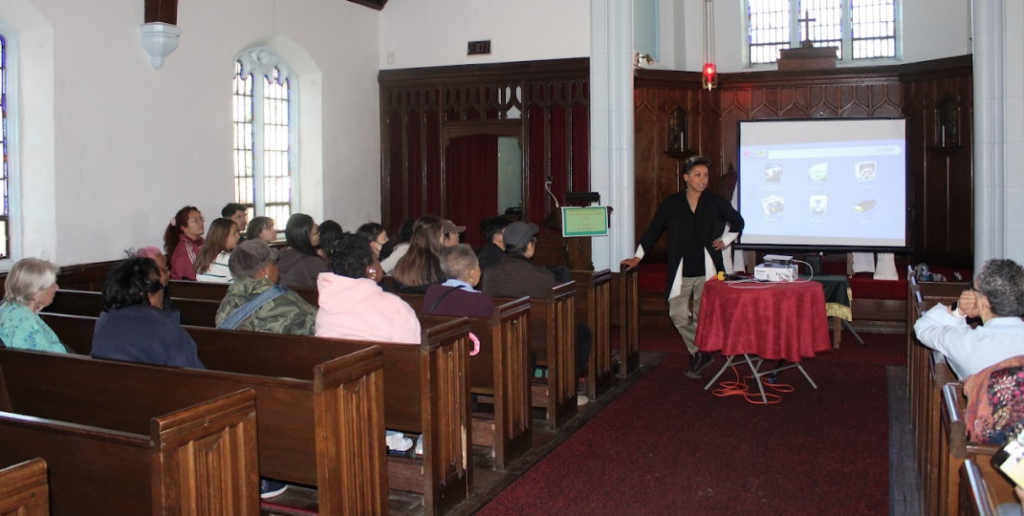
On Sat., April 18, more than 40 community members gathered at the Codman Square Library for “Give Them Their Flowers: A Community Workshop Honoring the 133 Women of Cedar Grove.”
Within the 70-plus-acre cemetery lie two plots of land holding the graves of 133 Black women who for centuries have gone unnamed, distinguished only by flat stone markers that read “Home for Aged Colored Women.”
April’s meeting was another step toward updating that information.
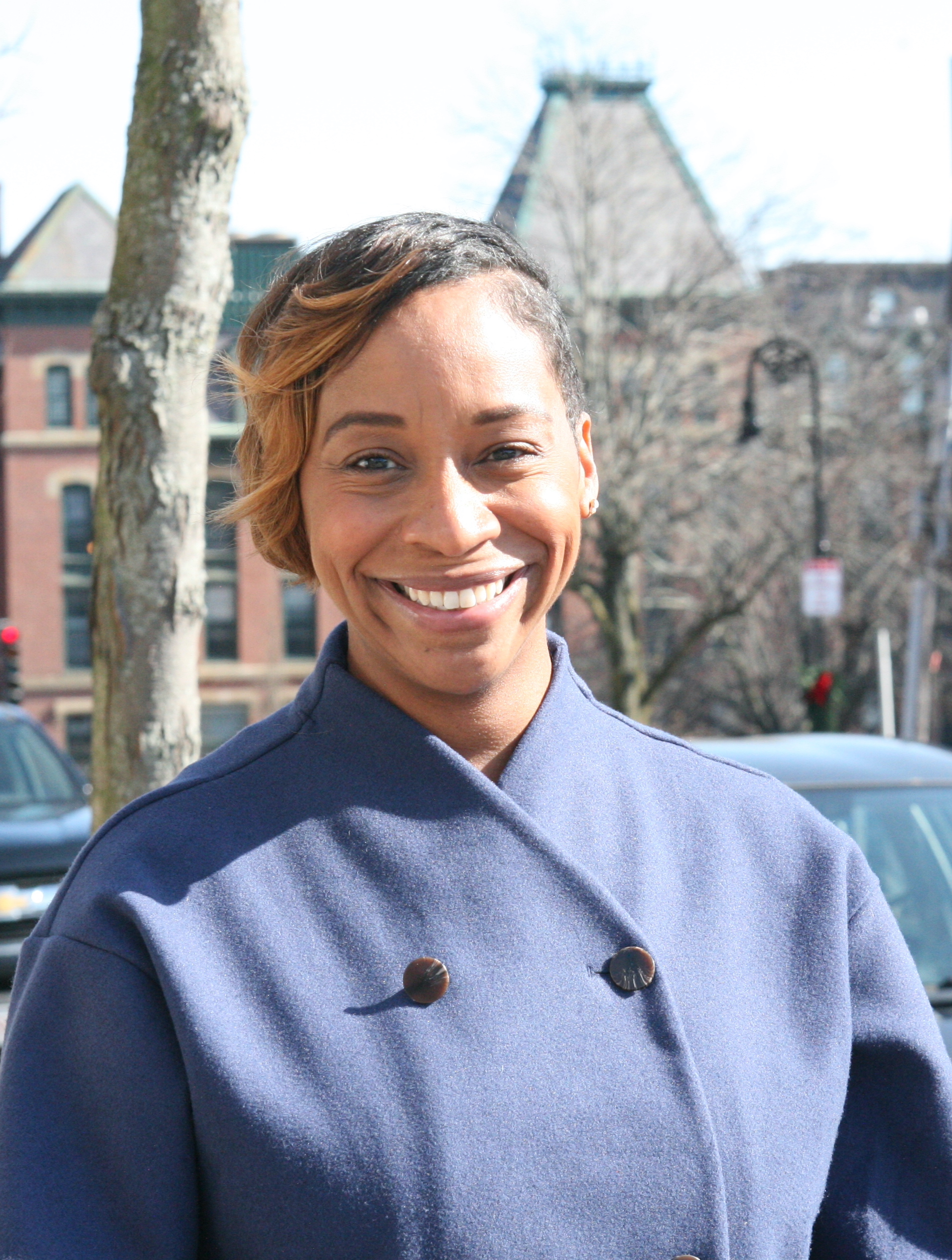
“We live in one of the greatest cities, in my mind, in this country. This is the city of the first post office, the first public school, and the first college,” said Roxbury’s Ekua Holmes, who has been commissioned to create a public memorial in the cemetery honoring these women.
“To take a chunk of history and just obscure [it], that’s not how we became who we are. We became who we are by celebrating history and all the people who contribute to it,” she added, noting:
“To take 133 people and basically obliterate their history and not know how they’ve contributed to the texture of the city, and those kinds of things, that’s not something that an educated city would do. This is going to add to the narrative about Boston.”
At the meeting, Holmes presented her initial concepts for a series of commemorative markers and a flower-planting installation. She then invited attendees to share their thoughts.
“We had sort of like a Post-it note kind of exercise with people putting comments up about the two works of art,” Holmes told The Reporter. “Now we’re taking all of that information [and] we may be going to a final step.”

Many participants suggested that each woman’s name be included in the permanent memorial. In 2022, Dorchester native Dr. Karilyn Crockett, an assistant professor of urban history at MIT, and her students spent the semester researching the names of these forgotten women. Since then, Crockett and her students have gone beyond the buried women’s names and looked into their lives.
“For three semesters now, students have been trying to learn more about the Home for Aged Colored Women and to learn more about Cedar Grove Cemetery,” Crockett said. “Students choose one person, then they get a few weeks over the semester to create a small profile. We want not only to know the names of the women but also to know something about them. What is it about their experience in the city?”
On April 28, Crockett’s current class visited the cemetery to present their findings to around 20 community members. Inside the Gilman Chapel, from 3 to 5 p.m., they spoke about women such as Amelia Johnston, Caroline Coleman, Lucy Gardner, and Margaret Lester.
“I really love the fact that there’s this aspect of the project because each one of the students decides what they think is important for them to investigate,” said Holmes.
“As we begin to look into their lives, we see how textured and varied they were,” she said. “They weren’t just all formally enslaved, or they weren’t just all domestic. Some of them were abolitionists, some of them were missionaries, and some of them were married and had children. Just very, very, very interesting stories, and they’re only scratching the surface right now.”
Holmes hopes to install a temporary memorial this summer with a celebratory event to follow in the fall.
“The deeper they dig, I think it’s going to be not just wonderful for highlighting and memorializing the women that are there, but also thinking about our own lives and our memories that we’re in right now, and sort of honoring each other while we’re still here to enjoy it,” said the artist, “really appreciating your neighbors and your friends and your family members in a new way.”
