

Better get used to those construction cranes dotting the skyline. There is no end in sight to the building boom in Boston and, increasingly, Dorchester and Mattapan.
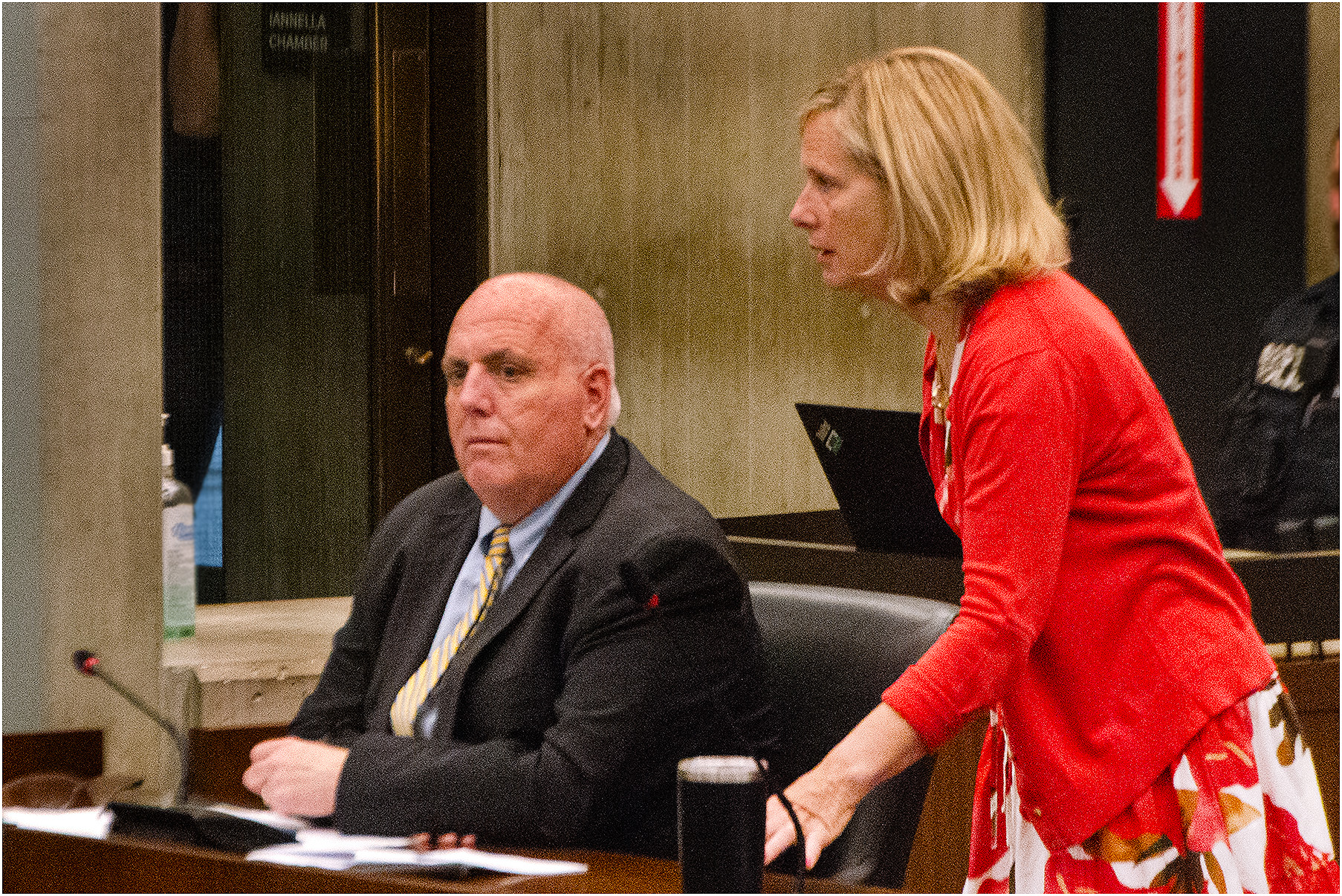
That’s the present-day assessment coming out of the 9th floor of City Hall, where BPDA director Brian Golden and his team are confronting a torrent of existing and new projects cascading into the development pipeline.
A former state representative from Allston-Brighton with a bit of a conservative streak— he went to the US Army War College and still serves as a Reserve officer— Golden is hardly a Polyanna-type.
In a sit-down with Golden last week, Reporter editors wanted to get his take on specific local projects that dominate our pages week in and week out. But we also wanted his more high-altitude take on the region’s economic boom that’s now approaching Year Ten— making it the longest recovery cycle since World War II.
Your BPDA director would love to follow Australia’s lead (that continent- nation has not had a recession since 1991) and keep the boom times going indefinitely.
“I don’t know if we should really bank on that,” Golden said. “You know, people seem to think we’ve got a couple of years left. There is no indication today that this is about to come to a screeching halt. I think we look at next year as likely a healthy year. Once you get beyond that, none of us know.”
How does this sense of a ticking economic clock inform how the city’s top planners approach their jobs?
“Our attitude is that we want to take full advantage of every really strong development economy so we can achieve benefits for the people of Boston,” said Golden, ticking off Mayor Walsh’s priority list on affordable housing, job creation, open space, and resiliency along the waterfront.
But there are limits, he says.
“We want to do quality development, not just development because we’re looking at the clock and we’re getting concerned [about adding things] to the property tax rolls before the doors slam shut. That is not how we approach this… I’m not building for the sake of getting some new sticks and stones erected. That’s not the goal. The goal is to get development that is high quality that serves people’s needs in the long term. And if something just doesn’t… satisfy us, does not satisfy the neighborhood, it might kind of have to be parked and wait.”
“So there are things that will miss this cycle,” said Golden. “We all accept that. But to the extent we can get a project in a good place, that serves the long-term needs of people and contributes to life in the city as opposed to solve a hindrance or a detraction, we will do the best we can to get it done. But we’re not just going to get it done for the sake of getting things done before the recovery come to a halt.”
On Article 80, large project reviews—the kind that are starting to dominate in Dorchester and Mattapan— Golden says the Impact Advisory Group (IAG) model remains the best mechanism for coming to consensus on how individual communities will benefit and integrate new buildings into their neighborhoods. But he has directed his team to diversify the way the city agency takes in comments and reflects on its own decisions on approvals.
“We go to civic groups that might have 20 people regularly active in them, because those are the folks who are sharp and justifiably so. We’re going to listen, but is that where we start and stop listening? It doesn’t make sense that 20 people in three different civic groups in Allston-Brighton, my neighborhood, speak for the 75,000 people in Allston-Brighton.
“There is no star chamber making the decisions for the neighborhood; that’s never been the case,” said Golden.
– Bill Forry
